
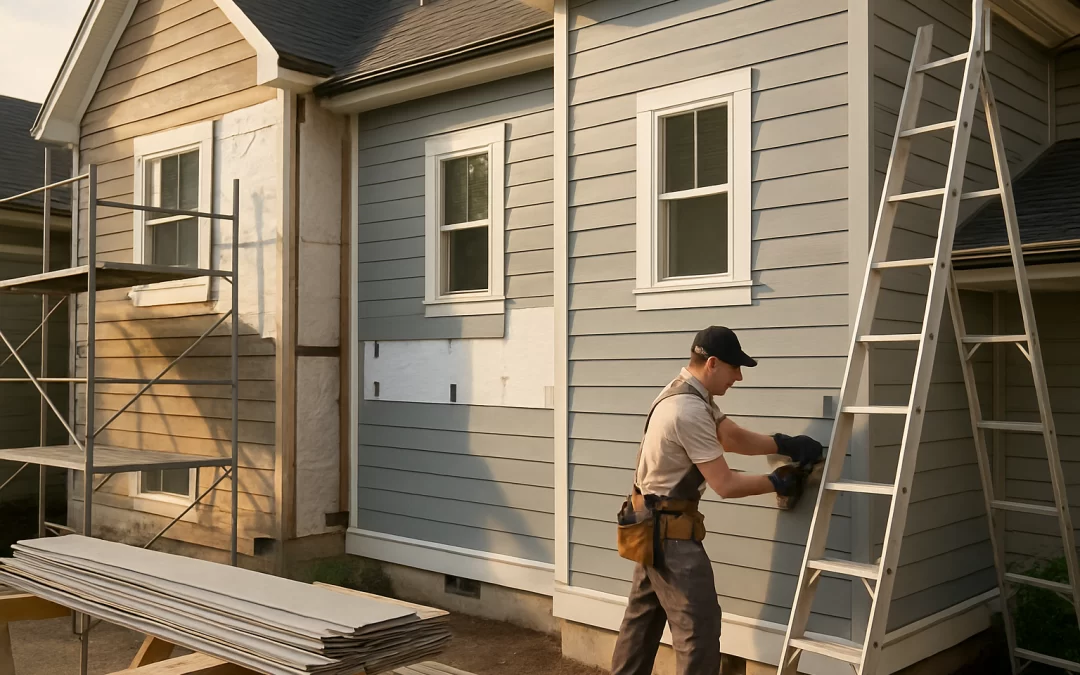
Siding replacement cost typically ranges from a few thousand dollars for smaller vinyl projects to significantly higher totals for large homes using premium materials like fiber cement, engineered wood, or natural wood siding. Most homeowners ultimately pay based on the size of the house, siding material, labor complexity, trim work, and whether hidden moisture or structural damage is discovered underneath the existing siding. While price matters, the real goal is choosing a replacement approach that protects the home long term without creating unnecessary maintenance or resale problems later.
Siding replacement is the process of removing failing or outdated exterior cladding and installing new materials that improve weather protection, appearance, insulation performance, and structural durability. The biggest factor affecting total cost is rarely just the siding itself. Labor access, wall condition, moisture damage, trim details, and installation quality often determine whether the project stays manageable or becomes unexpectedly expensive. Homeowners who understand where costs actually come from usually make better decisions, avoid low-quality bids, and get more value from the project overall.
Table of Contents
- What Actually Affects Siding Replacement Cost
- Average Siding Replacement Cost by Material
- How Siding Replacement Pricing Works
- Hidden Costs That Surprise Homeowners
- Comparing Popular Siding Materials
- How to Lower Siding Replacement Costs Without Cutting Corners
- Common Siding Replacement Mistakes to Avoid
- How to Decide Whether Replacement Is Worth It
- FAQ
- Summary and Next Steps
What Actually Affects Siding Replacement Cost
Many homeowners expect siding pricing to depend mostly on the material they choose, but labor, preparation, and wall condition often influence the final number just as much. Two homes using the same siding product can end up with dramatically different project costs depending on accessibility, repair needs, and installation complexity.
The biggest pricing factors usually include:
- Home size and wall square footage — larger homes require more materials, labor, trim, and disposal work.
- Siding material selection — vinyl is usually more affordable, while fiber cement, engineered wood, and cedar increase labor and material costs.
- Removal of existing siding — tear-off and disposal add labor, especially if multiple old layers exist.
- Moisture or rot damage underneath — damaged sheathing or framing must often be repaired before new siding can be installed properly.
- Architectural complexity — dormers, bump-outs, gables, second stories, and custom trim increase labor time.
- Insulation or weather barrier upgrades — adding house wrap or insulated backing improves efficiency but raises upfront cost.
- Local labor rates — installation pricing varies significantly by region and contractor demand.
One of the most important things homeowners can understand early is that siding replacement is not just a cosmetic project. Proper installation protects the structure from moisture intrusion, air leaks, and long-term deterioration. Choosing solely based on the cheapest bid often creates more expensive problems later.
Average Siding Replacement Cost by Material
Different siding materials come with very different installation costs, maintenance requirements, and long-term performance expectations. Some prioritize affordability, while others focus more on durability, appearance, or resale value.
Vinyl Siding
Vinyl siding is usually the most budget-friendly option for full replacement projects and remains one of the most common choices for residential homes.
- Typical cost range: Lower to moderate
- Advantages: Affordable, low maintenance, wide color selection, faster installation
- Drawbacks: Can crack in extreme temperatures, lower-end products may fade or warp over time
For homeowners prioritizing affordability and low maintenance, vinyl often delivers the best overall balance of cost and practicality.
Fiber Cement Siding
Fiber cement siding is heavier and more labor-intensive to install but is widely valued for durability, fire resistance, and high-end appearance.
- Typical cost range: Moderate to high
- Advantages: Strong durability, weather resistance, premium appearance, long lifespan
- Drawbacks: Higher labor cost, heavier material, repainting eventually required
Many homeowners choose fiber cement when they want stronger curb appeal and longer-term durability without the maintenance demands of natural wood.
Engineered Wood Siding
Engineered wood offers the appearance of real wood with lower maintenance requirements and improved moisture resistance compared to traditional wood siding.
- Typical cost range: Moderate
- Advantages: Natural appearance, lighter weight, easier installation
- Drawbacks: Product quality varies by manufacturer, moisture protection still matters
This option often appeals to homeowners who want warmer aesthetics without committing to full cedar maintenance.
Natural Wood Siding
Wood siding remains attractive for certain architectural styles but generally requires more maintenance and weather protection than modern alternatives.
- Typical cost range: Moderate to high
- Advantages: Distinct appearance, timeless character, customizable finishes
- Drawbacks: Ongoing staining or painting, moisture vulnerability, insect concerns
Wood siding tends to make the most sense for homeowners willing to actively maintain the exterior over time.
Metal and Specialty Siding
Aluminum, steel, composite, and specialty siding systems are sometimes chosen for modern designs or extreme weather durability.
- Typical cost range: Moderate to premium
- Advantages: Durability, modern appearance, low maintenance in some climates
- Drawbacks: Higher upfront pricing, limited style compatibility for some homes
How Siding Replacement Pricing Works
Most contractors calculate siding replacement pricing using a combination of square footage, labor difficulty, trim complexity, and material selection. Homeowners are often surprised by how much preparation work influences the estimate before installation even begins.
A typical siding replacement project usually includes:
- Removal and disposal of existing siding
- Inspection of wall sheathing and framing
- Moisture barrier or house wrap installation
- Flashing updates around windows and doors
- Trim and soffit integration
- Installation labor
- Cleanup and debris hauling
Some estimates appear dramatically lower because critical components are excluded initially and added later as change orders. This is one reason unusually cheap bids can become far more expensive before the project finishes.
Homeowners comparing estimates should look carefully at:
- What prep work is included
- Whether moisture repairs are addressed
- The quality level of siding products
- Warranty coverage
- Trim replacement details
- Flashing and waterproofing specifications
The best estimates are usually the clearest, not necessarily the cheapest.
Hidden Costs That Surprise Homeowners
Siding replacement projects often uncover issues that were hidden behind the old exterior for years. Some are minor; others can substantially change project scope.
Common hidden costs include:
- Rotten sheathing or framing caused by long-term moisture intrusion
- Outdated weather barriers that no longer meet modern standards
- Window flashing failures that require correction before new siding goes on
- Insect or pest damage inside exterior wall cavities
- Insulation upgrades homeowners decide to add once walls are exposed
- Permit or code-related corrections required during renovation
Older homes tend to carry higher uncertainty because hidden damage is more common once siding is removed. This is why experienced contractors often recommend setting aside contingency funds before work begins.
Projects that seem inexpensive initially can become significantly more costly if underlying moisture damage has been ignored for years.
Comparing Popular Siding Materials
The right siding choice depends less on trends and more on balancing maintenance tolerance, climate exposure, appearance goals, and budget.
| Material | Maintenance | Durability | Appearance | Cost Level |
|---|---|---|---|---|
| Vinyl | Low | Good | Moderate | Lower |
| Fiber Cement | Moderate | Excellent | High-End | Higher |
| Engineered Wood | Moderate | Good | Warm/Natural | Moderate |
| Natural Wood | High | Moderate | Premium | Higher |
Homeowners who prioritize minimal upkeep usually lean toward vinyl or certain composite products, while those focused on resale appearance often prefer fiber cement or engineered wood.
Climate also matters. Areas with high humidity, salt exposure, storms, or freeze-thaw cycles may favor certain materials over others.
How to Lower Siding Replacement Costs Without Cutting Corners
Reducing project cost does not necessarily mean sacrificing quality. In many cases, smarter planning has a larger financial impact than choosing the cheapest materials available.
Ways homeowners commonly control costs include:
- Keeping the existing wall layout unchanged
- Choosing simpler siding profiles and trim packages
- Avoiding overly complex architectural accents
- Scheduling work outside peak contractor demand periods
- Addressing small moisture issues early before they spread
- Comparing detailed written estimates instead of headline pricing alone
Trying to save money by skipping moisture barriers, flashing improvements, or proper installation practices usually backfires long term. The most expensive siding projects are often the ones that must be corrected prematurely after poor installation.
Common Siding Replacement Mistakes to Avoid
Most siding problems come from installation shortcuts, poor moisture management, or unrealistic expectations about maintenance.
- Choosing purely based on price instead of durability and installation quality
- Ignoring water damage signs before replacement begins
- Hiring uninsured or poorly qualified installers
- Overlooking trim, flashing, and waterproofing details
- Choosing materials unsuited to the local climate
- Assuming all siding products perform equally
Another common mistake is focusing heavily on color and appearance while underestimating how maintenance requirements affect long-term satisfaction. A siding material that looks beautiful initially may become frustrating if upkeep expectations are unrealistic.
Well-installed mid-range siding often performs better long term than premium materials installed poorly.
How to Decide Whether Replacement Is Worth It
Siding replacement becomes worthwhile when the existing exterior no longer protects the home effectively, creates recurring maintenance costs, or hurts energy performance and resale appeal.
Warning signs that replacement may make sense include:
- Visible warping, cracking, or loose panels
- Frequent repainting needs
- Moisture stains or mold concerns
- Higher heating and cooling costs
- Soft spots or hidden wall deterioration
- Storm or hail damage
- Fading or outdated appearance affecting curb appeal
Partial repairs sometimes make sense for isolated damage, but widespread deterioration usually becomes more expensive to manage over time through repeated patchwork.
For homeowners planning to stay long term, siding replacement often improves:
- weather protection
- maintenance demands
- energy efficiency
- home appearance
- buyer perception and resale value
Even when replacement feels expensive initially, delaying too long can allow hidden moisture issues to spread deeper into the structure.
FAQ
What is the cheapest siding option for a house?
Vinyl siding is usually the most affordable option for full siding replacement projects. It offers relatively low installation cost and minimal maintenance, making it one of the most common choices for homeowners balancing budget and durability.
Does siding replacement increase home value?
In many cases, yes. New siding can improve curb appeal, energy efficiency, weather protection, and buyer confidence. Homes with visibly aging or damaged siding often appear less maintained overall, which can negatively affect resale perception.
How long does siding replacement usually take?
Most residential siding replacement projects take anywhere from several days to a few weeks depending on house size, weather, material type, and whether repairs are needed underneath the old siding.
Can siding be replaced without removing the old siding?
Sometimes new siding can technically be installed over older layers, but full removal is usually recommended because it allows contractors to inspect for moisture damage and properly install modern weather barriers and flashing systems.
What siding lasts the longest?
Fiber cement, certain engineered products, and properly maintained metal siding systems are often among the longest-lasting options. Longevity depends heavily on installation quality, moisture control, and climate conditions.
Should I repair or fully replace my siding?
Small isolated damage may justify repairs, but widespread cracking, moisture intrusion, warping, or repeated maintenance problems often make full replacement more cost-effective long term.
Summary and Next Steps
Siding replacement cost depends on far more than just material pricing. Labor complexity, wall condition, waterproofing needs, architectural details, and installation quality all influence how expensive — and how successful — the project ultimately becomes.
The most effective next step is to inspect the current siding honestly and determine whether the main concern is appearance, moisture protection, maintenance, energy efficiency, or resale value. Once priorities are clear, compare a few material options that realistically fit your climate, maintenance tolerance, and long-term budget.
Before signing a contract:
- Request detailed written estimates
- Confirm what prep and repair work is included
- Ask how moisture protection and flashing will be handled
- Compare warranty coverage carefully
- Review examples of completed projects similar to your home
Homeowners who approach siding replacement as a long-term protection investment instead of a purely cosmetic upgrade usually make stronger decisions, avoid costly shortcuts, and end up more satisfied with the finished result.