
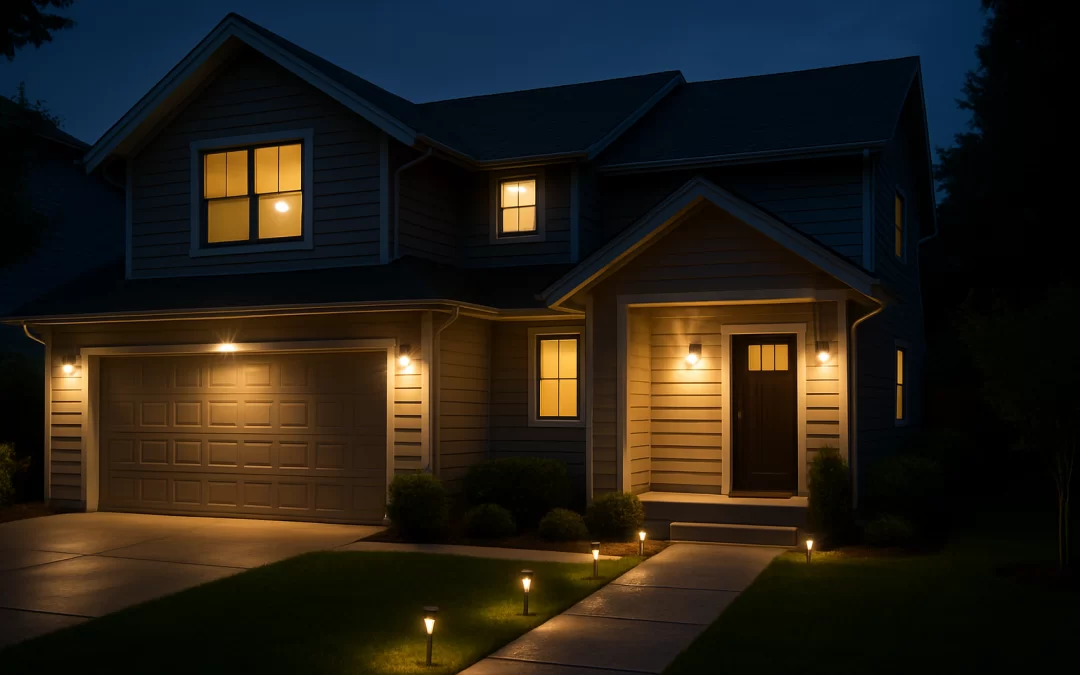
Energy-efficient outdoor lighting can cut your exterior lighting costs by 50–80% by switching from old halogen or incandescent fixtures to LEDs and using smart controls. A typical home can save $8–$25 per month, depending on how many lights you run and for how long. The main tradeoff is higher upfront cost for quality LED fixtures and occasional rewiring, but the long-term savings and lower maintenance usually outweigh this within 1–3 years.
This guide is for homeowners and renters who want safer, better-looking outdoor lighting without wasting money on electricity or constant bulb replacements. Outdoor lights often run for many hours every night, so inefficient bulbs and poor controls quietly drive up your bill. By choosing the right LED options and installing them wisely, you can reduce costs, improve security, and avoid expensive mistakes.
Table of Contents
- Why Outdoor Lighting Costs So Much
- Common Overspending Behaviors
- What to Check First Outside Your Home
- Immediate Outdoor Lighting Savings
- Best Long-Term Energy-Efficient Upgrades
- When Spending More Actually Saves More
- Common Costly Outdoor Lighting Mistakes
- When to Hire a Professional
- Costs, Savings, and Payback Periods
- How to Decide: Now vs Later, DIY vs Pro
- Frequently Asked Questions
- Summary and Next Steps
Why Outdoor Lighting Costs So Much
Outdoor lighting can quietly add $10–$40 per month to your electric bill, especially if you use older bulbs or leave lights on all night. The main cost drivers are:
- Inefficient bulbs: Incandescent, halogen, and older CFL bulbs use 4–10 times more electricity than LEDs for the same brightness.
- Long run times: Porch, driveway, and security lights often run 8–12 hours per night, multiplying any inefficiency.
- Poor controls: Lights left on during the day or all night, even when not needed, waste energy.
- Over-lighting: Using more fixtures or brighter bulbs than necessary increases both energy use and replacement costs.
Because outdoor lights are “set and forget,” many homeowners don’t realize how much they cost until they compare LED vs non-LED usage or install timers and see the bill drop.
Common Overspending Behaviors
Certain habits and choices make outdoor lighting much more expensive than it needs to be. Watch out for these:
- Leaving lights on 24/7: Porch or garage lights that never turn off can add $5–$15 per month by themselves if they’re not LED.
- Using high-wattage floodlights everywhere: 100–150W halogen floods used for general lighting instead of targeted security lighting waste a lot of power.
- Ignoring “phantom” fixtures: Side-yard, backyard, or decorative lights that no one uses but stay on all night.
- Buying cheap, short-lived fixtures: Low-quality solar or plug-in lights that fail quickly lead to repeated purchases instead of one solid upgrade.
- Not matching brightness to need: Using very bright lights where a low-level path or step light would do.
Changing these behaviors often costs little or nothing and can deliver immediate savings before you even buy new fixtures.
What to Check First Outside Your Home
Before spending money on new energy-efficient outdoor lighting, do a quick audit of what you already have. This helps you avoid replacing things that are already efficient and focus on the real money drains.
1. List All Outdoor Fixtures
- Walk around your home at night and note every light: porch, garage, driveway, paths, decks, patios, spotlights, and decorative lights.
- Write down how many bulbs each uses and the wattage if you can read it.
- Note which ones stay on all night vs only when you flip a switch.
2. Identify Bulb Types
- Incandescent/halogen: Often labeled 40W, 60W, 75W, 100W, or 150W. These are the most expensive to run.
- CFL (spiral or compact fluorescent): More efficient than incandescent but still less efficient and less durable than LEDs outdoors.
- LED: Often labeled 6W–15W for standard bulbs, 10W–30W for floods, with “LED” clearly printed.
Any non-LED bulb that runs more than 2–3 hours per night is a strong candidate for replacement.
3. Check Controls and Timers
- Look for switch-only lights that rely on you to turn them off.
- Note any dusk-to-dawn sensors (they turn on at dark and off at sunrise).
- Check for motion sensors on security lights.
- Test any plug-in timers to see if they still work and are set correctly.
Lights with no automatic control are usually where you can save the most quickly.
Immediate Outdoor Lighting Savings
You can often cut your outdoor lighting costs in half within a weekend using simple changes that don’t require rewiring or a professional.
1. Replace High-Use Bulbs with LEDs
Swapping bulbs is the fastest, most cost-effective move. Focus on lights that run the longest: porch, garage, driveway, and security lights.
- Replace 60W incandescent bulbs with 8–10W LED bulbs (same brightness, about 80–85% less energy).
- Replace 75–150W halogen floods with 12–25W LED floodlights.
- Choose “soft white” (2700–3000K) for cozy areas and “daylight” (4000–5000K) for security and task lighting.
Typical cost and savings:
- Cost: $3–$8 per LED bulb.
- Savings: About $1–$3 per bulb per month if used 6–10 hours nightly, depending on your local electricity rate.
- Payback: Often 2–6 months per bulb.
For more detail on bulb types and savings, see this guide on energy-efficient lighting options and cost savings.
2. Add Simple Plug-In Timers
For plug-in string lights, decorative lights, or plug-in floodlights, a basic outdoor-rated timer can prevent them from running all night.
- Set lights to run only during needed hours (for example, 6 p.m. to 11 p.m.).
- Use “random” modes for security lights to mimic occupancy without running them all night.
Typical cost and savings:
- Cost: $10–$25 per outdoor timer.
- Savings: $2–$10 per month per timer, depending on wattage and hours reduced.
- Payback: Usually 1–4 months.
3. Turn Off or Remove Unnecessary Lights
Some lights simply aren’t needed or can be used less often.
- Turn off decorative lights except when entertaining or during specific seasons.
- Remove or disconnect fixtures that no one uses or that duplicate other lighting.
- Use lower-wattage or lower-lumen bulbs where you only need gentle light.
This costs nothing and can save a few dollars each month, especially if you have many decorative or landscape lights.
Best Long-Term Energy-Efficient Upgrades
Once you’ve captured the easy wins, consider more permanent upgrades that combine LEDs with better controls. These usually have a 1–5 year payback and then keep saving for a decade or more.
1. Integrated LED Fixtures
Instead of just replacing bulbs, you can install fixtures with built-in LED modules designed for outdoor use.
- Common for wall-mounted porch lights, security floods, and pathway lights.
- Often rated to last 25,000–50,000 hours (10–20+ years at typical outdoor use).
- Better weather sealing and light distribution than many “bulb plus fixture” setups.
Cost and savings:
- Cost: $30–$150 per fixture, depending on style and features.
- Savings: $3–$10 per month per high-use fixture compared with halogen or incandescent.
- Payback: Typically 1–3 years for frequently used fixtures.
2. Motion-Sensor Security Lights
For driveways, garages, and backyards, motion-activated LED floodlights provide security without running all night.
- Lights stay off most of the time and turn on only when motion is detected.
- Adjustable sensitivity and duration (for example, 30 seconds to 5 minutes).
- Can be combined with cameras or smart home systems if desired.
Cost and savings:
- Cost: $40–$150 per motion-sensor LED fixture.
- Savings: Often 70–90% less energy than leaving a floodlight on all night.
- Payback: Usually 1–2 years, faster if replacing high-wattage halogens.
3. Dusk-to-Dawn LED Fixtures
These fixtures have built-in light sensors that automatically turn on at sunset and off at sunrise.
- Ideal for entryways, porches, and any light you want on all night for safety.
- Prevents lights from staying on during the day.
- Often available as integrated LED wall packs or screw-in bulbs with built-in sensors.
Cost and savings:
- Cost: $10–$20 for sensor bulbs; $40–$120 for integrated fixtures.
- Savings: $1–$5 per month per fixture by avoiding daytime operation and using LEDs.
- Payback: Typically 6–18 months.
4. Low-Voltage LED Landscape Lighting
For paths, gardens, and accent lighting, low-voltage (12V) LED systems are efficient and safer to install than line-voltage systems.
- Use a small transformer and thin cables to power multiple fixtures.
- LED path and spot lights often use 1–5W each instead of 10–20W halogen.
- Many kits include timers or photocells for automatic control.
Cost and savings:
- Cost: $100–$400 for a starter kit; $20–$60 per additional fixture.
- Savings: 60–80% less energy than equivalent halogen systems.
- Payback: 3–5 years, depending on how many hours you run them.
5. Smart Outdoor Lighting Controls
Smart switches, plugs, and bulbs let you schedule and automate outdoor lighting from your phone.
- Set schedules based on sunset/sunrise or specific times.
- Turn lights off remotely if you forget.
- Integrate with motion sensors or security systems.
Cost and savings:
- Cost: $20–$60 per smart switch or plug; more for integrated systems.
- Savings: Often modest on their own ($1–$5 per month), but they prevent waste and improve security.
- Payback: 2–5 years, depending on how much unnecessary runtime you eliminate.
When Spending More Actually Saves More
Not every cheap fixture or bulb is a bargain. Sometimes paying more upfront leads to lower total cost over 5–10 years.
1. Quality LED vs. Bargain LED
Very cheap LEDs may flicker, fail early, or perform poorly outdoors, especially in extreme temperatures or damp locations.
- Look for Energy Star or other reputable certifications.
- Choose brands with clear warranties (3–5 years or more).
- Check that the bulb or fixture is rated for outdoor or damp/wet locations.
Spending $2–$5 more per bulb can mean it lasts years longer, reducing replacement costs and hassle.
2. Integrated Fixtures vs. Bulb-Only Upgrades
If your existing fixtures are rusty, poorly sealed, or outdated, replacing the entire fixture can be smarter than just swapping bulbs.
- New fixtures often have better optics, directing light where you need it and reducing wasted light.
- Better sealing protects against water and insects, extending life.
- Built-in sensors (motion or dusk-to-dawn) can further cut energy use.
While the upfront cost is higher, the combination of energy savings, fewer replacements, and better performance can pay off within a few years.
3. Professional Installation for Complex Jobs
For major upgrades—like adding new circuits, burying cables, or integrating with a security system—hiring a professional can prevent costly mistakes.
- Correct wiring reduces fire and shock risks.
- Proper layout avoids dark spots and over-lighting.
- Code-compliant work can protect your home’s value and insurance coverage.
While labor adds cost, it can save you from redoing work, fixing damage, or dealing with safety issues later.
Common Costly Outdoor Lighting Mistakes
Avoiding a few frequent errors can save you money and frustration.
1. Over-Lighting the Yard
More light is not always better. Excessive brightness wastes energy and can create glare that actually reduces visibility.
- Use targeted lighting for paths, steps, and doors instead of flooding the entire yard.
- Choose lower-lumen fixtures for decorative areas.
- Consider shielding or aiming lights downward to avoid lighting the sky or neighbors’ windows.
2. Ignoring Weather Ratings
Using indoor-rated bulbs or fixtures outdoors can lead to early failure and safety risks.
- Check for “wet location” or “damp location” ratings for exposed areas.
- Use outdoor-rated extension cords, plugs, and timers.
- Ensure junction boxes and connections are properly sealed.
3. Mixing Incompatible Controls and Bulbs
Some LEDs don’t work well with older dimmers or motion sensors.
- Use bulbs labeled as compatible with dimmers or sensors if needed.
- If lights flicker or fail early, the control device may be the problem.
- Consider upgrading to modern, LED-compatible controls.
4. Skipping Maintenance
Dirty lenses, overgrown plants, and loose fixtures reduce effectiveness and can lead to damage.
- Clean lenses and covers once or twice a year.
- Trim plants blocking light or touching hot fixtures.
- Check for loose mounts or exposed wiring after storms.
When to Hire a Professional
Many outdoor lighting upgrades are DIY-friendly, but some situations call for a licensed electrician or lighting specialist.
Hire a Pro If:
- You need to add new hardwired fixtures where no wiring exists.
- You’re upgrading or extending line-voltage (120V) circuits outdoors.
- Your existing wiring looks damaged, corroded, or unsafe.
- You’re integrating lighting with a security system or complex smart home setup.
Typical Professional Costs
- Electrician hourly rate: $75–$150 per hour, depending on region.
- Simple fixture replacement: $75–$200 per fixture including labor.
- New circuits or extensive landscape lighting: $500–$3,000+ depending on scope.
Professional work is usually worth it when safety is a concern, when you’re adding many new fixtures, or when you want a polished, long-lasting result.
Costs, Savings, and Payback Periods
Here’s how the numbers typically work out for energy-efficient outdoor lighting upgrades.
Monthly Savings Estimates
Assuming average electricity rates and 8 hours of nightly use:
- Replacing a 60W incandescent with a 9W LED: $1–$2 per month saved per bulb.
- Replacing a 100W halogen flood with a 20W LED: $2–$4 per month saved per fixture.
- Adding motion sensors to security lights: often $3–$10 per month saved per light.
- Using timers to cut 4 hours per night: $1–$5 per month depending on wattage.
For a typical home with 6–12 outdoor fixtures, total savings after a full LED and control upgrade often land in the $8–$25 per month range.
Upfront Costs
- LED bulbs: $3–$8 each.
- Integrated LED fixtures: $30–$150 each.
- Motion-sensor or dusk-to-dawn fixtures: $40–$150 each.
- Outdoor timers or smart plugs: $10–$60 each.
- Low-voltage landscape kits: $100–$400+.
Typical Payback Periods
- Bulb-only LED upgrades: 2–6 months.
- Integrated LED fixtures replacing halogen/incandescent: 1–3 years.
- Motion-sensor security lights: 1–2 years.
- Smart controls and timers: 1–4 years, depending on how much runtime you reduce.
- Full landscape LED system: 3–5 years, sometimes longer if used only a few hours per night.
When Savings Are Small
Some upgrades don’t save much money and are better done only when you’re already replacing something.
- Replacing a CFL bulb that runs only 1–2 hours per night with an LED may save only a few dollars per year.
- Upgrading decorative lights you rarely use will have a long payback period.
- High-end smart systems mainly add convenience and control, not huge energy savings.
In these cases, wait until the existing bulb or fixture fails or you’re already doing other work outside.
When It’s Not Worth the Cost
Some projects don’t make financial sense purely for energy savings.
- Installing expensive new wiring and fixtures just to light an area you rarely use.
- Buying top-tier designer fixtures when mid-range options offer similar efficiency and durability.
- Overbuilding a landscape lighting system that you only turn on occasionally.
Focus your budget on high-use, high-impact areas first: entryways, driveways, main paths, and key security zones.
How to Decide: Now vs Later, DIY vs Professional
Use this section to prioritize your outdoor lighting upgrades and choose the right approach for your budget and comfort level.
Do Now vs. Do Later
- Do now:
- Replace any incandescent or halogen bulbs that run more than 2–3 hours per night.
- Add timers or smart plugs to decorative or security lights that stay on all night.
- Fix obviously unsafe wiring or broken fixtures.
- Do later:
- Upgrade low-use decorative fixtures.
- Install complex landscape lighting purely for aesthetics.
- Replace working CFLs in low-use areas.
Quick Fix vs. Investment
- Quick fixes (low cost, fast payback):
- LED bulb swaps.
- Plug-in timers and basic motion-sensor bulbs.
- Turning off or removing unnecessary lights.
- Investments (higher cost, long-term benefit):
- Integrated LED fixtures with built-in sensors.
- Low-voltage landscape systems.
- Smart switches and coordinated control systems.
DIY vs. Professional
- DIY-friendly tasks:
- Replacing bulbs with LEDs.
- Installing plug-in timers and smart plugs.
- Setting up low-voltage landscape kits following instructions.
- Replacing fixtures where wiring already exists and you’re comfortable turning off breakers and following safety steps.
- Hire a pro for:
- New wiring runs, new circuits, or adding many new hardwired fixtures.
- Any work inside the main electrical panel.
- Complex integrations with security or smart home systems.
Cheap Fix vs. Upgrade
- Choose a cheap fix when:
- You’re renting and can’t change wiring or fixtures.
- You need immediate savings with minimal cost (bulb swaps, timers).
- The fixture is in good shape but just needs an LED bulb.
- Choose a full upgrade when:
- Fixtures are old, rusty, or poorly placed.
- You want to improve both efficiency and appearance.
- You’re already doing exterior renovations or electrical work.
Frequently Asked Questions
How much can I really save by switching to LED outdoor lighting?
Most homes save $8–$25 per month by replacing high-use outdoor bulbs and fixtures with LEDs and adding basic controls. The exact amount depends on how many lights you have, how long they run, and your local electricity rate. In many cases, the cost of bulbs and simple controls is paid back within the first year.
Are solar outdoor lights worth it?
Solar lights can be a good option for low-level path or accent lighting where wiring is difficult or expensive. They don’t use grid electricity, but cheaper models often have dimmer light and shorter lifespans. For critical areas like driveways and entryways, wired LED fixtures usually provide better reliability and long-term value.
Do LED outdoor lights attract more bugs?
LEDs generally attract fewer insects than traditional bulbs because they produce less heat and can be chosen in color temperatures that are less attractive to bugs. Warm white LEDs (around 2700–3000K) tend to attract fewer insects than very cool, bluish lights. This can reduce the need for cleaning and maintenance around doors and patios.
How long do outdoor LED lights last?
Quality outdoor LED bulbs and fixtures are typically rated for 25,000–50,000 hours of use. At 8 hours per night, that’s roughly 8–17 years of service. Cheaper products may fail sooner, which is why it’s worth paying a bit more for outdoor-rated, well-reviewed options.
Should I replace CFL outdoor bulbs with LEDs?
If your CFL bulbs run many hours per night, switching to LEDs can still save money because LEDs use less energy and handle frequent on/off cycles better. However, if a CFL is in a low-use area, the savings from switching may be small. In those cases, wait until the CFL fails, then replace it with an LED.
Can I install outdoor LED lighting myself?
You can safely handle many upgrades yourself, such as swapping bulbs, installing plug-in timers, and setting up low-voltage landscape kits. For new hardwired fixtures, new circuits, or any work inside your electrical panel, it’s safer and often more cost-effective long term to hire a licensed electrician.
Summary and Next Steps
Energy-efficient outdoor lighting is one of the simplest ways to cut your home’s energy costs while improving safety and curb appeal. By focusing on high-use fixtures, switching to quality LEDs, and adding basic controls like timers and motion sensors, most households can save $100–$300 per year with payback periods often under two years.
Start by walking around your home at night, listing every outdoor light, and identifying the biggest energy users. Replace those bulbs with LEDs, add timers where needed, and plan fixture upgrades for worn-out or inefficient lights. For a deeper dive into indoor and outdoor lighting choices, you can review this guide to energy-efficient lighting and smart upgrade tips.
With a few targeted changes, you can lock in long-term savings, reduce maintenance, and enjoy a safer, better-lit home exterior without overspending.