
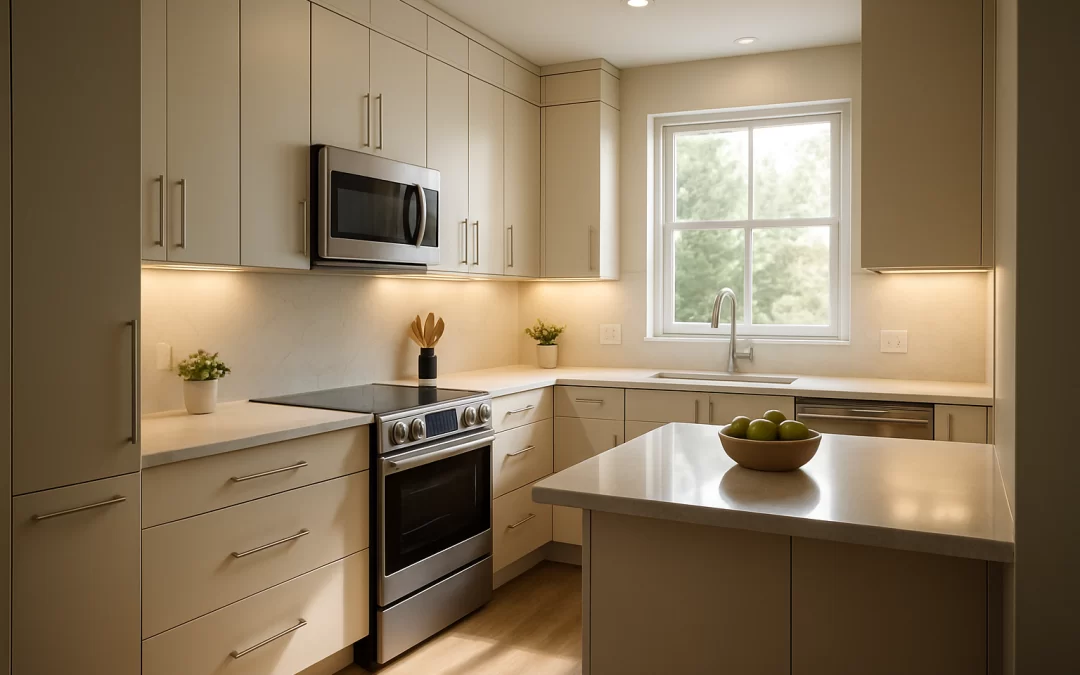
Small kitchen remodel ideas that focus on layout, storage, and simple design upgrades can dramatically improve how your kitchen works without a full gut renovation. By keeping your existing layout, reusing cabinets, and choosing targeted upgrades, many homeowners can save $5,000–$20,000 compared with a full remodel, while still improving resale value and daily convenience. The tradeoff is that you may not get your “dream kitchen,” but you can get a smarter, more functional space at a fraction of the cost.
Small kitchen remodels are ideal for homeowners and renters who feel cramped, disorganized, or frustrated by their current space but don’t want to overspend. The main cost problem is that even small kitchens can become expensive quickly when layouts are moved, walls are opened, or high-end finishes are chosen. This guide focuses on practical, budget-conscious ideas that stretch every dollar and help you avoid common remodeling mistakes.
Table of Contents
- Why Small Kitchen Remodels Get Expensive
- Common Overspending Behaviors in Small Kitchens
- What to Check First Before You Spend
- Immediate Savings: Low-Cost Changes With Fast Impact
- Long-Term Savings and Smart Upgrades
- When Spending More Actually Saves Money
- Common Costly Mistakes in Small Kitchen Remodels
- When to Hire a Professional vs DIY
- Decision Guide: What to Do Now vs Later
- Frequently Asked Questions
- Summary and Next Steps
Why Small Kitchen Remodels Get Expensive
Even a small kitchen remodel can run from $10,000 to $40,000 or more, depending on choices. The biggest cost drivers are not always size, but what you move and replace.
Key reasons costs climb quickly:
- Moving plumbing or gas lines: Relocating a sink, dishwasher, or range can add $1,000–$5,000+ in labor and materials.
- Changing the layout or removing walls: Structural changes, permits, and inspections can add thousands, even in a small space.
- Custom cabinets and high-end finishes: Custom cabinetry can cost 2–3 times more than stock or semi-custom options.
- Multiple trades on site: Electricians, plumbers, carpenters, and tile installers each add minimum charges, even for small jobs.
For a deeper breakdown of how budget, mid-range, and luxury choices affect price, see this kitchen remodel cost guide by budget.
Common Overspending Behaviors in Small Kitchens
Many homeowners overspend not because they choose the wrong products, but because they try to do too much at once. In a small kitchen, every change affects something else.
- Chasing a “magazine look” instead of function: High-end finishes and trendy materials can add $5,000–$10,000 with little impact on usability.
- Over-customizing storage: Specialty pull-outs and organizers are nice, but dozens of them can add $1,000–$3,000 quickly.
- Upgrading all appliances at once: Replacing working appliances early can waste $1,500–$4,000 that could be saved or used elsewhere.
- Ignoring existing layout strengths: Tearing out a functional layout to “start over” often doubles labor costs.
- Rushing decisions: Last-minute changes (called “change orders”) can add 10–20% to your total project cost.
What to Check First Before You Spend
Before you buy anything, take a step back and evaluate how your small kitchen actually works. This helps you spend on what matters most and avoid unnecessary upgrades.
1. Layout and Workflow
- Is the sink, stove, and fridge arranged in a simple “work triangle” or efficient line?
- Do you have at least one clear prep area (24–36 inches of counter) near the sink or stove?
- Are there any “dead zones” where cabinets are hard to reach or doors collide?
If the layout basically works, keeping plumbing and major appliances in place can save $3,000–$10,000.
2. Cabinet Condition and Storage
- Are your cabinet boxes solid and structurally sound?
- Do doors and drawers open smoothly, or are they warped and failing?
- Is clutter caused by lack of storage, or poor organization of existing space?
If cabinets are sturdy, you may only need new doors, paint, or better organizers instead of full replacement.
3. Lighting and Outlets
- Are work areas (sink, stove, prep space) well lit?
- Do you have enough outlets for everyday appliances without using multiple power strips?
Often, poor lighting and outlet placement make a kitchen feel smaller and more frustrating than it really is.
4. Safety and Hidden Issues
- Any signs of water damage under the sink or near the dishwasher?
- Old electrical (two-prong outlets, no GFCI near water) or overloaded circuits?
- Soft spots in flooring near the sink or fridge?
Addressing these first prevents you from spending on cosmetic upgrades that may need to be torn out later.
Immediate Savings: Low-Cost Changes With Fast Impact
These small kitchen remodel ideas focus on quick wins that improve function and appearance without major construction. Many can be done over a weekend.
1. Declutter and Reorganize Storage
- Cost: $50–$200 for organizers, bins, and shelf risers.
- Impact: Frees up 20–40% more usable cabinet space in many small kitchens.
- Savings: Can delay or avoid a $5,000–$15,000 cabinet replacement for several years.
Focus on:
- Pull-out baskets for deep lower cabinets.
- Vertical dividers for baking sheets and cutting boards.
- Door-mounted racks for spices and cleaning supplies.
2. Swap Hardware and Faucet
- Cost: $100–$500 for new cabinet pulls/knobs and a mid-range faucet.
- Impact: Instant visual upgrade; makes older cabinets feel newer.
- Savings: Can postpone full cabinet replacement, preserving $3,000–$10,000.
Choose simple, durable finishes like brushed nickel or black that won’t look dated quickly.
3. Improve Lighting
- Cost: $50–$300 for LED under-cabinet lights, brighter bulbs, or a new ceiling fixture.
- Impact: Makes the kitchen feel larger and safer to work in.
- Savings: LED lighting can save $5–$15 per month on electricity compared with old incandescent bulbs.
Stick-on or plug-in under-cabinet lights are a low-commitment way to test lighting changes before hiring an electrician.
4. Paint Walls (and Possibly Cabinets)
- Cost: $50–$300 DIY for walls; $200–$800 DIY for cabinets (more if hiring out).
- Impact: Light colors make a small kitchen feel bigger and cleaner.
- Savings: Painting cabinets instead of replacing can save $4,000–$12,000.
Use semi-gloss or satin paint in kitchens for easier cleaning and better moisture resistance.
Long-Term Savings and Smart Upgrades
Once you’ve tackled quick fixes, consider targeted upgrades that improve efficiency, durability, and resale value. These cost more upfront but can pay off over several years.
1. Keep the Layout, Upgrade the Surfaces
- Cost: $2,000–$8,000 for new counters, backsplash, sink, and faucet in a small kitchen.
- Impact: Major visual and functional upgrade without moving plumbing.
- Payback: Often recoups 50–80% of cost at resale, depending on market.
Consider:
- Durable counters like laminate, butcher block, or entry-level quartz instead of premium stone.
- A simple, classic backsplash (subway tile or similar) that won’t look dated.
2. Cabinet Refacing or Partial Replacement
- Cost: $3,000–$8,000 for refacing; $5,000–$15,000 for new stock/semi-custom cabinets in a small kitchen.
- Impact: Looks like a full remodel while reusing existing cabinet boxes (for refacing).
- Payback: Often 60–80% at resale; extends cabinet life 10–15 years.
Refacing is usually worth it when cabinet boxes are solid but doors are dated. Full replacement makes more sense if boxes are damaged or poorly laid out.
3. Energy-Efficient Appliances
- Cost: $1,500–$4,000 for a fridge, dishwasher, and range package (mid-range, energy-efficient).
- Savings: $10–$30 per month on electricity and water, depending on current appliances.
- Payback: 5–10 years in utility savings, plus improved reliability.
Replace appliances when they are near end-of-life or frequently needing repairs, not just for looks. Prioritize the fridge and dishwasher for the biggest efficiency gains.
4. Smart Storage Additions
- Cost: $200–$1,500 for pull-out shelves, a pantry cabinet, or a small island/cart.
- Impact: Adds usable storage and counter space without changing walls.
- Savings: Can avoid a larger expansion or wall removal costing $5,000–$20,000.
Mobile islands or carts are especially useful in small kitchens because they can be moved or removed if needed.
When Spending More Actually Saves Money
Some upgrades cost more upfront but prevent bigger expenses later. In a small kitchen, these choices can protect your investment and reduce ongoing costs.
1. Fixing Water and Electrical Issues
- Cost: $300–$2,000 for plumbing repairs; $300–$2,500 for electrical updates in a small kitchen.
- Savings: Avoids thousands in potential water damage, mold remediation, or electrical fires.
Updating to GFCI outlets near water and fixing slow leaks should come before cosmetic upgrades.
2. Durable, Easy-to-Clean Materials
- Cost: $500–$2,000 more than the cheapest options for better counters, flooring, or hardware.
- Savings: Fewer repairs and replacements over 10–15 years; less time and money spent on maintenance.
For example, choosing a mid-range, durable countertop over the absolute cheapest option can prevent chips, stains, and early replacement.
3. Professional Design Help for Tricky Layouts
- Cost: $200–$1,000 for a few hours with a kitchen designer.
- Savings: Can prevent layout mistakes that cost thousands to fix later.
In very tight or awkward spaces, a designer can often find storage and layout solutions you might miss on your own.
Common Costly Mistakes in Small Kitchen Remodels
Avoiding a few key mistakes can save you thousands and reduce stress. Many of these are more about planning than products.
- Changing the plan mid-project: Moving a sink or wall after work starts can add 10–25% to your total cost.
- Buying appliances before measuring: Oversized appliances can force cabinet changes or returns.
- Ignoring ventilation: Skipping a proper range hood can lead to grease buildup and moisture problems.
- Choosing trendy finishes that date quickly: You may feel pressure to remodel again sooner than necessary.
- Underestimating small details: Backsplash, trim, and hardware can add $1,000–$3,000 if not budgeted upfront.
For a more detailed list of pitfalls, review these kitchen remodel mistakes that increase costs before you start.
When to Hire a Professional vs DIY
Doing some work yourself can save 10–30% on labor, but only if it’s done safely and correctly. In a small kitchen, mistakes are more noticeable and can be costly to fix.
Good DIY Candidates
- Painting walls and possibly cabinets (if you’re patient and follow prep steps).
- Installing hardware, basic shelving, and simple organizers.
- Assembling and installing a small rolling island or cart.
- Swapping light fixtures where wiring is already in place (if you’re comfortable and follow safety guidelines).
Hire a Professional For
- Moving plumbing, gas lines, or electrical circuits.
- Installing new circuits, adding outlets, or upgrading the panel.
- Structural changes (removing or altering walls, beams, or supports).
- Stone countertop fabrication and installation.
- Major tile work if you lack experience (to avoid water leaks and uneven surfaces).
As a rule of thumb, if a mistake could cause water damage, fire risk, or structural issues, hire a licensed professional.
Decision Guide: What to Do Now vs Later
Use this section to prioritize your small kitchen remodel ideas based on budget, timing, and risk.
Do Now (Low Cost, High Impact)
- Declutter and reorganize cabinets and drawers.
- Improve lighting with LED bulbs and under-cabinet lights.
- Replace hardware and possibly the faucet.
- Paint walls a lighter, reflective color.
- Fix any active leaks or obvious electrical hazards.
Plan for 6–24 Months (Medium Investment)
- Countertop and backsplash upgrades while keeping the same layout.
- Cabinet refacing or partial replacement if boxes are aging.
- Energy-efficient appliance replacements as old units fail.
- Adding smart storage like pull-outs, pantry cabinets, or a small island.
Consider Carefully or Delay (Higher Cost, Mixed Payback)
- Moving the sink, range, or major appliances purely for looks.
- Removing walls or doing structural changes in a small space.
- High-end custom cabinets and luxury finishes in a modest home.
These can make sense if you plan to stay long-term and your local market supports higher-end remodels, but they rarely offer the best return in a small kitchen.
DIY vs Professional: How to Decide
- DIY if the task is cosmetic, low-risk, and you can learn it from reputable sources.
- Professional if permits are required, codes apply, or mistakes could be dangerous or very expensive.
- Hybrid approach: Many homeowners save money by doing demo, painting, and hardware themselves while hiring pros for plumbing, electrical, and counters.
Cheap Fix vs Upgrade
- Choose a cheap fix (like painting or new hardware) if you plan to do a full remodel within 3–5 years.
- Choose a quality upgrade (like new counters or cabinets) if you plan to stay 7–10+ years and want durability.
Frequently Asked Questions
How much does a small kitchen remodel usually cost?
Most small kitchen remodels range from $8,000–$25,000, depending on whether you keep the layout and how many finishes you replace. By focusing on layout, storage, and a few key upgrades, many homeowners can stay closer to the lower end of that range while still improving function and appearance.
What is the cheapest way to update a small kitchen?
The lowest-cost updates are decluttering, repainting walls, swapping hardware, improving lighting, and adding inexpensive organizers. These changes can cost as little as a few hundred dollars and often delay the need for a full remodel, saving thousands in the short term.
Is it worth replacing cabinets in a small kitchen?
Full cabinet replacement is worth it when your existing boxes are damaged, poorly laid out, or very low quality. If the boxes are solid, refacing or painting can give you a fresh look for 40–70% less than new cabinets, which is usually the better financial choice.
Do I need to move walls to make my small kitchen feel bigger?
In most cases, no. Better lighting, lighter colors, smarter storage, and a small island or cart can make a kitchen feel larger without structural changes. Removing walls can cost $3,000–$15,000 or more, so it’s usually only worth it if it solves a major layout problem and fits your long-term plans.
How long does a small kitchen remodel take?
Cosmetic updates like paint, hardware, and lighting can be done over a few weekends. A more involved small kitchen remodel with new cabinets, counters, and appliances typically takes 3–6 weeks, plus planning time, so scheduling and temporary kitchen setups are important to avoid costly delays.
Will a small kitchen remodel increase my home’s value?
Yes, a well-planned small kitchen remodel often recoups 50–80% of its cost at resale, depending on your market and finish level. Focusing on function, durability, and classic design usually delivers a better return than high-end, trendy finishes in a small space.
Summary and Next Steps
Small kitchen remodel ideas that prioritize layout, storage, and targeted design upgrades can dramatically improve how your kitchen works without overspending. By keeping your existing layout, reusing what you can, and focusing on lighting, organization, and durable surfaces, you can often save $5,000–$20,000 compared with a full gut renovation.
Next steps:
- Walk through your kitchen and list what truly doesn’t work (layout, storage, lighting, safety).
- Tackle low-cost, high-impact changes first: declutter, paint, lighting, and hardware.
- Plan medium-term upgrades like counters, backsplash, and appliances based on your budget and how long you’ll stay.
- Decide what you can safely DIY and where a professional will protect you from costly mistakes.
With a clear plan and realistic budget, you can turn a cramped small kitchen into a more efficient, enjoyable space while keeping your spending under control.