
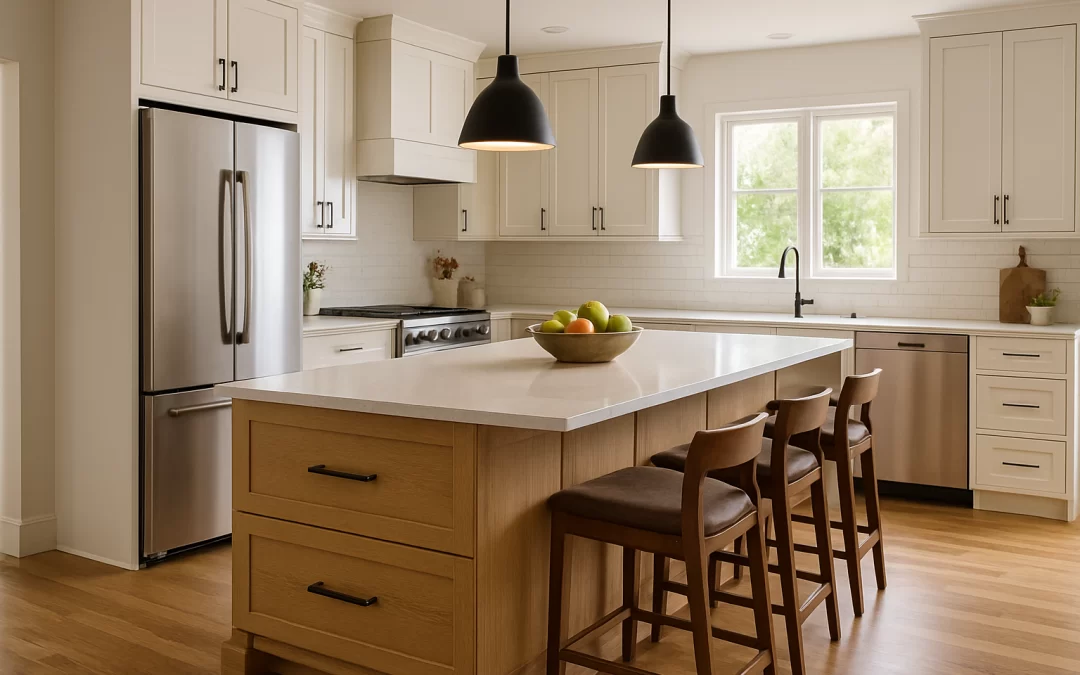
Kitchen island remodels can cost anywhere from $1,500 for a simple upgrade to $15,000+ for a custom, fully wired island, but smart choices on layout and features can cut that by 20–40%. The biggest savings come from keeping plumbing and electrical in place, choosing stock cabinets, and skipping rarely used extras. A well-planned island can improve storage, seating, and resale value, sometimes adding 5–15% of your kitchen’s value. The tradeoff is that squeezing in an island where space is tight can hurt function and lower your return on investment.
This guide is for homeowners and renters planning a kitchen island remodel on a budget, whether you’re adding a new island or upgrading an existing one. Kitchen islands can get expensive quickly because they touch cabinets, countertops, flooring, electrical, and sometimes plumbing. By understanding where the money really goes and which features are worth it, you can get the island you need without overspending.
Table of Contents
- Causes of High Kitchen Island Remodel Costs
- Common Overspending Behaviors
- What to Check First Before You Remodel
- Immediate Savings: Budget-Friendly Island Updates
- Long-Term Savings and Smart Upgrades
- When Spending More Actually Saves Money
- Common Costly Kitchen Island Mistakes
- When to Hire a Professional vs DIY
- Cost & Savings: Numbers, Payback, and What’s Worth It
- Decision Guide: Do Now vs Later, DIY vs Pro
- Frequently Asked Questions
- Summary & Next Steps
Causes of High Kitchen Island Remodel Costs
Kitchen islands get expensive because they combine several trades and materials in a small footprint. Even a modest island can involve cabinetry, countertops, electrical, flooring, and sometimes plumbing and ventilation.
Main cost drivers include:
- Moving plumbing or gas lines: Adding a sink, dishwasher, or cooktop to an island can add $1,000–$4,000+ in plumbing and gas work alone.
- Upgrading electrical: Code usually requires outlets on islands; adding circuits, wiring, and GFCI outlets can run $300–$1,200.
- Countertop material: Large slabs of quartz, granite, or waterfall edges can add $1,000–$4,000 depending on size and material.
- Custom cabinetry: Non-standard sizes, curved islands, or built-in appliances push cabinet costs up to $2,000–$6,000+.
- Structural changes: If you’re opening walls or changing layout to fit an island, framing and permits can add thousands.
In many kitchens, the island becomes the most expensive single piece of the remodel. Understanding these drivers helps you decide where to simplify and where to invest.
Common Overspending Behaviors
Most people overspend on kitchen islands not because of one big decision, but a series of small “nice to have” upgrades that add up. Avoiding these habits can easily save $2,000–$5,000.
Common overspending behaviors include:
- Insisting on a sink or cooktop in the island when the existing wall layout works fine. This triggers plumbing, electrical, and ventilation costs.
- Choosing high-end stone with complex edges for a large island when a mid-range quartz or butcher block would look great and cost far less.
- Overbuilding storage with expensive pull-outs and custom organizers instead of using a mix of drawers and a few affordable inserts.
- Oversizing the island so it dominates the room, requiring more countertop, more cabinets, and sometimes new flooring.
- Changing the plan mid-project, which leads to rework, rush orders, and extra labor charges.
Being realistic about how you cook and entertain helps you skip features you will rarely use and focus your budget on daily value.
What to Check First Before You Remodel
Before you design or price a new kitchen island, check a few basics. This can prevent expensive surprises and help you set a realistic budget.
1. Measure Your Space and Clearances
Islands need enough room around them to move, cook, and open appliances safely. As a rule of thumb:
- Minimum walkway around the island: 36 inches (3 feet).
- More comfortable clearance in busy areas: 42–48 inches.
- Island width for seating on one side: usually 36–42 inches.
If your kitchen is small, consider a narrow island, peninsula, or movable cart instead of forcing a full-size island that makes the room feel cramped.
2. Check Existing Plumbing and Electrical
Look at where your sink, dishwasher, and stove are now. If they’re all on one wall and you’re planning to move them to the island, expect a big jump in cost. Also check:
- Your electrical panel capacity (do you have room for more circuits?).
- Where outlets currently are and how hard it will be to run new lines.
- Whether your flooring can be patched if you move or add an island.
3. Clarify Your Main Goal
Decide what matters most:
- More prep space for cooking.
- More storage for pots, pans, or pantry items.
- More seating for family or guests.
- Better resale value and appearance.
Your top goal should drive your layout and features. This keeps you from paying for extras that don’t support your main reason for remodeling.
Immediate Savings: Budget-Friendly Island Updates
If your existing island is basically in the right spot and size, you can often refresh it for a fraction of the cost of a full rebuild. These updates can run $200–$3,000 and dramatically improve function and appearance.
Low-Cost Cosmetic Upgrades
- Paint or refinish the island base (about $150–$600 DIY or $400–$1,200 pro). This can make an old island look custom and modern.
- Swap hardware (handles and knobs) for $50–$200 to match the rest of the kitchen.
- Add decorative panels or trim to the back and sides for $100–$400 in materials.
- Update lighting above the island with new pendants for $150–$800 installed.
These changes don’t usually increase monthly savings, but they can boost perceived value and help your kitchen compete better if you sell.
Function-First Quick Fixes
- Add drawer organizers and pull-out bins for $50–$300 to make existing storage more efficient.
- Install a simple overhang with stools if structure allows, adding seating for $200–$800.
- Use a butcher block top over existing cabinets instead of stone to add prep space for $300–$900.
These upgrades can improve daily use immediately, without touching plumbing or electrical, which is where costs spike.
Long-Term Savings and Smart Upgrades
Some kitchen island features can reduce energy use, cut food waste, or improve resale value. These are usually more expensive upfront but can pay off over time.
Energy and Utility Savings
- Induction cooktop in the island: Costs $1,500–$4,000 installed, but uses less energy than many electric or gas ranges and keeps the kitchen cooler. Potential savings: $5–$15 per month on energy, with a payback of 8–15 years mainly justified by comfort and safety, not pure dollars.
- LED task lighting under the island counter: $150–$400 installed. Uses very little power and can replace brighter overhead lights when prepping food, saving a few dollars per month.
Storage That Reduces Waste
- Deep drawers for pots and pantry items: $300–$800 per cabinet section. Easier access means less food lost in the back of cabinets and fewer duplicate purchases.
- Pull-out trash and recycling: $200–$600. Keeps waste organized and can make composting easier, which may reduce trash bag use and fees in some areas.
While these don’t always show up as big monthly savings, they improve efficiency and can support better habits that save money over time.
Resale Value and ROI
A well-designed island can increase your kitchen’s appeal and your home’s resale value. In many markets, a functional island can add several thousand dollars to perceived value. For a deeper look at how kitchen upgrades affect resale, see the guide on kitchen remodel ROI and value-adding upgrades.
When Spending More Actually Saves Money
Some higher upfront costs can prevent expensive problems later or make your island last longer, which lowers your cost per year of use.
1. Durable Countertops
Spending an extra $500–$1,500 on a durable, low-maintenance countertop (like mid-range quartz) can be cheaper than replacing a cheaper surface in 5–7 years. Benefits include:
- Less staining and damage from daily use.
- No sealing required (unlike many natural stones).
- Better resale appeal.
Over 10–15 years, this can save $100–$300 per year compared to replacing a cheaper, easily damaged top.
2. Quality Drawers and Hardware
Soft-close, full-extension drawer slides and solid hinges cost more upfront (maybe $200–$600 extra for an island), but they:
- Last longer and reduce the chance of needing repairs or replacements.
- Handle heavy pots and pans without sagging.
- Improve daily use, which matters if you cook often.
3. Proper Electrical and Ventilation
Cutting corners on electrical or ventilation around an island cooktop can lead to safety issues, smoke damage, or code problems when you sell. Spending $500–$2,000 more to do it right can avoid:
- Rewiring later to meet code.
- Moisture and grease buildup that damages cabinets and ceilings.
- Failed inspections during a home sale.
Common Costly Kitchen Island Mistakes
Avoiding a few common mistakes can save thousands and prevent a remodel you regret.
1. Island That’s Too Big or Poorly Placed
Oversized islands can block traffic, make appliance doors clash, and require more expensive materials. Costs include:
- Extra countertop and cabinets ($1,000–$3,000+).
- Potential need to move lights, vents, or flooring.
- Reduced buyer appeal if the kitchen feels cramped.
2. Adding Plumbing Without Considering Structure
Running water and drain lines to an island in a slab foundation or multi-story home can be complex. Mistakes here can lead to:
- Costly slab cuts and repairs.
- Leaks under flooring.
- Code violations if venting and slope aren’t correct.
Plumbing to an island can easily add $2,000–$5,000 if conditions are difficult. In many cases, keeping the sink on a wall is the smarter financial choice.
3. Ignoring Seating Comfort
Bar seating that’s too high, too low, or too cramped often goes unused. Common issues:
- Not enough knee space under the overhang (you generally need 12–15 inches).
- Stools crammed too close together (plan 24 inches per seat).
- Choosing a two-level island that dates quickly and can be harder to use.
Fixing these later can mean replacing countertops or even rebuilding the island.
4. Not Planning for Outlets
Code usually requires outlets on islands, and they’re very useful for small appliances. Forgetting them can mean:
- Expensive retrofits after countertops are installed.
- Visible cords running across walkways.
For more pitfalls to avoid across your whole kitchen, see the guide on kitchen remodel mistakes that increase costs.
When to Hire a Professional vs DIY
DIY can save thousands on a kitchen island remodel, but only if you stay within your skill level and local code requirements.
Good DIY Candidates
- Painting or refacing the island base.
- Installing new hardware and simple trim.
- Assembling and installing stock cabinets (if you’re handy and have basic tools).
- Installing a butcher block top (with help for lifting).
Hire a Professional For
- Plumbing and gas lines: Mistakes can cause leaks, water damage, or safety hazards.
- Electrical work: New circuits, outlets, and code compliance are best handled by a licensed electrician.
- Stone countertop fabrication and installation: Heavy, fragile, and expensive to fix if broken.
- Structural changes: Moving walls, beams, or major layout changes.
As a rough guide, DIY on a simple island can save $1,000–$4,000 in labor. But if you make errors that require a pro to fix, you can erase those savings quickly.
Cost & Savings: Numbers, Payback, and What’s Worth It
Kitchen island remodel costs vary widely based on size, materials, and whether you move utilities. Here’s a general breakdown and how it ties to savings and value.
Typical Cost Ranges
- Cosmetic refresh only (paint, hardware, minor trim): $200–$1,500.
- New basic island (stock cabinets, simple top, no plumbing): $1,500–$5,000.
- Mid-range island (better cabinets, quartz top, outlets, seating): $4,000–$10,000.
- High-end/custom island (custom cabinets, stone, sink/cooktop, complex utilities): $8,000–$20,000+.
For context on how this fits into a full kitchen remodel, see the kitchen remodel cost guide by budget level.
Monthly Savings Estimates
Kitchen islands don’t usually create large direct monthly savings, but they can contribute in smaller ways:
- Energy-efficient lighting and appliances in the island: $5–$20 per month in lower utility bills.
- Better storage and prep space: Harder to measure, but can reduce food waste and eating out, potentially saving $20–$100+ per month depending on habits.
Most of the financial benefit comes from improved home value and daily function rather than big utility bill drops.
Payback Period
Think of payback in two ways: utility savings and resale value.
- Utility savings payback: For energy-efficient lighting or an induction cooktop, expect 5–15 years to “pay back” the extra cost through lower bills.
- Resale payback: A well-designed island can return 50–80% of its cost at resale in many markets, sometimes more in high-demand areas. If you spend $8,000 on an island, you might see $4,000–$6,000 reflected in higher sale price or faster sale.
When Savings Are Small vs Significant
Smaller savings, mostly about comfort and style:
- Upgrading from mid-range to luxury stone.
- Adding decorative panels and complex trim.
- Choosing specialty seating or unusual shapes.
More significant financial impact:
- Improving layout so the kitchen functions better (less wasted space, easier cooking).
- Adding comfortable seating that truly replaces the need for a separate table.
- Using durable, low-maintenance materials that avoid early replacement.
When It’s Not Worth the Cost
Some upgrades rarely pay off financially:
- Adding a second sink in a small kitchen where it’s rarely used.
- Installing a cooktop in the island if it forces expensive ventilation and you already have a working range.
- Custom curved or highly unusual island shapes that limit future buyers’ options.
If an upgrade doesn’t clearly improve your daily life or your home’s resale appeal, it’s usually not worth a big price tag.
Decision Guide: Do Now vs Later, DIY vs Pro
Use this section to decide how and when to tackle your kitchen island remodel.
Do Now vs Later
- Do now if your current island blocks traffic, is unsafe, or makes cooking difficult.
- Do now if you’re already remodeling the rest of the kitchen and can bundle labor and materials.
- Wait if your budget is tight and the island is mostly a style upgrade, not a function fix.
- Wait if you plan to change the kitchen layout in a few years; avoid paying twice.
Quick Fix vs Investment
- Choose a quick fix (paint, hardware, lighting) if you plan to move within 2–3 years or your budget is under $1,500.
- Choose a larger investment (new island, utilities, high-quality materials) if you’ll stay 5+ years and cook often.
DIY vs Professional
- DIY if the work is cosmetic, you’re comfortable with tools, and local codes allow it.
- Professional if you’re moving plumbing, gas, or electrical, or if permits are required.
Cheap Fix vs Upgrade
- Go with a cheap fix if the island is structurally sound and your main issue is looks.
- Invest in a full upgrade if the island is the wrong size, in the wrong place, or has serious wear or damage.
Frequently Asked Questions
How much does it cost to remodel just the kitchen island?
Remodeling only the island typically ranges from $1,500–$10,000, depending on size, materials, and whether you move plumbing or electrical. A simple cosmetic refresh can be under $1,000, while a custom island with a sink or cooktop can exceed $15,000. You can often save 20–40% by keeping utilities in place and using stock cabinets.
Is adding a kitchen island worth it financially?
In many homes, a well-designed island is worth the cost because it improves function and boosts resale appeal. You may not “make money” directly, but you can often recover 50–80% of the cost at resale and enjoy better daily use in the meantime. It’s most worth it when the island adds real prep space, storage, and comfortable seating.
Can I add a kitchen island to a small kitchen?
Yes, but only if you maintain at least 36 inches of clearance around the island (more in busy areas). In very small kitchens, a narrow island, peninsula, or movable cart may be a better choice. For more ideas, see the guide on small kitchen remodel ideas and smart layouts.
What’s the cheapest way to update my kitchen island?
The cheapest updates are painting the base, changing hardware, and adding new lighting or trim. These can cost as little as a few hundred dollars and dramatically change the look. Reusing the existing structure and avoiding changes to plumbing and electrical keeps costs down.
Should I put a sink or cooktop in my island?
Only if it clearly improves how you cook and your budget can handle the extra cost. Adding a sink or cooktop usually adds $2,000–$5,000+ for plumbing, electrical, and ventilation. In many kitchens, keeping these on a wall and using the island for prep, storage, and seating is the better financial choice.
How do I know if my island layout is good?
A good island layout allows at least 36–42 inches of clearance, doesn’t block appliance doors, and supports your main kitchen tasks. Tape out the island footprint on the floor and “test” walking around it and opening doors before you commit. If it feels tight or awkward, adjust size or placement before spending money on materials.
Summary & Next Steps
A kitchen island remodel can cost anywhere from a few hundred dollars for cosmetic upgrades to tens of thousands for a custom, fully equipped island. The biggest financial wins come from keeping plumbing and electrical where they are, choosing durable mid-range materials, and sizing the island correctly for your space. Done well, an island can improve daily life and add meaningful resale value.
Next steps:
- Measure your kitchen and sketch a simple island layout with clearances.
- Decide your top priority: prep space, storage, seating, or resale value.
- Get 2–3 quotes if you’re moving plumbing or electrical, and compare options for stock vs custom cabinets and countertops.
- Start with the lowest-cost improvements (paint, hardware, lighting) if you’re unsure about a full remodel.
By planning carefully and focusing on features you’ll use every day, you can get a kitchen island that fits your budget and pays you back in comfort, function, and long-term value.