
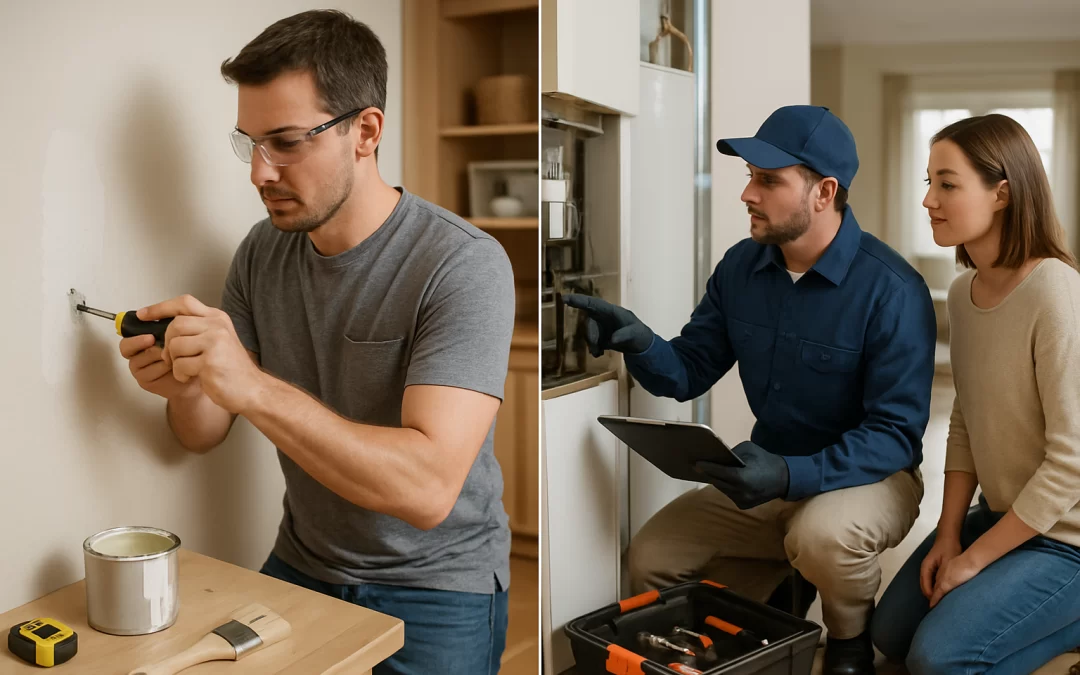
DIY vs. hiring a professional for home repairs comes down to cost, risk, and your skill level. Doing repairs yourself can save 30–70% compared to labor rates of $50–$150 per hour, especially for simple tasks like painting, caulking, or replacing fixtures. However, mistakes on electrical, plumbing, or structural work can turn a $200 repair into a $2,000 problem. The best option is usually a mix: DIY low‑risk jobs, hire pros for safety‑critical or complex work.
For most homeowners and renters, the real question is not “Can I do this?” but “Should I do this, and will it actually save money?” Home repair costs add up quickly, especially when emergencies or repeat fixes are involved. By choosing carefully between DIY and professional help, you can avoid overspending, reduce surprise bills, and protect your home’s value.
Table of Contents
- Causes of High Home Repair Costs
- Common Overspending Behaviors
- What to Check First Before Choosing DIY or Pro
- Immediate Savings: Simple DIY Wins
- Long-Term Savings and Smart Upgrades
- When Spending More Now Saves Money Later
- Common Costly DIY and Hiring Mistakes
- When to Hire a Professional Instead of DIY
- Cost & Savings: What You Can Realistically Expect
- Decision Guide: DIY vs Professional, Now vs Later
- Frequently Asked Questions
- Summary and Next Steps
Causes of High Home Repair Costs
Home repair bills are often high not just because of materials, but because of labor, urgency, and hidden damage. Understanding these cost drivers helps you decide when DIY is worth it and when a professional is the better financial choice.
1. Labor rates and minimum service fees
- Many contractors and handymen charge $50–$150 per hour, often with a 1–2 hour minimum.
- A 20-minute repair can still cost $150–$250 once trip fees and minimums are added.
- DIY can eliminate these minimum charges for simple, low-risk tasks.
2. Emergency and after-hours premiums
- Emergency calls (nights, weekends, holidays) can cost 1.5–3x normal rates.
- For example, emergency plumbing repairs can quickly reach several hundred dollars for a short visit.
- Basic prevention and simple DIY steps (like shutting off water) can avoid or reduce these premiums.
3. Hidden or delayed damage
- Small issues (drips, hairline cracks, minor leaks) often become expensive when ignored.
- What starts as a $20 DIY caulking job can turn into a $1,000+ mold or water damage repair.
- Timely DIY maintenance is one of the easiest ways to avoid large professional repair bills.
4. Rework and “fixing the fix”
- Incorrect DIY repairs can cause more damage, forcing you to pay a pro to redo the job.
- This can double or triple the total cost compared to hiring a professional once.
- High-risk systems (electrical, structural, gas, major plumbing) are especially expensive to fix after a failed DIY attempt.
Common Overspending Behaviors
Many homeowners overspend not because they choose DIY or professional help, but because of how and when they make that choice.
1. Calling a pro for every small task
- Paying $150–$250 for simple jobs like replacing a faucet aerator, tightening a loose toilet seat, or patching a nail hole adds up quickly.
- Learning a few basic skills can save $50–$200 per month in small service calls.
2. Overestimating DIY skills
- Taking on complex projects (like full bathroom remodels or major electrical work) without experience often leads to costly mistakes.
- Materials wasted, code violations, and damage can easily add $500–$3,000 to a project.
3. Buying tools you rarely use
- Spending $300–$800 on specialty tools for a one-time project can erase any labor savings.
- Renting tools or choosing a professional who already owns them is often cheaper overall.
4. Ignoring maintenance until it becomes an emergency
- Skipping simple maintenance (like cleaning gutters, sealing around tubs, or checking for leaks) often leads to emergency calls.
- Preventive DIY tasks can reduce the need for high-cost emergency services.
What to Check First Before Choosing DIY or Pro
Before you decide to DIY or hire a professional, run through a quick checklist. This helps you avoid safety risks, code issues, and wasted money.
1. Safety and legal requirements
- Ask: Does this involve electrical panels, gas lines, structural changes, or major plumbing?
- Many areas require permits or licensed professionals for certain work (especially electrical and structural).
- If a mistake could cause fire, flooding, or collapse, it is usually safer and cheaper long term to hire a pro.
2. Your skill level and comfort
- Have you done something similar before, successfully?
- Can you follow clear instructions from a reputable source and recognize when something is going wrong?
- If you feel unsure about basic steps or tools, start with smaller projects first.
3. Time vs. money
- Estimate how long the job will take you vs. a professional.
- If a pro can finish in 2 hours and it will take you 2 full weekends, consider the value of your time.
- For urgent issues (like active leaks), speed often matters more than saving every dollar.
4. Total project cost, not just parts
- Include: materials, tools, permits, disposal fees, and potential rework.
- Sometimes a “cheap” DIY job becomes expensive when you add tools and wasted materials.
- Compare this to a written estimate from a professional.
Immediate Savings: Simple DIY Wins
Some home repairs are ideal for beginners and can deliver fast, low-risk savings. These are good starting points if you want to reduce repair bills without taking on major risk.
1. Painting and cosmetic fixes
- Interior painting, touch-ups, and small drywall patches are often safe DIY projects.
- Hiring painters can cost hundreds to thousands of dollars depending on room size and prep work.
- Doing it yourself can save 40–70% of the total cost, especially if you already own basic tools like rollers and brushes.
2. Basic plumbing maintenance
- Tasks like unclogging simple drains, replacing showerheads, or fixing a running toilet are usually manageable with simple tools.
- Parts often cost $10–$40, while a service call can be $150–$300.
- Learning these basics can save $20–$100 per month on average, depending on how often issues arise.
3. Weatherstripping and draft sealing
- Adding or replacing weatherstripping around doors and windows is low risk and inexpensive.
- Materials typically cost $20–$80 for a small home.
- This can reduce heating and cooling bills by $10–$30 per month, with a payback period of 1–6 months.
4. Simple electrical tasks (with caution)
- Replacing light bulbs, installing plug-in smart devices, and swapping outlet covers are safe for most people.
- Anything involving wiring, panels, or new circuits should usually be left to a licensed electrician.
Long-Term Savings and Smart Upgrades
Some repairs and upgrades cost more upfront but reduce future bills and emergency calls. Here, the DIY vs professional choice affects both safety and long-term savings.
1. Energy-efficient upgrades
- Upgrading to energy-efficient exterior doors, better insulation, or LED lighting can cut utility bills.
- Some tasks (like installing weatherstripping or LED bulbs) are DIY-friendly; others (like door replacement) may need a pro for proper sealing and security.
- Monthly savings can range from $10–$50, with payback periods from 1–5 years depending on the project.
2. Preventive plumbing and water protection
- Installing leak detectors, checking for slow drips, and addressing hard water issues early can prevent major damage.
- DIY monitoring and simple fixes are usually worth it; more complex water treatment or major pipe work is better handled by a professional.
- Preventing one major leak can avoid $1,000–$10,000 in damage and insurance hassles.
3. Exterior maintenance
- Cleaning gutters, checking caulk around windows, and inspecting exterior paint or siding can often be done yourself with basic safety precautions.
- These tasks help avoid water intrusion, rot, and pest issues that require expensive professional repairs.
- Plan for seasonal DIY checks to reduce surprise costs.
When Spending More Now Saves Money Later
Sometimes the cheapest option today is the most expensive over time. In these cases, hiring a professional or choosing a higher-quality solution can be the smarter financial move.
1. Structural, electrical, and major plumbing work
- Incorrect work in these areas can lead to fires, floods, or serious structural damage.
- Insurance claims may be denied if unpermitted or unsafe DIY work is found.
- Paying a licensed professional now can prevent tens of thousands of dollars in future damage.
2. Work that affects home value or inspections
- Visible poor-quality work (crooked tile, uneven flooring, sloppy exterior paint) can reduce your home’s resale value.
- Home inspectors often flag DIY work that does not meet code, leading to repair credits or required fixes during a sale.
- For high-visibility projects, a professional finish may pay off when you sell.
3. Projects with expensive materials
- When materials are costly (stone countertops, hardwood flooring, custom doors), mistakes are expensive.
- Wasting even 10–20% of materials due to errors can cost more than hiring a professional installer.
Common Costly DIY and Hiring Mistakes
Avoiding a few common mistakes can save hundreds or thousands of dollars over time, regardless of whether you DIY or hire out.
DIY mistakes that cost more later
- Skipping prep work: Not cleaning, sanding, or priming surfaces before painting or sealing leads to peeling and early failure.
- Using the wrong materials: Indoor caulk outdoors, non-waterproof materials in wet areas, or incompatible parts can fail quickly.
- Ignoring instructions: Not following cure times, torque specs, or safety steps can cause leaks, cracks, or equipment damage.
- Working without permits: Unpermitted work may need to be redone to pass inspection, doubling costs.
Hiring mistakes that waste money
- No written estimate: Verbal quotes can change; always get scope, materials, and price in writing.
- Choosing only by lowest price: Very low bids can mean shortcuts, poor materials, or lack of insurance.
- Not checking references or reviews: A little research can prevent hiring someone who does low-quality work.
- Paying too much upfront: Large deposits before work starts increase your risk if the job is delayed or abandoned.
When to Hire a Professional Instead of DIY
Some situations are clear signs that hiring a professional is the safer and more cost-effective choice, even if it feels more expensive at first.
Hire a professional when:
- The work involves your electrical panel, main plumbing lines, gas lines, or structural elements.
- A permit or inspection is required by your city or homeowners association.
- The repair is on a system that could cause major damage if it fails (roof, foundation, main water line).
- You do not understand the steps even after reading or watching reputable guides.
- You do not have the right tools and renting or buying them would be costly.
Consider a handyman for small multi-skill jobs
- For a list of small tasks (fixing doors, patching drywall, minor carpentry), a handyman can be more affordable than multiple specialists.
- Bundling several small jobs into one visit can reduce total labor costs and trip fees.
Cost & Savings: What You Can Realistically Expect
Here is how the numbers often work out when comparing DIY vs hiring a professional for common home repairs.
Typical cost ranges
- Professional labor: $50–$150 per hour, often with a 1–2 hour minimum.
- Basic DIY tools starter set: $75–$200 (hammer, screwdrivers, drill, level, tape measure, utility knife, pliers).
- Specialty tools (rented): $20–$80 per day for items like tile saws, paint sprayers, or floor sanders.
Monthly savings estimates
- If you DIY 1–2 small repairs per month (like minor plumbing, patching, or hardware replacement), you can often avoid $100–$300 in service calls.
- Energy-saving DIY tasks (weatherstripping, LED bulbs, basic sealing) can reduce utility bills by $10–$30 per month.
- Combined, many homeowners can realistically save $50–$200 per month by choosing DIY for appropriate tasks.
Upfront costs and payback period
- Basic tool kit investment: $150 in tools may pay for itself after avoiding just one or two professional visits.
- Weatherstripping and sealing: $50 in materials can pay back in 2–6 months through lower energy bills.
- Learning curve: Expect to spend extra time on your first few projects; the “payback” improves as you gain experience.
When savings are small
- If a repair is rare, complex, and requires expensive tools, DIY savings may be small or negative.
- For example, a one-time complex tile job may cost nearly as much in tools and wasted materials as hiring a pro.
- In these cases, paying a professional is often the better financial decision.
When it is not worth the cost
- Do not invest heavily in tools for a project you are unlikely to repeat.
- Avoid DIY if the risk of major damage (flooding, fire, structural failure) outweighs the potential savings.
- If you are planning to sell soon, low-quality DIY work that buyers notice can reduce offers more than you saved.
Decision Guide: DIY vs Professional, Now vs Later
Use this simple framework to decide how to handle each repair or project.
Step 1: Do it now vs later
- Do it now if it involves water leaks, electrical safety, roof damage, or anything that is actively getting worse.
- Schedule it soon if it affects comfort or efficiency (drafts, minor plumbing issues, sticking doors).
- Plan for later if it is purely cosmetic and not causing damage.
Step 2: Quick fix vs long-term solution
- Quick fix is fine for temporary safety or to stop immediate damage (like shutting off water, temporary patching).
- Long-term solution is better when you own the home and plan to stay, or when the issue keeps coming back.
- Balance: a quick DIY fix now plus a planned professional repair later can spread out costs.
Step 3: DIY vs professional
- Choose DIY when:
- The task is low risk (cosmetic, simple mechanical, basic maintenance).
- You can follow clear instructions and have or can afford basic tools.
- A mistake would be annoying, not dangerous or extremely expensive.
- Choose professional when:
- Safety, permits, or major systems are involved.
- The repair is urgent and you cannot complete it quickly yourself.
- The project affects home value or requires a high-quality finish.
Step 4: Cheap fix vs upgrade
- Use a cheap fix when:
- You need a short-term solution (for example, before a planned renovation).
- You are renting and cannot make major changes.
- Choose an upgrade when:
- It will reduce future repair costs or energy bills.
- You plan to stay in the home long enough to benefit from the savings.
Frequently Asked Questions
How much can I really save by doing my own home repairs?
For simple, low-risk tasks, you can often save 30–70% compared to hiring a professional, mainly by avoiding labor and trip fees. Many homeowners who handle basic DIY repairs and maintenance save $50–$200 per month over time. The key is choosing projects that match your skill level so you do not create expensive problems to fix later.
Which home repairs should I never DIY?
Avoid DIY on electrical panels, major wiring changes, gas lines, structural work, and main plumbing lines. Mistakes in these areas can cause fires, flooding, or serious safety hazards and may violate local codes. In these cases, hiring a licensed professional is usually the safest and most cost-effective option.
Is it worth buying tools for DIY home repairs?
A basic tool kit is usually worth the cost if you plan to handle small repairs and maintenance regularly. A $150 starter set can pay for itself after avoiding one or two professional service calls. For specialty tools you will use only once, renting or hiring a professional is often cheaper.
How do I know if a contractor’s price is fair?
Get at least two to three written estimates that clearly list labor, materials, and scope of work. Extremely low bids can be a red flag for poor quality or hidden costs, while very high bids may not offer extra value. Checking reviews, references, and what is included in the price helps you choose a fair and reliable option.
What if I start a DIY project and get stuck?
If you feel unsafe, confused, or notice new problems, stop and reassess before continuing. Take photos, document what you have done, and contact a professional with that information so they can finish or correct the work efficiently. It is better to pause early than to push ahead and cause more damage.
Summary and Next Steps
Choosing between DIY and hiring a professional for home repairs is about balancing cost, safety, and long-term value. DIY is best for low-risk, repeatable tasks where you can build skills and avoid frequent service calls, while professionals are essential for complex, safety-critical, or high-impact projects. Over a year, thoughtful decisions can save hundreds to thousands of dollars and reduce surprise repair bills.
Your next steps:
- Make a simple list of current home issues and sort them into “DIY now,” “hire a pro,” and “plan for later.”
- Invest in a basic tool kit if you do not already have one and start with small, low-risk projects.
- For larger or complex work, get written estimates from qualified professionals and compare total costs, not just hourly rates.
By combining smart DIY with strategic use of professionals, you can keep your home in good shape, avoid major emergencies, and make better financial decisions about every repair.