
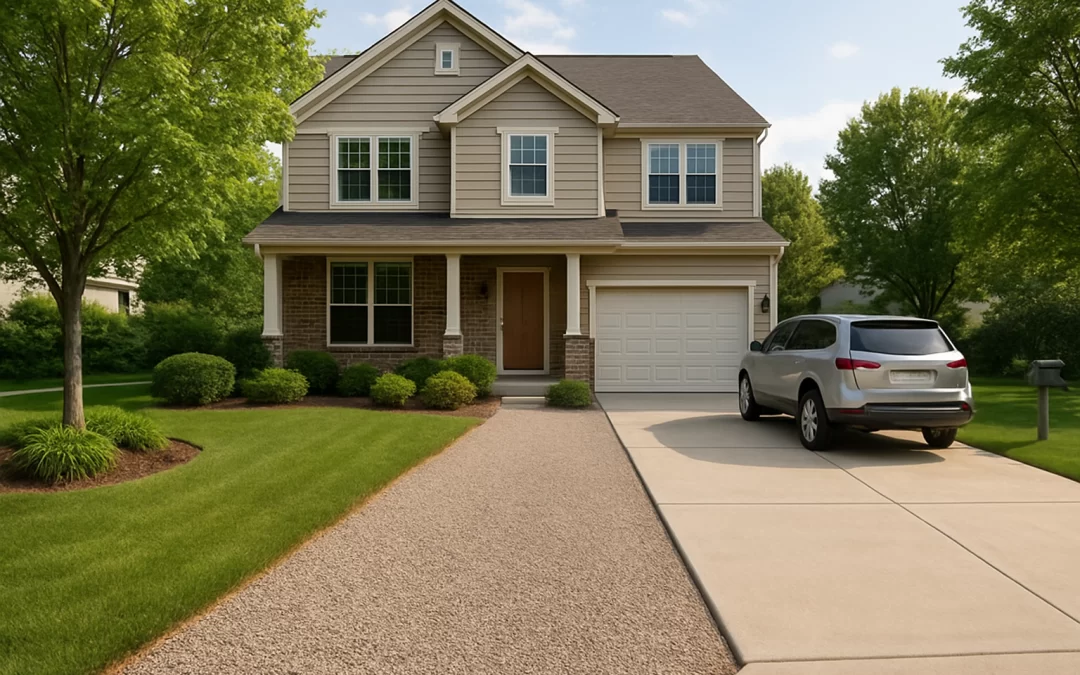
Gravel vs. concrete driveway: which really saves you more? For most budget-focused homeowners, a gravel driveway costs far less upfront—often $3,000–$8,000 less than concrete for an average-size drive—but it can mean more frequent maintenance and dust. Concrete costs more to install but usually lasts longer with less routine work, which can save money over 20–30 years. The tradeoff: gravel wins on initial price and easy DIY repairs, while concrete wins on long-term durability and cleaner appearance.
This guide is for homeowners comparing gravel vs. concrete driveway costs, maintenance, and lifespan before committing thousands of dollars. Driveways are easy to overlook, but choosing the wrong material or contractor can add thousands in avoidable repairs, early replacement, and ongoing upkeep. By understanding real costs—not just the installation quote—you can pick the option that fits your budget, climate, and how long you plan to stay in your home.
Table of Contents
- Main Causes of High Driveway Costs
- Common Ways Homeowners Overspend on Driveways
- What to Check First Before Choosing Gravel or Concrete
- Immediate Ways to Save on a New or Replacement Driveway
- Long-Term Savings: Maintenance and Upgrades
- When Spending More Upfront Actually Saves Money
- Common Costly Mistakes with Gravel and Concrete Driveways
- When to Hire a Professional vs. DIY
- Costs, Savings, and Payback Periods
- Decision Guide: Gravel vs. Concrete for Your Situation
- Frequently Asked Questions
- Summary and Next Steps
Main Causes of High Driveway Costs
The biggest cost differences between gravel and concrete driveways come from materials, labor, and site conditions. Understanding these helps you see where you can save and where you should not cut corners.
Material and Installation Costs
- Gravel driveway cost: Typically $1–$4 per square foot installed, depending on depth, gravel type, and local prices.
- Concrete driveway cost: Typically $5–$15 per square foot installed, depending on thickness, reinforcement, and finish.
For a 600-square-foot driveway (about 20′ x 30′):
- Gravel: Around $600–$2,400
- Concrete: Around $3,000–$9,000
This means concrete can cost 3–5 times more upfront than gravel for the same size area.
Site Preparation and Base Work
Whether you choose gravel or concrete, the base under your driveway is critical. Poor base work is one of the main reasons driveways fail early and need expensive repairs.
- Excavation and grading: Removing topsoil, leveling, and creating proper slope for drainage.
- Base material: Crushed stone or gravel compacted in layers to support weight and prevent sinking.
- Drainage solutions: French drains, ditches, or swales if your property holds water.
Base work can add $1–$5 per square foot to either type of driveway. Skimping here can lead to cracks, potholes, and rutting that cost far more to fix later.
Climate and Soil Conditions
Your local climate and soil type can quietly drive up costs over time:
- Freeze-thaw climates: Concrete is at higher risk of cracking if not installed correctly; gravel may shift and rut more often.
- Clay or soft soils: Both gravel and concrete need a thicker, well-compacted base to avoid sinking and heaving.
- Heavy rainfall: Poor drainage can wash out gravel or cause concrete slabs to settle unevenly.
In challenging conditions, you may spend more upfront on base and drainage, but this often prevents thousands in repairs later.
Common Ways Homeowners Overspend on Driveways
Many homeowners pay more than necessary for both gravel and concrete driveways because of a few predictable behaviors.
Choosing Appearance Over Function
- Paying for decorative concrete finishes (stamping, coloring) when a basic broom finish would perform just as well.
- Ordering premium decorative gravel when standard crushed stone would be more stable and cheaper.
Decorative upgrades can add 20–50% to your concrete cost and 10–30% to gravel cost without improving lifespan.
Overbuilding for Light Use
- Installing extra-thick concrete designed for heavy trucks when you only park cars and SUVs.
- Adding more gravel depth than needed for a short, lightly used driveway.
For typical residential use, a 4-inch concrete slab with proper base is often enough; going to 6 inches can add $1–$3 per square foot with limited benefit for many households.
Not Getting Multiple Quotes
Driveway quotes can vary widely, especially for concrete. Many homeowners:
- Accept the first quote without comparing.
- Don’t ask for a breakdown of materials, labor, and base work.
Getting 3 quotes and asking detailed questions can easily save $500–$3,000 on a typical driveway project.
Ignoring Maintenance Until Damage Is Severe
Small issues that are cheap to fix become expensive when ignored:
- Not regrading or adding gravel when ruts first appear.
- Skipping concrete sealing and crack repair, leading to larger cracks and slab movement.
Spending $50–$200 per year on basic maintenance can prevent $1,000–$5,000 in major repairs or early replacement.
What to Check First Before Choosing Gravel or Concrete
Before you decide on gravel vs. concrete, check a few key factors that strongly affect cost and performance.
1. How Long You Plan to Stay in the Home
- Short-term (0–5 years): Gravel often makes more financial sense because of the low upfront cost.
- Long-term (10–30 years): Concrete may be cheaper over time due to lower routine maintenance and longer lifespan.
2. Local Climate and Weather
- Snow and ice: Concrete is easier to shovel and plow; gravel can get pushed around and lost.
- Heavy rain: Gravel can wash out without good drainage; concrete can crack if water undermines the base.
- Hot climates: Dark gravel can get very hot; concrete reflects more heat but can still crack if poorly installed.
3. Slope and Drainage
Look at how water currently flows on your property:
- Steep slopes can cause gravel to migrate downhill and may require edging or stabilizing grids.
- Flat, poorly drained areas may need extra base and drainage for either material.
Fixing drainage during installation is usually cheaper than repairing water damage later.
4. Local Rules and Neighborhood Expectations
- Check HOA rules or local codes—some areas don’t allow gravel driveways or require certain finishes.
- Consider resale value: in some markets, buyers expect a concrete driveway and may discount homes with gravel.
Immediate Ways to Save on a New or Replacement Driveway
You can reduce the cost of either type of driveway without sacrificing safety or durability.
Right-Size Your Driveway
- Limit width to what you truly need (for example, 10–12 feet for a single-car drive instead of 14–16 feet).
- Shorten or simplify curves where possible—complex shapes cost more in both gravel and concrete.
Reducing your driveway area by even 100 square feet can save $100–$400 on gravel and $500–$1,500 on concrete.
Do Simple Prep Work Yourself
Depending on your comfort level and local rules, you may be able to:
- Remove old landscaping, small shrubs, or surface debris.
- Handle basic demolition of an old gravel drive (raking and moving stone).
Leaving excavation, grading, and concrete work to pros is usually wise, but light prep can save $200–$1,000 in labor.
Choose Standard Finishes and Materials
- Pick a basic broom-finished concrete slab instead of stamped or colored concrete.
- Use standard crushed stone or gravel that compacts well, rather than decorative rock.
These choices can cut 10–30% off your total project cost with no impact on function.
Schedule During Off-Peak Times
In some areas, contractors are busiest in late spring and early summer. If your climate allows, scheduling work in late summer or fall can sometimes lead to better pricing or more flexible scheduling. Always balance potential savings with weather risks, especially for concrete curing.
Long-Term Savings: Maintenance and Upgrades
Upfront cost is only part of the story. Long-term maintenance and lifespan are where gravel and concrete differ most.
Gravel Driveway Maintenance and Lifespan
- Typical lifespan: 10–30+ years with regular maintenance.
- Annual maintenance: $50–$300 for adding gravel, filling ruts, and grading (more for long or heavily used drives).
To save money over time:
- Regrade and fill low spots yearly to prevent water pooling and washouts.
- Add fresh gravel every 1–3 years instead of waiting until the base is exposed.
- Consider edging (timbers, pavers, or metal) to keep gravel contained.
Concrete Driveway Maintenance and Lifespan
- Typical lifespan: 20–40+ years with proper installation and care.
- Maintenance: $50–$200 every 2–5 years for sealing and minor crack repair.
To extend lifespan and avoid costly replacement:
- Seal the concrete every few years, especially in freeze-thaw climates or where de-icing salts are used.
- Fill small cracks early to keep water out of the base.
- Avoid heavy vehicles (like large moving trucks) if the slab is not designed for that weight.
Upgrades That Pay Off
Some upgrades add cost but can save money over time:
- For gravel: Installing a geotextile fabric under the base can reduce mixing with soil and slow rutting.
- For concrete: Adding proper control joints and reinforcement (rebar or wire mesh) reduces cracking and slab movement.
These upgrades may add $0.50–$2.00 per square foot but can extend lifespan by many years and reduce repair costs.
When Spending More Upfront Actually Saves Money
Sometimes the cheapest option today is the most expensive over 10–20 years. Here’s when paying more now can be the smarter financial move.
High-Traffic or Heavy-Use Driveways
- If you regularly park multiple vehicles, RVs, or work trucks, a properly designed concrete driveway often holds up better.
- Gravel can handle heavy loads but may require frequent regrading and replenishing, adding up over time.
In these cases, the extra $2,000–$5,000 for concrete may pay off by avoiding constant gravel maintenance and ruts.
Steep or Erosion-Prone Sites
- On steep slopes, gravel tends to migrate downhill, requiring frequent top-ups and repairs.
- Concrete, combined with good drainage, can be more stable and predictable over time.
Spending more on concrete and proper drainage can prevent repeated washouts that cost hundreds each year.
Long-Term Ownership and Resale Value
- If you plan to stay in your home 10+ years, the lower yearly maintenance of concrete can offset the higher upfront cost.
- In many markets, a well-installed concrete driveway improves curb appeal and can support a higher resale price.
While it’s hard to put an exact number on resale impact, buyers often see concrete as “finished” and gravel as “temporary,” which can influence offers.
Common Costly Mistakes with Gravel and Concrete Driveways
Avoiding a few common mistakes can save thousands over the life of your driveway.
Skipping Proper Base Preparation
- Gravel: Pouring gravel directly on soil leads to sinking, mud mixing, and constant ruts.
- Concrete: Pouring on poorly compacted or uneven soil leads to cracks and slab movement.
Fixing a failed base often means tearing out and rebuilding large sections—far more expensive than doing it right the first time.
Ignoring Drainage
Water is the enemy of both gravel and concrete driveways:
- Standing water softens the base, causing potholes and cracks.
- Improper slope sends water toward your home’s foundation, creating bigger problems.
Spending a few hundred dollars on drainage solutions can prevent thousands in driveway and foundation repairs.
Using the Wrong Gravel Type
- Round, smooth stones don’t lock together and move easily under tires.
- Crushed stone with angular edges compacts better and stays in place.
Choosing the wrong gravel can double your maintenance needs and costs.
Driving on Fresh Concrete Too Soon
Concrete needs time to cure and gain strength:
- Walking is usually fine after 24–48 hours.
- Parking vehicles typically requires 7–10 days or more, depending on conditions.
Driving on it too soon can cause permanent damage and early cracking that is expensive to fix.
When to Hire a Professional vs. DIY
Some driveway tasks are realistic DIY projects; others are better left to experienced contractors.
DIY-Friendly Tasks
- Minor gravel regrading and filling small ruts.
- Adding a thin layer of gravel to refresh the surface.
- Sealing a concrete driveway with a homeowner-grade sealer.
- Filling small concrete cracks with appropriate crack filler.
These tasks can save $200–$800 per year compared to hiring out simple maintenance.
When to Hire a Professional
- Installing a new concrete driveway or replacing an old one.
- Major excavation, grading, or drainage work.
- Large gravel driveway installations on challenging terrain.
- Repairing significant concrete cracking, sinking, or heaving.
For help deciding when DIY makes sense and when a pro is safer and cheaper long-term, see this guide on DIY home improvement vs professional help.
Costs, Savings, and Payback Periods
Here’s how the numbers typically work out for a 600-square-foot driveway, assuming average conditions.
Upfront Costs
- Gravel driveway: $600–$2,400 installed.
- Concrete driveway: $3,000–$9,000 installed.
Upfront difference: Concrete usually costs $2,400–$6,600 more for the same size driveway.
Ongoing Maintenance Costs (Annual Averages)
- Gravel: $50–$300 per year for regrading and adding gravel.
- Concrete: $20–$100 per year on average, factoring in sealing every few years and occasional crack repair.
Monthly Savings Estimates
Spread over time, the cost difference looks like this:
- Choosing gravel instead of concrete: Saves about $20–$55 per month over the first 10 years (from lower upfront cost), but you’ll spend a bit more on yearly maintenance.
- Choosing concrete instead of gravel: Costs more upfront, but you may save $5–$15 per month in reduced maintenance, especially on long or heavily used driveways.
Payback Period
Whether concrete “pays for itself” depends on your situation:
- Light use, short driveway, mild climate: Gravel’s low upfront cost usually wins; concrete may not fully pay back its higher cost in maintenance savings alone.
- Heavy use, long driveway, harsh climate: Concrete’s lower yearly maintenance and longer lifespan can offset the higher initial cost over 10–20 years.
In many real-world cases, concrete’s financial “payback” comes partly from reduced hassle and better resale value, not just direct maintenance savings.
When Savings Are Small vs. Significant
- Small savings: Upgrading to decorative concrete or premium gravel rarely pays back in dollars; it’s mostly about looks.
- Significant savings: Right-sizing your driveway, improving drainage, and doing basic maintenance yourself can save thousands over the life of either driveway type.
Decision Guide: Gravel vs. Concrete for Your Situation
Use this section to decide what to do now vs. later, and whether to choose gravel or concrete.
Do Now vs. Later
- Do now: Fix serious drainage issues, safety hazards (deep ruts, large cracks), and base failures.
- Do later: Cosmetic upgrades, decorative finishes, and widening beyond what you truly need.
Quick Fix vs. Long-Term Investment
- Quick fix: Add gravel to smooth ruts, patch small concrete cracks, and improve drainage with simple grading.
- Investment: Full replacement with a properly designed gravel or concrete driveway and upgraded base.
If your budget is tight and the driveway is still functional, a quick fix can buy you 1–5 years while you save for a better long-term solution.
DIY vs. Professional
- DIY: Small gravel top-ups, basic regrading with a rake or small tractor, concrete sealing, and minor crack repair.
- Professional: New installations, major structural repairs, and any work involving heavy equipment or complex drainage.
For broader guidance on choosing between DIY and hiring out, you can also review this article on DIY vs hiring a professional for home repairs.
Cheap Fix vs. Upgrade
- Cheap fix makes sense when: You plan to move soon, damage is mostly cosmetic, or the base is still solid.
- Upgrade makes sense when: The base is failing, you have ongoing drainage issues, or you’re committed to staying long-term.
Spending $500–$1,500 on repeated patching every few years can quickly exceed the cost of a proper rebuild, so track what you’re spending over time.
Frequently Asked Questions
Is a gravel driveway cheaper than concrete in the long run?
Gravel is almost always cheaper upfront, often by several thousand dollars. Over 15–20 years, concrete can narrow the gap through lower maintenance and longer lifespan, especially for long or heavily used driveways. However, if you plan to move within a few years or have light use, gravel often remains the cheaper choice overall.
How long does a gravel driveway last compared to concrete?
A well-maintained gravel driveway can last 10–30+ years, while a properly installed concrete driveway can last 20–40+ years. The key difference is that gravel needs more frequent, low-cost maintenance, while concrete needs less frequent but sometimes higher-cost repairs if problems develop.
Can I put gravel over an old concrete driveway to save money?
You can add gravel over old concrete, but it’s usually a short-term solution. The gravel may slide on the smooth surface, and drainage can be poor. If the concrete is badly cracked or heaving, it’s often better to remove it and rebuild the base correctly to avoid paying twice.
Does a concrete driveway increase home value more than gravel?
In many markets, buyers see a concrete driveway as more finished and lower maintenance, which can support a higher sale price or faster sale. While it’s hard to assign an exact dollar amount, the improved curb appeal and perceived quality can help offset some of the higher installation cost.
How can I reduce dust and mud with a gravel driveway?
Using well-graded, angular crushed stone, maintaining proper drainage, and adding fresh gravel regularly all help reduce dust and mud. In some cases, adding a stabilizing grid or geotextile fabric under the gravel can also improve performance and reduce maintenance costs over time.
Is it worth sealing a concrete driveway?
Yes, sealing a concrete driveway every few years is a relatively low-cost way to extend its life, especially in areas with freeze-thaw cycles or road salt. A $100–$300 sealing job can help prevent surface damage and reduce the risk of costly repairs later.
Summary and Next Steps
Gravel driveways win on low upfront cost and easy DIY maintenance, making them a strong choice if you’re budget-conscious, plan to move within a few years, or don’t mind occasional ruts and dust. Concrete driveways cost more to install but usually last longer, look cleaner, and require less frequent upkeep, which can pay off over 10–30 years—especially for long-term homeowners and high-traffic driveways.
To move forward wisely:
- Measure your driveway and get at least three detailed quotes for both gravel and concrete.
- Ask each contractor about base preparation, drainage, and expected lifespan—not just the surface material.
- Decide how long you’ll stay in the home and how much maintenance you’re willing to do yourself.
By focusing on total cost of ownership—not just the initial price—you can choose the driveway option that fits your budget today and protects your savings in the years ahead.