
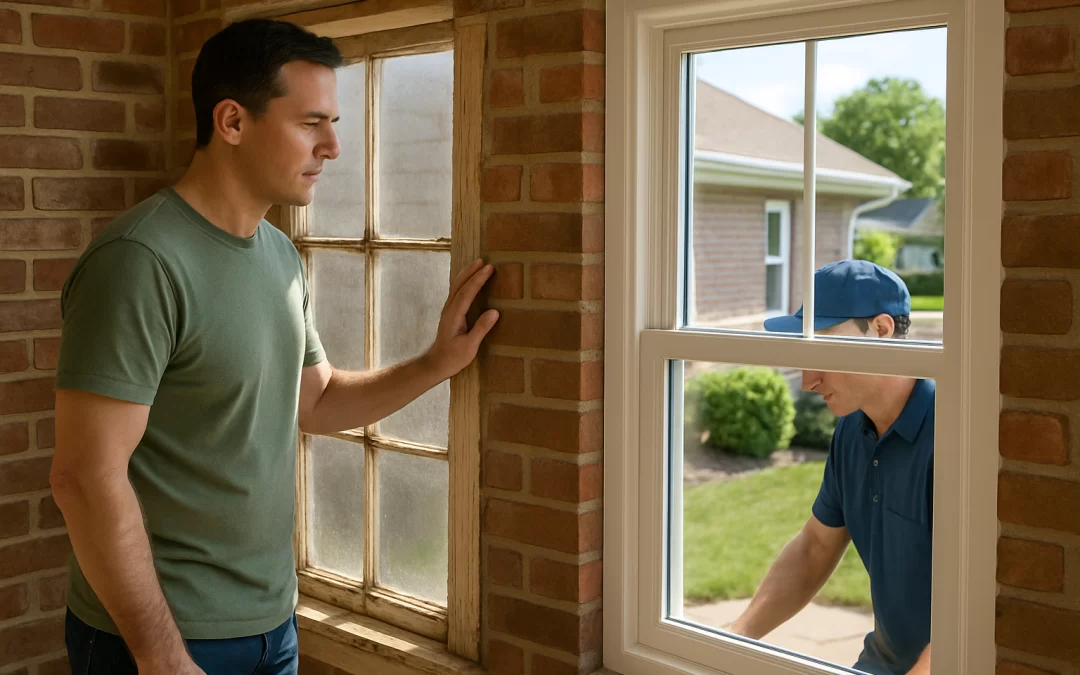
Signs you need new windows usually show up as drafts, rising energy bills, condensation between panes, sticking sashes, or visible rot and damage. Replacing failing windows can cut heating and cooling costs by roughly 10–25%, which might mean $20–$80 per month for many households, depending on climate and home size. However, new windows are a major investment, and if your current windows are older but still sound, the payback period can be long.
This guide is for homeowners and renters who are noticing comfort problems, higher utility bills, or visible window issues and want to know whether it’s time to replace or repair. Windows are expensive, so the goal is to help you avoid overspending, understand the real cost of waiting, and decide when a quick fix is enough versus when a full replacement will actually save you more money over time.
Table of Contents
- Why Old or Failing Windows Cost You More
- Common Ways People Overspend on Windows
- What to Check First: Simple Tests You Can Do Today
- Immediate Savings: Low-Cost Fixes Before You Replace
- Long-Term Savings and Upgrade Options
- When Spending Now Actually Saves You More
- Common Costly Window Mistakes to Avoid
- When to Hire a Professional (and When You Don’t Need One)
- Costs, Savings, and Payback Periods
- Decision Guide: Repair vs Replace, DIY vs Pro
- Frequently Asked Questions
- Summary and Next Steps
Why Old or Failing Windows Cost You More
Windows affect both your energy bills and your maintenance costs. When they start to fail, you pay more every month in ways that are easy to miss.
Key signs your windows are costing you money
- Age over 20–25 years: Older single-pane or early double-pane windows often have poor insulation and worn seals.
- Drafts and cold spots: If you feel cold air in winter or hot air in summer near the window, your heating and cooling system has to work harder.
- Condensation between panes: Fog or moisture trapped inside double- or triple-pane glass means the insulating gas has leaked out and the unit has lost much of its efficiency.
- Rot, warping, or soft wood: Damaged frames let in air and moisture, which can lead to mold and structural damage around the window.
- Sticking, jamming, or broken locks: Windows that don’t close tightly leak air and can be a safety risk.
Each of these issues increases your heating and cooling costs. In colder climates, leaky windows can add 10–20% to your winter energy bills; in hot climates, they can drive up summer cooling costs by a similar amount.
Common Ways People Overspend on Windows
Many homeowners spend more than they need to on windows because they react to problems instead of planning for them. Understanding these patterns can help you avoid unnecessary costs.
- Replacing every window at once without a plan: This can make sense in some cases, but often you can prioritize the worst windows and spread costs over several years.
- Buying the most expensive window type “just in case”: Premium features may not pay off in mild climates or for rooms you rarely use.
- Ignoring small issues until they become emergencies: Waiting too long can turn a simple sash repair into a full frame replacement with wall repairs.
- Choosing the wrong material for your climate and lifestyle: For example, high-maintenance wood in a very wet climate can lead to frequent repainting and earlier replacement.
- Paying for features that don’t match your home: Soundproof glass, specialty coatings, or custom shapes can be useful, but they rarely pay for themselves in energy savings alone.
The goal is to match the window type and timing to your actual needs, not to marketing promises. Comparing options like wood vs. vinyl replacement windows can help you avoid long-term maintenance surprises.
What to Check First: Simple Tests You Can Do Today
Before you think about replacement, do a quick inspection. This can help you decide whether you need new windows now or can get by with repairs.
1. Draft test
- On a windy day, hold the back of your hand or a lit incense stick around the window edges and sash.
- If you feel air movement or see smoke pulled strongly in one direction, you have a noticeable draft.
2. Visual inspection
- Look for cracked glass, peeling paint, soft or crumbling wood, or gaps between the frame and wall.
- Check the weatherstripping around the sash for gaps, brittleness, or missing sections.
- Open and close each window: it should move smoothly and latch firmly without forcing it.
3. Condensation check
- Condensation on the inside surface of the glass in winter can mean high indoor humidity, not necessarily bad windows.
- Condensation or fog between the panes means the seal has failed and the insulating gas is gone.
4. Energy bill comparison
- Compare your last 12 months of energy bills to the same months a year or two ago, adjusting for rate changes if possible.
- If usage (kWh or therms) has climbed significantly without a change in your habits or equipment, leaky windows may be part of the problem.
If your windows pass most of these checks, you may not need full replacement yet. If they fail several, especially with drafts and failed seals, it’s time to consider your options.
Immediate Savings: Low-Cost Fixes Before You Replace
If you’re not ready for a major project, there are inexpensive steps that can reduce drafts and costs right away. These won’t turn old windows into high-performance ones, but they can buy you time and lower bills in the short term.
Weatherstripping and caulking
- Cost: $20–$100 in materials for several windows if you DIY.
- What it does: Seals gaps around the sash and frame to reduce drafts.
- Potential savings: Often 5–10% off heating and cooling bills if your windows were very leaky.
Window film and plastic insulation kits
- Cost: $10–$30 per window for clear plastic film or insulating kits.
- What it does: Adds a temporary air barrier over the window, especially useful for single-pane or very drafty windows.
- Potential savings: $5–$20 per month in cold climates during winter, depending on how many windows you treat.
Thermal curtains and blinds
- Cost: $30–$100 per window for insulated curtains or cellular shades.
- What it does: Reduces heat loss at night and heat gain during hot days.
- Potential savings: Modest but noticeable comfort improvement; energy savings of a few dollars per month per room.
These measures are most worthwhile if you plan to keep your existing windows for at least another season or two. If you’re certain you’ll replace them soon, focus on the cheapest fixes like caulking and basic weatherstripping.
Long-Term Savings and Upgrade Options
When your windows are clearly failing, replacement becomes a long-term investment decision. The right choice can lower your bills, improve comfort, and reduce maintenance for decades.
Energy-efficient replacement windows
- Double- or triple-pane glass with insulating gas between panes reduces heat transfer.
- Low-E coatings (low-emissivity) reflect heat, keeping warmth inside in winter and outside in summer.
- Improved frames (vinyl, fiberglass, or well-designed wood) reduce drafts and heat loss.
Upgrading from old single-pane or very leaky double-pane windows to modern energy-efficient models can often cut window-related energy loss by 20–50%. For many homes, that translates to roughly $150–$400 per year in energy savings, depending on climate and how bad the old windows were.
To understand typical price ranges and features, see this guide on energy-efficient window replacement costs.
Choosing window materials and styles
- Vinyl windows: Generally lower upfront cost, low maintenance, good energy performance.
- Wood windows: Higher cost, classic look, more maintenance, can be very efficient if maintained.
- Aluminum windows: Durable, slim frames, but less insulating unless they have a thermal break.
The best choice depends on your budget, climate, and how long you plan to stay in the home. For example, if you plan to move in 5–7 years, a mid-range vinyl window may offer the best balance of cost and payback.
When Spending Now Actually Saves You More
Replacing windows is expensive, but waiting too long can cost you more in energy, repairs, and even home value. The key is to recognize when “later” is actually more expensive than “now.”
Situations where replacement usually makes financial sense
- Severe drafts and high bills: If you can feel strong drafts and your energy bills are noticeably higher than similar homes, replacement can often pay back in 8–15 years.
- Rotting frames or water damage: Delaying can lead to wall, siding, or structural repairs that cost thousands more than timely window replacement.
- Condensation between panes in many windows: Failed seals across multiple windows mean your whole system is aging out.
- Safety and security issues: Windows that don’t lock or open properly can be a liability in emergencies and may affect insurance or resale.
In these cases, the combination of energy savings, avoided repairs, and improved comfort often justifies acting sooner, especially if you plan to stay in the home for at least 5–10 more years.
Common Costly Window Mistakes to Avoid
Even when you know you need new windows, certain choices can add cost without adding value. Avoiding these mistakes can save you hundreds or even thousands of dollars.
- Over-replacing: Replacing windows that are still in good shape just to “match” others can add years to your payback period.
- Under-specifying: Choosing the cheapest, least efficient window in a very cold or hot climate can lock you into higher bills for decades.
- Ignoring installation quality: Even the best window will perform poorly if installed badly. Poor flashing and sealing can cause leaks and rot.
- Not checking local rebates or incentives: Utility companies and governments sometimes offer rebates for energy-efficient windows, which can shorten payback time.
- Choosing style over function: Fancy shapes or custom designs can cost much more without improving efficiency or resale value.
Take time to compare quotes, ask about installation details, and focus on performance ratings, not just appearance.
When to Hire a Professional (and When You Don’t Need One)
Some window issues are easy DIY projects; others are better left to professionals to avoid costly mistakes.
Good candidates for DIY
- Adding or replacing weatherstripping and caulk around frames.
- Installing plastic window film or thermal curtains.
- Minor hardware fixes like replacing locks or handles on accessible windows.
When to call a professional
- Full window replacement, especially if it involves changing frame size or type.
- Rotten or damaged frames that may involve structural repairs.
- Multiple windows with failed seals where sash or glass replacement is needed.
- Homes in multi-story buildings where access and safety are concerns.
Professional installation adds to upfront cost but can prevent water damage, air leaks, and warranty issues. For most full replacements, professional installation is worth the extra expense.
Costs, Savings, and Payback Periods
Understanding the numbers helps you decide whether to repair, upgrade, or wait. Actual costs vary by region, window size, and material, but these ranges can guide your planning.
Upfront costs
- Basic repairs and sealing (DIY): $20–$200 total for caulk, weatherstripping, and minor hardware.
- Professional repairs (per window): $100–$400 for sash repairs, glass replacement, or hardware fixes.
- Standard replacement windows (installed): Often $400–$1,200 per window, depending on material, size, and efficiency.
- Premium or specialty windows: $1,000–$2,500+ per window for large, custom, or high-performance units.
Monthly savings estimates
- Minor sealing and weatherstripping: $5–$15 per month in energy savings for a typical home with previously leaky windows.
- Upgrading from very old, leaky windows to efficient double-pane: $15–$40 per month in many climates.
- In extreme climates (very cold or very hot): Savings can reach $50+ per month if many windows were in poor condition.
Payback periods
- Low-cost fixes: Often pay back within a single season to 2 years.
- Mid-range replacement windows: Typical payback is around 10–20 years, depending on energy prices and how bad the old windows were.
- High-end windows: Payback can be longer than 20 years if the main benefits are comfort and appearance rather than big energy savings.
Savings are small if your current windows are already double-pane, in good condition, and your climate is mild. Savings are significant if you have single-pane or very drafty windows in a climate with hot summers or cold winters. In mild areas with decent existing windows, full replacement mainly improves comfort and appearance, not your utility bills.
Decision Guide: Repair vs Replace, DIY vs Pro
Use these guidelines to decide what to do now versus later, and how much to invest.
Do now vs. later
- Do now if you have severe drafts, visible rot, condensation between panes in many windows, or safety issues.
- Do later if your windows are older but still sound, with only minor drafts or cosmetic issues.
Quick fix vs. investment
- Choose a quick fix (caulk, weatherstripping, film) if you’re on a tight budget or plan to replace windows within a few years.
- Choose a full investment (replacement) if you plan to stay in the home long-term and your windows are clearly failing.
DIY vs. professional
- DIY for sealing, basic hardware, and temporary insulation measures.
- Professional for full replacements, structural issues, or multi-story work.
Cheap fix vs. upgrade
- Use a cheap fix when your main goal is to get through a season or two with lower bills.
- Invest in an upgrade when your windows are at the end of their life and you want to reduce long-term energy and maintenance costs.
Also consider your window type and material. For example, comparing single vs. double-hung window costs can help you choose a style that balances price, ease of use, and efficiency for your home.
Frequently Asked Questions
How do I know if I really need new windows or just repairs?
If your windows have minor drafts, intact frames, and no condensation between panes, repairs like weatherstripping and caulking may be enough. If you see rot, repeated condensation between panes, or major drafts even after sealing, replacement is usually the better long-term financial choice.
Will new windows actually lower my energy bills?
Yes, but the amount depends on your starting point. Replacing very old or leaky windows can cut heating and cooling costs by 10–25%, while replacing decent double-pane windows with slightly better ones may only save a few percent, which can mean a very long payback period.
Are energy-efficient windows worth the extra cost?
They often are in climates with hot summers or cold winters, especially if your current windows are poor. However, in mild climates or if your existing windows are already efficient, the extra cost may not pay back quickly, and comfort and noise reduction become the main benefits.
How long do replacement windows last?
Many modern windows last 20–30 years or more if installed and maintained properly. Cheaper products or poor installation can shorten that lifespan, which effectively raises your annual cost even if the upfront price was lower.
Should I replace all my windows at once?
Not always. If budget is tight, start with the worst-performing windows—usually those with the most drafts or damage—and replace others over time, focusing on rooms you use most and sides of the house exposed to harsh weather.
What about aluminum or wood windows—are they still a good choice?
Aluminum and wood can both be good options in the right situation. For example, aluminum is durable but may need special designs to insulate well, while wood looks great but needs more maintenance; comparing options like an aluminum window replacement cost guide or wood vs. vinyl resources can help you understand long-term costs.
Summary and Next Steps
Signs you need new windows include noticeable drafts, condensation between panes, rotting or warped frames, sticking sashes, and rising energy bills without another clear cause. Addressing these issues early—whether with low-cost sealing or full replacement—can save you money on utilities, prevent water damage, and improve comfort.
For many homes with very old or failing windows, upgrading to efficient models can save roughly $150–$400 per year on energy, with payback periods typically in the 10–20 year range. In milder climates or with already decent windows, focus first on low-cost fixes and only replace when the windows reach the end of their useful life.
Next steps:
- Inspect your windows for drafts, condensation, and damage using the simple tests above.
- Start with inexpensive sealing and insulation if your budget is limited or your windows are mostly sound.
- Get multiple quotes for replacement if you see clear signs of failure, and compare materials, efficiency ratings, and installation quality.
- Consider how long you plan to stay in the home and choose the level of investment that makes financial sense for your timeline.
By matching your window decisions to your home, climate, and budget, you can avoid overspending while still capturing the savings and comfort that come from fixing or replacing windows at the right time.