
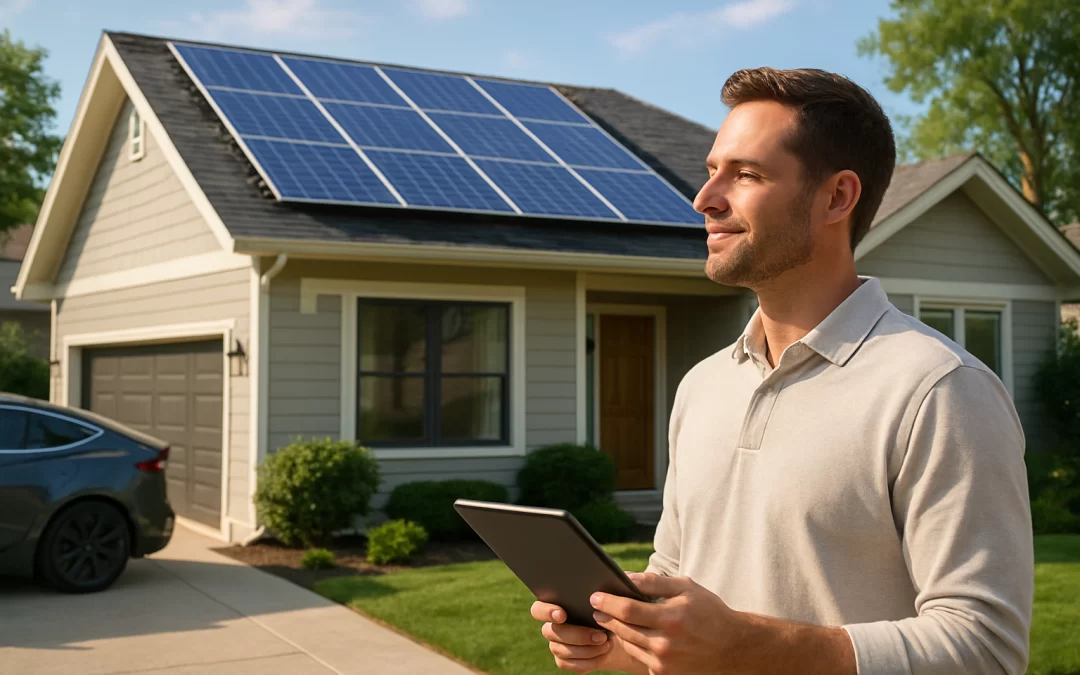
Solar panels can realistically save many homeowners between $800 and $2,000 per year on electricity, depending on location, roof size, and energy use. Over 20–25 years, that can add up to tens of thousands of dollars in avoided utility bills, often with a payback period of 6–12 years after incentives. However, savings are not guaranteed: if your electric rates are low, your roof is heavily shaded, or you move soon, your solar panel ROI may be modest or not worth the upfront cost.
For homeowners facing rising electric bills, solar panels can be a powerful long-term way to lock in lower energy costs. This guide is for homeowners and long-term renters who want clear, realistic numbers on how much they can actually save with solar. We will walk through what drives solar panel ROI, common money-wasting mistakes, and when solar is a smart investment versus when it may not pay off.
Table of Contents
- What Is Solar Panel ROI for Homeowners?
- Why Electric Bills Are So High (and Getting Higher)
- Common Ways People Overspend on Solar
- What to Check Before Buying Solar Panels
- Solar Panel Costs, Savings, and Payback Period
- Quick Ways to Save on Electricity Before (or Without) Solar
- Long-Term Ways to Boost Your Solar Panel ROI
- When Spending More on Solar Actually Saves You More
- Costly Mistakes to Avoid With Solar Panels
- DIY vs Professional Solar: What Makes Financial Sense?
- Is Solar Worth It for You Right Now?
- Frequently Asked Questions
- Summary and Next Steps
What Is Solar Panel ROI for Homeowners?
Solar panel ROI (return on investment) is how much money you save on electricity over time compared to what you paid for the system. It is usually measured in:
- Payback period – how many years it takes for your electric bill savings to equal your total solar cost.
- Total lifetime savings – how much you save over 20–25 years after the system has paid for itself.
- Annual return – similar to an investment percentage, comparing yearly savings to your upfront cost.
For many homeowners, a well-sized rooftop solar system can pay for itself in about 6–12 years and then continue producing mostly free electricity for another 10–15+ years. In higher-cost electricity areas, solar ROI is often stronger and payback is faster.
Why Electric Bills Are So High (and Getting Higher)
Understanding why your electric bill is high helps you see where solar can make the biggest impact. Several factors are driving up costs:
- Rising utility rates – Many utilities raise rates every year, often 2–5% or more.
- Increased home energy use – More electronics, bigger TVs, home offices, and electric vehicles all add up.
- Weather extremes – Hotter summers and colder winters mean more air conditioning and heating use.
- Inefficient appliances and lighting – Older equipment can quietly waste a lot of electricity.
Solar panels help by producing your own electricity, which reduces how much you buy from the utility. In areas with high or fast-rising rates, this can translate into strong long-term savings.
Common Ways People Overspend on Solar
Many homeowners leave money on the table or get a weaker solar ROI because of avoidable mistakes. Common overspending issues include:
- Buying a system that is too large for their actual energy use, especially if they plan to improve efficiency later.
- Ignoring shade and roof orientation, which can cut production and lengthen the payback period.
- Choosing expensive financing with high interest rates that eat into savings.
- Not using available incentives such as federal tax credits, state rebates, or utility programs.
- Signing the first quote without comparing multiple installers and equipment options.
A bit of upfront homework—checking your usage, getting several quotes, and understanding incentives—can easily improve your solar panel ROI by thousands of dollars over the life of the system.
What to Check Before Buying Solar Panels
Before you commit to solar, a few simple checks can help you avoid costly surprises and get a more accurate picture of your potential savings.
1. Your Current Electric Bill
Start by looking at your last 12 months of electric bills. Note:
- Average monthly cost (for example, $80, $150, $250+).
- Total annual usage in kilowatt-hours (kWh), usually listed on the bill.
- Rate per kWh (for example, $0.12, $0.18, $0.25+).
Solar tends to make the most financial sense if your average bill is at least around $80–$100 per month and your rates are moderate to high. You can see more detailed examples of yearly savings in this guide on how much solar panels save per year.
2. Your Roof Condition and Sun Exposure
Next, consider your roof:
- Age and condition – If your roof needs replacement soon, it is usually better to do that before installing solar.
- Orientation – South-facing roofs (in the U.S.) generally get the best sun, followed by west and east.
- Shade – Trees, nearby buildings, or chimneys that cast shade can significantly reduce output.
A reputable installer can provide a production estimate based on your roof and location. If your roof is heavily shaded most of the day, your solar ROI may be weak.
3. How Long You Plan to Stay in the Home
Solar is a long-term investment. It usually works best if you plan to stay in your home for at least:
- 5–7 years if you are in a high-cost electricity area.
- 10+ years in moderate-cost areas.
Solar can increase home value, but you may not recover the full cost if you move very soon after installation.
Solar Panel Costs, Savings, and Payback Period
Understanding the basic numbers will help you decide if solar is a smart financial move for your situation.
Typical Upfront Cost of Solar Panels
For a typical residential system in the U.S. (around 5–8 kW), rough cost ranges before incentives are:
- Small system (3–5 kW): about $9,000–$15,000.
- Medium system (6–8 kW): about $15,000–$24,000.
- Larger system (9–12 kW): about $22,000–$36,000.
After the federal tax credit (if you qualify) and any state or utility incentives, your net cost can drop by 20–40% or more. Local prices vary, so it is important to get quotes specific to your area.
Realistic Monthly and Annual Savings
Your savings depend on how much electricity your system produces and your utility rates. As a rough guide:
- Homeowners with moderate bills ($80–$150/month) might save around $40–$100 per month once solar is installed and paid for.
- Homeowners with higher bills ($150–$300+/month) might save around $80–$200+ per month.
- Over a year, that often equals $800–$2,000+ in savings, depending on system size and local rates.
In some cases, especially with very high rates and strong sun, savings can be higher. In areas with low electricity costs, savings may be more modest and payback slower.
Typical Payback Period for Solar Panels
The payback period is how long it takes for your cumulative savings to equal your net cost. Typical ranges:
- High-cost electricity areas (for example, $0.20–$0.30+/kWh): about 6–9 years.
- Moderate-cost areas (for example, $0.13–$0.19/kWh): about 8–12 years.
- Low-cost areas (for example, under $0.12/kWh): payback can stretch to 12–15+ years, and sometimes solar is not financially attractive.
After the payback period, your system still produces electricity, so most of the value from that point forward is pure savings, minus any minor maintenance or inverter replacement costs.
What Affects Your Solar Panel ROI the Most
Key factors that can significantly change your ROI include:
- Electricity rate – Higher rates usually mean faster payback and larger lifetime savings.
- Sun exposure – More sun hours per day increase production and savings.
- System size and cost – Oversized or overpriced systems take longer to pay off.
- Incentives and tax credits – These can shorten payback by several years.
- Financing terms – Low-interest loans or cash purchases usually yield better ROI than high-interest financing.
For a deeper breakdown of costs versus other options, you can compare solar with other renewable energy choices in this solar vs other renewable energy cost comparison.
Quick Ways to Save on Electricity Before (or Without) Solar
Even if you are not ready for solar yet, you can reduce your electric bill and improve your future solar ROI by cutting waste now.
Simple, Low-Cost Steps
- Switch to LED bulbs – Replacing older bulbs can save $5–$15 per month in many homes.
- Unplug or power-strip electronics – TVs, game consoles, and chargers use power even when “off.”
- Adjust thermostat settings – A few degrees higher in summer or lower in winter can save $10–$30 per month.
- Use timers and smart plugs for lights and space heaters to avoid running them longer than needed.
Moderate Upgrades That Pay Back Quickly
- Seal air leaks and add basic insulation – Often pays back in 2–5 years and reduces heating and cooling costs.
- Replace very old refrigerators or freezers – Newer models can cut appliance energy use by 30–50%.
- Install a programmable or smart thermostat – Can save 5–10% on heating and cooling costs.
These steps lower your baseline energy use, which means you may need a smaller solar system to cover your needs—reducing your upfront cost and improving ROI.
Long-Term Ways to Boost Your Solar Panel ROI
Once you have solar, or if you are planning ahead, there are ways to stretch your savings further over the life of the system.
Match Your Usage to Solar Production
In many areas, you save the most when you use solar power as it is produced. You can:
- Run dishwashers and laundry during sunny hours instead of at night.
- Charge electric vehicles in the daytime when possible.
- Shift pool pumps or other large loads to midday.
This reduces how much power you “sell back” to the grid at lower rates and increases the value of your solar production.
Keep Panels Working Efficiently
Solar panels are low-maintenance, but a few habits help maintain performance:
- Occasional cleaning if you live in a dusty or pollen-heavy area.
- Monitoring system output via your app or inverter portal to catch issues early.
- Checking shading changes as trees grow and trimming if needed.
Small drops in performance add up over 20–25 years, so staying on top of this can protect your ROI.
Plan for Inverter Replacement
Inverters (the device that converts solar DC power to AC power) often last 10–15 years. Budgeting for a future replacement:
- Helps avoid surprise costs later.
- Allows you to compare extended warranties versus paying out of pocket.
Even with an inverter replacement, most systems still deliver strong net savings over their lifetime.
When Spending More on Solar Actually Saves You More
Sometimes, paying a bit more upfront leads to better long-term savings and a stronger ROI.
Higher-Efficiency Panels
Premium, higher-efficiency panels cost more per watt but can be worth it if:
- Your roof space is limited and you need more power from a smaller area.
- You want to leave room for future expansion (for example, adding an EV or heat pump later).
In these cases, the extra cost can be offset by higher production and better long-term savings.
Better Warranties and Reputable Installers
Choosing a well-established installer with strong workmanship and equipment warranties can reduce your risk of:
- Costly repairs or replacements later.
- System downtime that cuts into your savings.
Paying slightly more for quality installation and support often pays off over 20+ years.
Smart Financing Choices
Spending a bit more time shopping for financing can save thousands over the life of the system. In general:
- Lower interest loans or home equity options usually beat high-interest solar loans.
- Shorter loan terms mean higher monthly payments but lower total interest paid.
Run the numbers to see how different loan options affect your monthly cash flow and total ROI.
Costly Mistakes to Avoid With Solar Panels
A few common missteps can seriously weaken your solar panel ROI or create headaches later.
1. Not Understanding Your Contract
Before signing, make sure you know:
- Whether you are buying, leasing, or signing a power purchase agreement (PPA).
- Who owns the system and who gets the tax credits and incentives.
- What happens if you sell your home before the contract ends.
Ownership usually offers the strongest long-term savings, but it also means you are responsible for maintenance and repairs.
2. Ignoring Roof Age
Installing solar on a roof that needs replacement soon can cost you twice:
- You may have to remove and reinstall the system when you replace the roof.
- This adds labor costs and can reduce your net savings.
If your roof is near the end of its life, it is often cheaper long-term to replace it before adding solar.
3. Overestimating Future Energy Use
Some homeowners size systems based on future plans that never happen (for example, adding an EV or hot tub). Oversizing can:
- Increase your upfront cost without a matching increase in savings.
- Lead to excess production that is compensated at a lower rate by the utility.
It is usually better to size for your current usage plus realistic near-term changes, then expand later if needed.
DIY vs Professional Solar: What Makes Financial Sense?
Some homeowners consider installing solar themselves to save on labor costs. This can work in limited cases, but it is not right for everyone.
DIY Solar: Pros and Cons
Potential advantages:
- Lower upfront cost if you have the skills and time.
- More control over equipment choices.
Potential drawbacks:
- More complex permitting and inspections.
- Risk of installation errors that reduce performance or cause safety issues.
- Some incentives, warranties, or financing options may not be available for DIY systems.
DIY can make sense for smaller, off-grid, or ground-mounted systems if you are very handy and comfortable with electrical work.
Professional Installation: Pros and Cons
Advantages:
- Turnkey handling of design, permits, installation, and inspections.
- Access to better warranties and often better equipment pricing.
- Professional design to maximize production and safety.
Drawbacks:
- Higher upfront cost due to labor and overhead.
- Quality can vary by installer, so you still need to compare options.
For most homeowners, professional installation offers a better balance of safety, performance, and long-term ROI.
Is Solar Worth It for You Right Now?
Whether solar is worth it depends on your specific situation. You can think about it in three steps: your current costs, your home’s suitability, and your time horizon.
When Solar Is Usually a Strong Investment
Solar often makes financial sense if:
- Your average electric bill is $100+/month and rates are moderate to high.
- Your roof has good sun exposure and is in good condition.
- You plan to stay in your home for at least 7–10 years.
- You can access tax credits and local incentives.
In these cases, payback periods of 6–10 years and strong lifetime savings are common. For a detailed breakdown of costs and payback, see this guide on whether solar is worth it and typical payback periods.
When Solar Savings May Be Minimal
Solar may not be worth it financially if:
- Your electric rates are very low and your bill is under $60–$70/month.
- Your roof is heavily shaded or poorly oriented.
- You plan to move within 3–5 years and are unsure about recouping the cost through a higher sale price.
- You cannot access key incentives or affordable financing.
In these situations, focusing on energy efficiency upgrades and simple behavior changes may deliver better returns with less risk.
Quick Decision Checklist
To decide if you should move forward now, ask yourself:
- Are my electric bills high enough that I would notice a $50–$150/month reduction?
- Is my roof ready for 20+ years of use, with good sun exposure?
- Can I comfortably handle the upfront cost or monthly loan payment?
- Do I plan to stay in this home long enough to see the payback?
If you answer “yes” to most of these, getting quotes and running the numbers is likely worth your time.
Frequently Asked Questions
How much money can I realistically save with solar panels?
Many homeowners save between $800 and $2,000 per year on electricity once their system is installed and operating well. Your actual savings depend on your electric rates, how much energy you use, system size, and sun exposure.
How long does it take for solar panels to pay for themselves?
Most residential systems pay for themselves in about 6–12 years after incentives, depending on local electricity costs and system pricing. In high-cost electricity areas, payback can be faster; in low-cost areas, it may take longer or not be financially attractive.
Do solar panels really increase home value?
Studies suggest that homes with owned solar systems often sell for more than similar homes without solar, especially in markets where buyers value lower utility bills. However, the exact increase varies by region, system size, and how well the system is documented and marketed during the sale.
Is it better to buy or lease solar panels?
Buying (with cash or a loan) usually provides the strongest long-term savings and gives you access to tax credits and incentives. Leasing or power purchase agreements can reduce or eliminate upfront costs but often deliver smaller overall savings and can complicate home sales.
What happens if I produce more solar power than I use?
If your system produces more than you use at certain times, the excess usually goes back to the grid. Depending on your utility’s net metering policy, you may receive bill credits at full or partial retail rates, or at a lower “export” rate, which affects your overall ROI.
Do solar panels work during power outages?
Most standard grid-tied systems shut down during outages for safety reasons, even if the sun is shining. To have power during outages, you typically need a battery backup system or a special inverter setup, which adds cost but can provide extra resilience.
Summary and Next Steps
Solar panel ROI can be strong for many homeowners, often delivering payback in 6–12 years and thousands of dollars in lifetime savings. The best candidates are homes with solid sun exposure, moderate to high electric bills, and owners who plan to stay put for several years. In low-cost electricity areas or heavily shaded homes, solar savings may be modest and other upgrades may make more sense.
Your next steps are simple: review your last year of electric bills, assess your roof’s condition and sun exposure, and get multiple quotes from reputable installers. From there, compare the projected savings, payback period, and financing options to decide whether solar is a smart long-term investment for your home. Taking a careful, numbers-based approach will help you avoid common money-wasting mistakes and make the most of your home energy budget.