
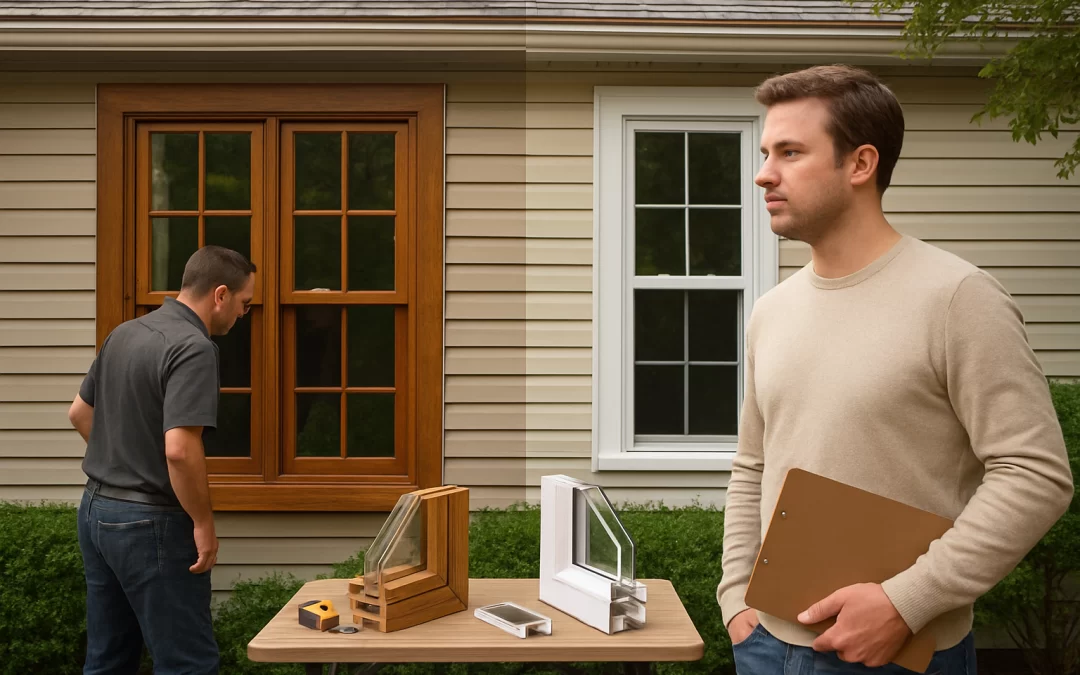
Wood vs. vinyl replacement windows mainly comes down to cost, maintenance, and how long you plan to stay in your home. Vinyl windows usually cost 20–40% less upfront and can cut heating and cooling bills by $10–$40 per month when replacing old, drafty windows, while wood offers a higher-end look and better resale appeal in some markets. Over 15–20 years, the total cost of ownership for vinyl is often lower, but wood can be worth it in historic or high-value homes. The tradeoff: wood gives you beauty and flexibility, but it demands more time and money to maintain.
This guide is for homeowners comparing wood vs. vinyl replacement windows and trying to avoid overspending. Window projects can easily run into the thousands of dollars, and the wrong choice can lock you into higher maintenance or lower energy savings for decades. Below, you’ll find clear cost ranges, realistic savings, and when each option makes financial sense.
Table of Contents
- Causes of High Window Replacement Costs
- Common Overspending Behaviors
- What to Check First Before Choosing Wood or Vinyl
- Immediate Savings: Fast Ways to Cut Costs
- Long-Term Savings and Upgrades
- When Spending More Actually Saves You Money
- Common Costly Mistakes to Avoid
- When to Hire a Professional vs. DIY
- Cost & Savings: Wood vs. Vinyl by the Numbers
- Decision Guide: How to Choose What’s Best for Your Home
- Frequently Asked Questions
- Summary & Next Steps
Causes of High Window Replacement Costs
Window replacement is expensive mainly because you’re paying for both the window unit and skilled labor. Wood and vinyl windows differ in how those costs add up.
Material and Manufacturing Costs
- Vinyl windows are made from PVC, which is cheaper to produce and easier to mass-manufacture. This usually makes vinyl the lowest-cost replacement option.
- Wood windows use real lumber and often more complex construction. High-quality wood (like pine, fir, or clad wood) and factory finishes raise the price.
- Custom shapes, colors, and divided-light grids (grilles) add cost to both, but the premium is usually higher for wood.
Labor and Installation Complexity
- Wood windows are heavier and more delicate, and they often require more precise carpentry work, which increases labor time and cost.
- Vinyl windows are lighter and designed for faster installation, especially for “insert” or “pocket” replacements that fit into existing frames.
- If your existing frames are rotted or out of square, both options get more expensive, but wood repairs can be especially labor-intensive.
Energy Performance and Glass Options
- Most of the energy savings comes from the glass (double- or triple-pane, low-E coatings, gas fills), not just the frame material.
- Upgrading to energy-efficient glass packages adds $50–$150+ per window, whether wood or vinyl.
- Skipping these upgrades lowers upfront cost but can leave you with higher utility bills for decades.
Common Overspending Behaviors
Many homeowners spend more than they need to on replacement windows because of a few predictable habits.
- Replacing all windows at once when only the worst ones truly need immediate attention.
- Paying for premium wood everywhere when vinyl would perform just as well in less-visible areas (like basements or side walls).
- Over-customizing with special colors, shapes, and grids that don’t add much resale value.
- Choosing triple-pane glass in mild climates where the extra energy savings are small.
- Not getting multiple quotes, which can easily add 15–30% to your final price.
Being strategic about where you use wood vs. vinyl and which windows you replace first can save thousands without sacrificing comfort.
What to Check First Before Choosing Wood or Vinyl
Before you decide between wood and vinyl replacement windows, check these key factors. They will determine how much you can save and where you should spend.
1. Condition of Existing Frames and Sills
- Probe the wood around your windows with a screwdriver to check for rot, softness, or crumbling.
- If frames are solid and square, you may be able to use insert replacements, which are cheaper and less invasive.
- If there is significant rot or water damage, you may need full-frame replacement, which costs more regardless of material.
2. How Long You Plan to Stay
- If you plan to move within 5–7 years, it’s usually smarter to choose quality vinyl with good glass and keep costs down.
- If you expect to stay 10–20+ years, wood may be worth considering in key areas for aesthetics and potential resale appeal.
3. Local Climate and Sun Exposure
- In very hot or cold climates, prioritize energy-efficient glass and tight installation over frame material alone.
- In areas with intense sun, low-quality vinyl can fade or warp over time; higher-grade vinyl or clad wood may perform better.
- In humid or rainy regions, wood requires more vigilant maintenance to avoid rot.
4. HOA, Historic, or Design Requirements
- Historic districts or strict HOAs may require wood or wood-look exteriors, limiting your options.
- Some high-end neighborhoods expect wood windows on the front elevation for curb appeal, even if vinyl is used elsewhere.
Immediate Savings: Fast Ways to Cut Costs
You can reduce your upfront window replacement bill without sacrificing performance by making a few smart choices.
Prioritize the Worst Windows First
- Replace windows that are rotted, won’t open, or have failed seals (fogging between panes) before others.
- This staged approach lets you spread costs over several years while still improving comfort and safety.
Choose Vinyl in Low-Visibility Areas
- Use vinyl replacement windows on sides and back of the house where appearance matters less.
- Reserve wood (if desired) for the front elevation or main living spaces to control costs.
Stick to Standard Sizes and Styles
- Standard double-hung or slider windows are cheaper than custom shapes or sizes.
- Before upgrading style, compare costs using a single vs double-hung window cost comparison to see if the change is worth it.
Negotiate and Get Multiple Quotes
- Get at least 3 written quotes from reputable installers.
- Ask each to price vinyl vs. wood with the same glass package so you can compare apples to apples.
- Many companies will match or beat a competitor’s price if you ask.
Long-Term Savings and Upgrades
Long-term savings come from lower energy bills, fewer repairs, and windows that last. Here’s how wood and vinyl compare over time.
Energy Efficiency and Utility Bills
- Replacing old single-pane or leaky windows with modern double-pane units can save $120–$400 per year on energy bills for an average home, depending on climate and window count.
- Both wood and vinyl can be highly efficient when paired with low-E glass and gas fills.
- For deeper detail on energy performance and costs, see this guide to energy-efficient window replacement costs.
Maintenance and Repair Costs
- Vinyl windows:
- Low maintenance: no painting, minimal upkeep.
- Occasional cleaning and lubrication of moving parts is usually enough.
- Repairs can be harder if frames crack; often the whole unit is replaced.
- Wood windows:
- Require regular painting or staining every 3–7 years, depending on exposure.
- More vulnerable to rot, swelling, and insect damage if not maintained.
- Individual parts can often be repaired, but labor can be costly.
Lifespan Expectations
- Vinyl: Typically 20–30 years with minimal maintenance, sometimes longer with high-quality products and proper installation.
- Wood: Can last 30–50+ years if well maintained; neglected wood can fail much sooner.
- In real-world use, many homeowners don’t maintain wood perfectly, so the practical lifespan advantage may be smaller than it looks on paper.
When Spending More Actually Saves You Money
Sometimes the higher upfront cost of wood or upgraded vinyl pays off over time. The key is knowing when the extra investment makes sense.
Upgrading Glass Packages
- Spending an extra $50–$150 per window for better glass (low-E coatings, argon gas, warm-edge spacers) can cut energy bills significantly in harsh climates.
- Over 15–20 years, this can easily pay back the upgrade cost, especially if your heating or cooling bills are high.
- Look for ENERGY STAR–rated windows for your climate zone; this guide on ENERGY STAR windows explains how they work and when they’re worth it.
Choosing Higher-Quality Vinyl
- Cheapest vinyl windows can warp, discolor, or fail early, leading to replacement sooner than expected.
- Spending a bit more for reputable brands, thicker frames, and better hardware often extends lifespan and reduces drafts.
- This is usually a better investment than paying extra for cosmetic upgrades that don’t affect performance.
Using Wood Strategically
- In high-end or historic homes, wood windows on the front elevation can support resale value and curb appeal.
- Pairing wood in key areas with vinyl elsewhere can balance aesthetics and cost.
- If you’re committed to wood, consider clad wood windows (wood inside, low-maintenance exterior) to reduce long-term painting costs.
Common Costly Mistakes to Avoid
Avoiding these mistakes can save you thousands over the life of your windows.
- Choosing based on price alone: The cheapest vinyl or wood option may have poor energy performance or a short lifespan.
- Ignoring installation quality: Even the best window will leak air and water if installed poorly.
- Overpaying for brand names when mid-range products offer similar performance at lower cost.
- Skipping maintenance on wood, leading to rot and premature replacement.
- Using wood in high-moisture areas (like near showers or in damp basements) where vinyl would be more durable.
- Not checking warranties: Some vinyl windows have limited or prorated warranties; wood warranties may require proof of maintenance.
When to Hire a Professional vs. DIY
DIY can save money, but only if you have the skills and the project is straightforward. Otherwise, mistakes can erase any savings.
DIY-Friendly Situations
- You’re replacing a standard-size window with an insert replacement and the frame is in good condition.
- You’re comfortable measuring accurately, using basic tools, and following manufacturer instructions.
- You understand that incorrect installation can void warranties and reduce energy performance.
When to Hire a Professional
- There is rot, water damage, or structural issues around the window opening.
- You’re switching window types (for example, from single-hung to casement) or changing sizes.
- You’re installing heavy wood windows or large picture windows that require multiple people to handle safely.
- You want to ensure warranty coverage and proper flashing, insulation, and sealing.
Professional installation typically adds $150–$350 per window, but it can prevent costly air leaks, water damage, and callbacks later.
Cost & Savings: Wood vs. Vinyl by the Numbers
Below are typical cost and savings ranges for wood vs. vinyl replacement windows. Actual prices vary by region, brand, and project complexity.
Upfront Costs (Per Window, Installed)
- Vinyl replacement windows:
- Basic: $300–$500
- Mid-range (better glass, hardware, and finish): $500–$800
- High-end or large/custom: $800–$1,000+
- Wood replacement windows:
- Basic wood: $600–$900
- Clad wood or premium species: $900–$1,500+
- Custom shapes or historic replicas: $1,500–$2,500+
For a typical home with 10–15 windows, choosing vinyl over wood can easily save $3,000–$10,000 upfront.
Monthly Energy Savings
- Replacing old, drafty single-pane windows with modern double-pane units (wood or vinyl) can save:
- $10–$40 per month on average, depending on climate, energy rates, and home size.
- That’s roughly $120–$480 per year.
- Energy savings are similar for wood and vinyl if they have the same glass and installation quality.
Maintenance Costs Over Time
- Vinyl:
- Minimal maintenance cost: mostly cleaning and occasional hardware replacement.
- Over 20 years, you might spend a few hundred dollars total on minor parts or adjustments.
- Wood:
- Painting or staining every 3–7 years can cost $50–$150 per window if you hire it out, less if DIY.
- Over 20 years, maintenance can add $1,000–$3,000+ for a typical home, depending on exposure and labor costs.
Payback Period
- If your project costs $7,500 and you save $300 per year on energy, the simple payback is about 25 years.
- However, if you choose vinyl instead of wood and save $4,000 upfront, your effective payback period shortens because you invested less to get similar energy savings.
- In many cases, vinyl offers a faster financial payback than wood, especially if you’re focused on energy savings and low maintenance.
When Savings Are Small vs. Significant
- Small savings:
- Replacing relatively modern double-pane windows with only slightly better ones.
- Upgrading from mid-range to top-tier wood purely for aesthetics.
- Significant savings:
- Replacing old single-pane or very leaky windows.
- Upgrading to efficient glass in extreme climates.
- Choosing vinyl over wood when you don’t need wood for design or HOA reasons.
Decision Guide: How to Choose What’s Best for Your Home
Use this section to decide between wood and vinyl, and whether to act now or later.
Do It Now vs. Later
- Do it now if:
- You have windows that are rotted, won’t open, or leak water.
- Your energy bills are high and you feel drafts around windows.
- You’re planning other exterior work (like siding) that will disturb window openings.
- Wait or phase the project if:
- Your windows are older but still functional and not leaking.
- You need time to save for a better-quality product or professional installation.
- You want to replace the worst windows first and spread costs over several years.
Quick Fix vs. Long-Term Investment
- Quick fix options:
- Weatherstripping and caulking to reduce drafts.
- Storm windows over existing units to improve efficiency temporarily.
- These can save some energy for a low cost but don’t solve structural issues.
- Long-term investment:
- Full replacement with quality vinyl or wood windows and efficient glass.
- Best if you plan to stay in the home long enough to benefit from lower bills and improved comfort.
DIY vs. Professional
- DIY:
- Can save $150–$350 per window in labor.
- Best for handy homeowners with simple insert replacements and solid frames.
- Risk: mistakes can cause leaks, drafts, and voided warranties.
- Professional:
- Higher upfront cost but better protection against installation errors.
- Recommended for wood windows, full-frame replacements, and structural repairs.
Cheap Fix vs. Upgrade
- Cheap fix (vinyl, basic glass):
- Good if you’re selling soon and just need functional, clean-looking windows.
- Lower upfront cost, modest energy savings.
- Upgrade (better glass, higher-quality frames):
- Better if you’ll stay long-term and want comfort, lower bills, and durability.
- Consider mid-range vinyl with efficient glass as a strong value choice.
Frequently Asked Questions
Are vinyl windows cheaper than wood windows?
Yes. Vinyl replacement windows are typically 20–40% cheaper than comparable wood windows, especially once you include installation. For a whole-house project, that can mean saving $3,000–$10,000+ upfront while still getting good energy performance.
Do wood windows save more energy than vinyl?
Not usually. Most energy savings come from the glass package and installation quality, not the frame material alone. A well-installed vinyl window with efficient glass can perform just as well as a wood window with the same glass.
How long do vinyl vs. wood windows last?
Quality vinyl windows typically last 20–30 years with minimal maintenance, while well-maintained wood windows can last 30–50+ years. However, if wood is not regularly painted or sealed, its lifespan can drop sharply, making vinyl more cost-effective for many homeowners.
Will new windows really lower my energy bills?
Replacing old, drafty windows with modern double-pane units can cut energy bills by about $10–$40 per month, depending on your climate and home. The savings are similar for wood and vinyl if you choose comparable glass and ensure proper installation.
Is it worth paying extra for wood windows?
Wood windows can be worth the extra cost in historic, high-end, or design-focused homes, especially on the front elevation where appearance matters most. If you’re mainly focused on cost, low maintenance, and energy savings, mid-range vinyl is usually the better financial choice.
Can I mix wood and vinyl windows in the same house?
Yes. Many homeowners use wood or clad wood on the front of the house for curb appeal and vinyl on the sides and back to save money. This hybrid approach can balance aesthetics, cost, and maintenance.
Summary & Next Steps
Vinyl replacement windows usually offer the best financial value for most homeowners: lower upfront cost, low maintenance, and similar energy savings to wood when paired with good glass and proper installation. Wood windows can make sense if you’re in a historic or high-end home, plan to stay long-term, and are willing to invest time and money in maintenance for a premium look.
To move forward wisely:
- Inspect your existing windows for rot, leaks, and drafts.
- Decide how long you plan to stay in the home and how much maintenance you’re willing to do.
- Get at least three quotes comparing wood vs. vinyl with the same glass package.
- Consider phasing the project, starting with the worst windows first.
By focusing on your real needs, avoiding over-customization, and choosing the right material for each part of your home, you can control costs today and enjoy lower bills and better comfort for years to come.