
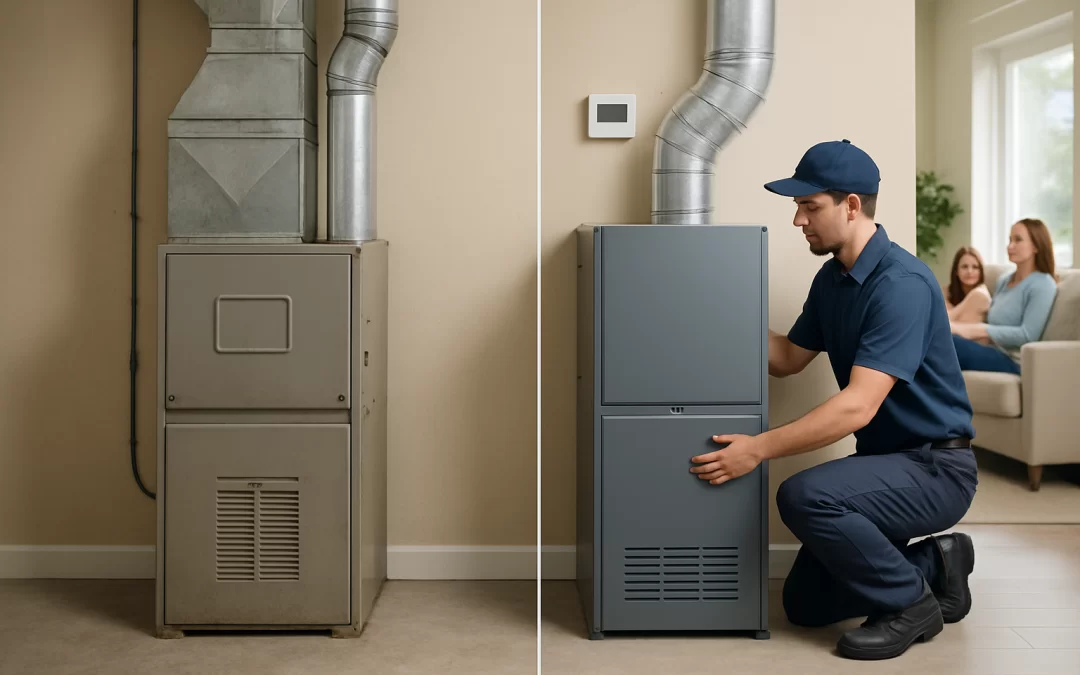
5 Signs Your HVAC System Needs an Upgrade to Lower Energy Bills
If your heating and cooling system is old, runs constantly, or struggles to keep your home comfortable, it may be costing you far more in energy than it should. Upgrading to a modern, efficient HVAC system can often cut heating and cooling costs by around 20–40%, which might mean $30–$150+ per month depending on your home and climate. The tradeoff is the upfront cost, so it’s important to recognize the signs that an upgrade will actually pay for itself instead of just repairing an inefficient system again and again.
Below are five clear signs your HVAC system is draining your wallet, how much you might save by upgrading, and how to decide whether to repair, maintain, or replace it.
This guide is for homeowners and renters responsible for utility bills who are tired of high electric or gas bills and uneven comfort. Heating and cooling are usually the largest energy expense in a home, so even modest improvements can make a noticeable difference in your monthly budget.
Table of Contents
- 5 Signs Your HVAC System Needs an Upgrade
- Why an Old or Inefficient HVAC System Costs You So Much
- Common Ways Homeowners Overspend on Heating and Cooling
- What to Check First Before You Replace Your HVAC
- Quick Ways to Save Money Immediately
- Long-Term Ways to Reduce Heating and Cooling Costs
- Costs, Savings, and Payback Period for an HVAC Upgrade
- Should You Upgrade Your HVAC Now or Wait? (Decision Guide)
- Mistakes That Quietly Cost Homeowners Money
- When Professional Help or a Full Upgrade Makes Sense
- Frequently Asked Questions
- Summary and Next Steps
5 Signs Your HVAC System Needs an Upgrade to Lower Energy Bills
Sign 1: Your Energy Bills Keep Climbing Without a Good Reason
If your electric or gas bill is noticeably higher than last year, even though your rates and usage habits are similar, your HVAC system may be losing efficiency. This often happens gradually as parts wear out, refrigerant levels drop, or the system gets dirty inside.
Warning signs include:
- Monthly bills 15–30% higher than the same month last year
- Big spikes in summer or winter even with similar thermostat settings
- Neighbors with similar homes paying much less for utilities
Sometimes a tune-up can help, but if your system is older and bills keep rising, it’s a strong sign that an upgrade could save you more than repeated repairs.
Sign 2: Your System Is 12–15+ Years Old
Most central air conditioners and heat pumps last about 12–15 years, and furnaces about 15–20 years, with good maintenance. After that, they usually become less reliable and less efficient, even if they still run.
Age matters because:
- Newer systems are often 20–40% more efficient than models from 15+ years ago
- Older units may use outdated technology and refrigerants
- Parts become harder to find and more expensive
If your system is in this age range and you’re seeing higher bills or frequent repairs, upgrading can often be cheaper over the next 5–10 years than trying to keep an old system alive.
Sign 3: Uneven Temperatures and Poor Comfort
If some rooms are too hot while others are too cold, or your system runs constantly but never feels quite right, it may be undersized, oversized, or simply worn out. Poor comfort often means wasted energy.
Look for:
- Hot upstairs, cold downstairs (or the reverse)
- Rooms that never reach the set temperature
- System short-cycling (turning on and off frequently)
These issues can sometimes be fixed with ductwork adjustments or better insulation, but if the equipment itself is the main problem, a properly sized, modern system can improve comfort and reduce wasted energy at the same time.
Sign 4: Frequent Repairs and Breakdowns
Needing one small repair every few years is normal. Needing multiple repairs in a single year is a red flag that your system is nearing the end of its useful life.
Consider upgrading if:
- You’ve had two or more major repairs in the last 2–3 years
- Repair quotes are starting to reach $800–$1,500+ each time
- Your system breaks down during peak heat or cold every year
At some point, putting more money into an old, inefficient system becomes like pouring money into an old car that keeps breaking. An upgrade can stop the repair cycle and lower your monthly bills at the same time.
Sign 5: Your System Runs Constantly or Is Very Noisy
If your HVAC runs almost non-stop on hot or cold days, or makes loud banging, grinding, or squealing noises, it’s usually working harder than it should. That extra run time translates directly into higher energy use.
Signs of trouble include:
- System rarely shuts off, even at night
- Noticeably louder than it used to be
- Vibrations, rattling, or whistling from ducts
Sometimes cleaning, repairs, or duct sealing can help. But if the system is older and struggling, a new high-efficiency unit can do the same job with less noise and less energy.
Why an Old or Inefficient HVAC System Costs You So Much
Heating and cooling usually make up 40–60% of a home’s energy use. When your HVAC system is inefficient, every hour it runs costs more than it should.
Key reasons older systems are expensive to run:
- Lower efficiency ratings: Older units often have much lower SEER (cooling efficiency) or AFUE (heating efficiency) than modern systems.
- Wear and tear: Worn motors, dirty coils, and leaky ducts force the system to work harder.
- Poor sizing: Systems that are too big or too small waste energy by short-cycling or running constantly.
Over time, the extra $30–$150+ per month you pay in energy can easily exceed the cost of a replacement system, especially if you’re also paying for frequent repairs.
Common Ways Homeowners Overspend on Heating and Cooling
Many people pay more than necessary for heating and cooling without realizing it. Some of the most common money-wasting habits include:
- Ignoring maintenance: Skipping annual tune-ups and filter changes makes any system use more energy than needed.
- Keeping very tight temperature settings: Setting the thermostat too low in summer or too high in winter can add 3–5% to your bill for each degree.
- Using an old thermostat: Manual thermostats make it easy to forget to adjust temperatures when you’re away or asleep.
- Closing too many vents: This can unbalance the system and make it work harder, not smarter.
- Delaying replacement too long: Hanging onto a 20-year-old system because “it still runs” can quietly cost thousands in extra energy over time.
Addressing these issues can often reduce your bills even before you commit to a full HVAC upgrade.
What to Check First Before You Replace Your HVAC
Before deciding on a major upgrade, it’s smart to rule out simple, low-cost issues that might be driving up your bills.
1. Air Filters and Basic Maintenance
Dirty filters and neglected maintenance are some of the cheapest problems to fix and can have a big impact on efficiency.
- Replace or clean filters every 1–3 months during heavy use.
- Clear debris around outdoor units and ensure good airflow.
- Schedule a professional tune-up if it’s been more than a year.
A good seasonal maintenance routine can improve performance and may delay the need for a full replacement. For a detailed checklist, see this AC maintenance checklist to keep your air conditioner running efficiently.
2. Thermostat Settings and Schedules
Small thermostat changes can lead to noticeable savings without replacing equipment.
- In summer, aim for around 76–78°F when home, a bit higher when away.
- In winter, aim for around 68–70°F when home, a bit lower when away or at night.
- Use a programmable or smart thermostat to automate these changes.
Even a 2–3°F adjustment can save 5–10% on heating and cooling costs with no equipment changes.
3. Air Leaks and Insulation
Sometimes the HVAC system is working fine, but your home is leaking heated or cooled air. This forces the system to run longer and harder.
- Check for drafts around windows, doors, and attic hatches.
- Look at insulation levels in the attic and crawl spaces.
- Seal obvious gaps with weatherstripping or caulk.
Improving insulation and sealing leaks can reduce how often your HVAC runs, which lowers bills and may allow you to choose a smaller, less expensive replacement system later. For more detail, see the home insulation cost guide and energy savings overview.
4. Ductwork Condition
Leaky or poorly designed ducts can waste 20–30% of your heating and cooling before it ever reaches your rooms.
- Look for disconnected or crushed ducts in attics or crawl spaces.
- Check for visible gaps or loose connections.
- Consider professional duct sealing if your home has many leaks.
If your ducts are in bad shape, fixing them may be just as important as replacing the HVAC unit itself.
Quick Ways to Save Money Immediately
Even if you’re not ready to replace your HVAC system, you can often cut your bills right away with a few simple steps.
- Change filters regularly: This can improve airflow and reduce energy use by 5–10%.
- Adjust thermostat settings: A small change of 2–4°F can save $10–$30 per month in many homes.
- Use fans wisely: Ceiling fans make rooms feel cooler, allowing a higher AC setting.
- Close blinds and curtains: Reduce heat gain in summer and heat loss in winter.
- Seal obvious air leaks: Low-cost caulk and weatherstripping can pay for themselves quickly.
These steps are low-cost or free and can help you see immediate reductions in your energy bills while you decide whether a larger upgrade makes sense.
Long-Term Ways to Reduce Heating and Cooling Costs
For bigger, longer-lasting savings, you may need to look beyond quick fixes and consider upgrades that change how your home uses energy.
1. Upgrading to a High-Efficiency HVAC System
Modern HVAC systems use advanced compressors, variable-speed fans, and better controls to deliver the same comfort with less energy. Upgrading from a very old system to a high-efficiency model can often reduce heating and cooling costs by 20–40%.
Benefits include:
- Lower monthly utility bills
- Quieter operation and better comfort
- Fewer breakdowns and repair surprises
For a detailed breakdown of what homeowners actually pay, see this guide on HVAC replacement costs and real-world price ranges.
2. Improving Home Insulation and Air Sealing
Insulation and air sealing reduce how much heating or cooling your home needs in the first place. This means your HVAC system runs less often and can be smaller when you eventually replace it.
- Add attic insulation to recommended levels for your climate.
- Seal gaps around plumbing, wiring, and recessed lights.
- Weatherstrip doors and windows that leak air.
These improvements often have a payback period of a few years and continue to save money for the life of the home.
3. Smart Thermostats and Zoning
Smart thermostats and zoning systems help you avoid heating or cooling rooms you’re not using.
- Smart thermostats learn your schedule and adjust automatically.
- Zoning allows different areas of the home to be set to different temperatures.
- Both can reduce wasted energy, especially in larger homes.
While they don’t replace the need for efficient equipment, they can boost the savings from any HVAC system.
Costs, Savings, and Payback Period for an HVAC Upgrade
Understanding the financial side of an HVAC upgrade is critical. You want to know how much it will cost, how much you might save, and how long it will take for the savings to cover the investment.
Typical Upfront Costs
Actual costs vary by home size, location, and system type, but here are rough ranges for a full replacement (equipment plus installation):
- Central air conditioner replacement: Often in the range of several thousand dollars.
- Furnace replacement: Typically somewhat less than a full AC + furnace combo, depending on fuel type and efficiency.
- Complete heating and cooling system (furnace + AC or heat pump): Frequently in the mid-to-high thousands, depending on efficiency and home size.
For more specific numbers and what affects price, see this detailed guide on heating and cooling replacement costs and what homeowners actually pay.
Monthly Savings Potential
How much you save depends on your current system, local energy rates, and climate. Typical ranges:
- Modest upgrade (old but not terrible system to standard efficient): Around $10–$40 per month in savings.
- Major upgrade (very old, inefficient system to high-efficiency): Often $40–$150+ per month, especially in extreme climates.
- Minimal savings: If your current system is already fairly efficient and well-maintained, savings may be under $10–$20 per month.
These are general ranges; your actual savings could be higher or lower based on your usage and local rates.
Payback Period: When Does an Upgrade Pay for Itself?
The payback period is how long it takes for your energy savings to equal the cost of the new system.
- If you save about $40 per month and the system costs around $8,000, the simple payback is roughly 16–17 years.
- If you save $80 per month on the same system, the payback drops to about 8–9 years.
- Utility rebates, tax credits, and avoiding future repair costs can shorten the real payback time.
An upgrade makes the most financial sense when your current system is very inefficient, your energy rates are high, and you’re already facing expensive repairs.
When Savings Are NOT Worth the Cost
Sometimes, replacing your HVAC system doesn’t make financial sense right now.
- Your system is under 10 years old and working reliably.
- Your energy bills are reasonable and haven’t been rising sharply.
- Repairs are minor and infrequent.
In these cases, focusing on maintenance, insulation, and thermostat settings may give you better returns than a full replacement.
Should You Upgrade Your HVAC Now or Wait? (Decision Guide)
Use the questions below to decide whether to act now, make smaller improvements, or wait.
Is This a Quick Fix or a Long-Term Investment?
- Quick fixes: Filter changes, thermostat adjustments, sealing obvious leaks, and basic maintenance can often be done immediately at low cost.
- Long-term investment: A full HVAC upgrade is a multi-year decision that should be based on system age, repair history, and energy costs.
If your system is old and inefficient, a long-term investment may be the smarter move, especially if you plan to stay in the home for several years.
DIY vs Hiring a Professional
DIY is appropriate for:
- Changing filters and cleaning vents
- Basic caulking and weatherstripping
- Simple thermostat programming
Hire a professional for:
- System sizing and replacement
- Refrigerant handling and major repairs
- Ductwork design and sealing beyond simple patching
Improper installation can wipe out the benefits of a high-efficiency system, so professional work is usually worth it for major upgrades.
Cheap Fix vs Full Upgrade
Ask yourself:
- Is this repair under about 10–20% of the cost of a new system?
- How old is my current system?
- Have my bills been rising even after maintenance?
If your system is 15+ years old and a repair will cost $1,000 or more, it’s often smarter to put that money toward a replacement instead of patching an inefficient unit.
When to Take Action vs Wait
Consider upgrading soon if:
- Your system is 12–15+ years old and needs frequent repairs.
- Your energy bills are noticeably higher than similar homes or past years.
- Comfort is poor, with uneven temperatures and constant running.
It’s reasonable to wait if:
- Your system is under 10–12 years old and generally reliable.
- Your bills are stable and reasonable.
- You’ve not yet tried basic maintenance and home efficiency improvements.
Mistakes That Quietly Cost Homeowners Money
Avoiding a few common mistakes can save you money whether you upgrade now or later.
- Skipping regular maintenance: This shortens system life and increases energy use.
- Choosing the cheapest contractor without checking qualifications: Poor installation can lead to higher bills and more repairs.
- Oversizing or undersizing the system: A system that’s too big or too small wastes energy and reduces comfort.
- Ignoring ductwork and insulation: Replacing equipment without fixing leaks and poor insulation limits your savings.
- Waiting until total failure: Emergency replacements often cost more and leave you with fewer options.
When you’re ready to talk to professionals, use resources that explain how to compare quotes and spot red flags, such as guides on how to choose an HVAC contractor and understand replacement costs.
When Professional Help or a Full Upgrade Makes Sense
Professional help is especially important when:
- You’re seeing multiple signs from the list above (age, high bills, frequent repairs, poor comfort).
- You’re unsure whether a repair or replacement is the better financial move.
- You want accurate sizing and efficiency recommendations for your home.
A qualified HVAC contractor can perform load calculations, inspect your ducts, and give you options at different price points. Getting multiple quotes helps you avoid overpaying and ensures you understand the tradeoffs between cheaper and higher-efficiency systems.
Frequently Asked Questions
How much can I realistically save by upgrading my HVAC system?
Most homeowners who replace an older, inefficient system with a modern high-efficiency unit see heating and cooling costs drop by about 20–40%. In dollar terms, that often means $20–$150+ per month, depending on your climate, home size, and energy rates. If your current system is already fairly efficient, savings will be on the lower end.
Is it better to repair or replace my old HVAC system?
If your system is under 10–12 years old and repairs are minor, repairing usually makes sense. If it’s 15+ years old, needs frequent or expensive repairs, and your bills are high, replacement often saves more money over the next 5–10 years than continuing to repair an inefficient system.
How do I know if my HVAC system is inefficient?
Signs include rising energy bills, long run times, uneven temperatures, and frequent breakdowns, especially if your system is over 12–15 years old. A professional energy audit or HVAC inspection can measure performance and compare it to modern efficiency standards to show how much you might save by upgrading.
Will a new HVAC system lower my electric bill right away?
Yes, if your old system was significantly less efficient, you should see lower bills as soon as the new system is installed and running under similar thermostat settings. The exact amount depends on your usage, local rates, and how well the new system is installed and maintained.
Are high-efficiency HVAC systems always worth the extra cost?
Not always. High-efficiency models cost more upfront but save more each month, so they make the most sense in areas with high energy prices, extreme climates, or for homeowners who plan to stay in the home for many years. In milder climates or for short-term stays, a mid-efficiency system may offer a better balance of cost and savings.
What should I do before deciding to replace my HVAC system?
Start by checking filters, scheduling a tune-up, adjusting thermostat settings, and sealing obvious air leaks. If your system is still struggling or your bills remain high after these steps, get a few professional opinions and quotes so you can compare the cost of repairs versus replacement and estimate potential energy savings.
Summary and Next Steps
If your HVAC system is old, unreliable, and driving up your energy bills, upgrading can be one of the most effective ways to save money at home. Look for signs like rising bills, frequent repairs, uneven comfort, and constant run times to decide whether it’s time to move from quick fixes to a long-term solution.
Expect potential savings of 20–40% on heating and cooling costs when replacing a very old, inefficient system, with payback periods that vary based on your energy rates and usage. Before you commit, tackle simple maintenance and home efficiency improvements, then compare multiple professional quotes so you can choose the option that offers the best financial return for your situation.
Start with the easy steps today: change filters, adjust your thermostat, and seal obvious leaks to cut your bills right away. Then, if your system shows several of the warning signs above, seriously consider an upgrade that can lower your monthly costs, improve comfort, and reduce the stress of surprise breakdowns. Avoid delaying decisions until an emergency forces you into a rushed, expensive replacement, and instead plan your upgrade on your own terms and budget.