
AC maintenance is one of the simplest ways to keep your home comfortable while lowering your electric bill. A basic seasonal AC maintenance checklist can help most homeowners cut cooling costs by around 5–15%, which might mean $10–$40 per month in hot climates. You’ll also reduce the risk of expensive breakdowns and extend the life of your system. The tradeoff is that you’ll need to spend a little time each season (and sometimes a small amount of money) to keep up with the tasks.
Regular air conditioner maintenance is less about being “handy” and more about being consistent. This guide walks you through a clear, step-by-step AC maintenance checklist for each season, focused on saving money, avoiding surprise repair bills, and keeping your system running efficiently. It’s written for homeowners and renters who want practical, non-technical advice that actually affects their monthly bills.
Table of Contents
- Why AC Maintenance Matters for Your Wallet
- What Drives High Cooling Costs and Inefficiency
- Common AC Mistakes That Make You Overspend
- What to Check First: Simple, High-Impact Steps
- Seasonal AC Maintenance Checklist
- Quick Ways to Save Money Immediately
- Long-Term Ways to Reduce Cooling Costs
- When Spending Money on AC Maintenance Actually Saves More
- AC Maintenance Cost & Savings: What’s Realistic?
- Decision Guide: DIY vs Pro, Fix vs Upgrade
- When to Call a Professional or Consider Replacement
- Frequently Asked Questions
- Summary & Next Steps
Why AC Maintenance Matters for Your Wallet
Your air conditioner is one of the biggest energy users in your home, especially in summer. When it’s dirty, clogged, or poorly maintained, it has to run longer and harder to cool the same space.
That extra run time shows up as:
- Higher electric bills every month
- More frequent repairs and service calls
- Shorter system lifespan, leading to earlier replacement
Regular maintenance is essentially “insurance” against those costs. Simple tasks like changing filters, cleaning coils, and checking airflow can keep your system running closer to its original efficiency, which directly reduces your cost per hour of cooling.
What Drives High Cooling Costs and Inefficiency
Most high cooling bills are not caused by one big problem but by several small ones adding up. The main drivers of AC inefficiency include:
- Dirty air filters that restrict airflow and make the system work harder
- Clogged or dusty coils that can’t transfer heat effectively
- Low refrigerant (from leaks) that reduces cooling performance
- Leaky or poorly insulated ducts that waste cooled air in attics or crawlspaces
- Blocked outdoor units (covered by leaves, grass, or debris)
- Thermostat issues or poor settings that cause overcooling
- Overall home inefficiency (poor insulation, air leaks, sun exposure)
Maintenance doesn’t fix everything (for example, it won’t solve a badly designed duct system), but it does remove the most common and avoidable sources of wasted energy.
Common AC Mistakes That Make You Overspend
Many homeowners overspend on cooling without realizing it. Some of the most expensive habits are also the easiest to fix.
Ignoring the Air Filter
- Running the AC with a clogged filter can increase energy use by 5–15%.
- It also strains the blower motor and can lead to frozen coils and repair bills.
Setting the Thermostat Too Low
- Every degree you set below about 76–78°F can raise cooling costs by around 3–5%.
- Many people leave the thermostat at 70°F out of habit, not comfort.
Skipping Annual Professional Maintenance
- Small issues (like a minor refrigerant leak or loose electrical connection) turn into major repairs when ignored.
- Skipping tune-ups can shorten system life, pushing you into a costly replacement years earlier than necessary.
Blocking Vents and Returns
- Furniture, rugs, or curtains over vents reduce airflow and cooling efficiency.
- Closed vents in unused rooms can actually raise system pressure and stress components.
Neglecting the Outdoor Unit
- Grass clippings, leaves, and dirt around the outdoor condenser choke off airflow.
- This makes the compressor work harder, which is one of the most expensive parts to replace.
What to Check First: Simple, High-Impact Steps
Before you dive into a full seasonal AC maintenance checklist, start with the easiest items that often deliver the biggest savings.
1. Check and Replace the Air Filter
- Locate your return air filter (usually behind a grille in a hallway or inside the indoor unit).
- If it looks gray, dusty, or clogged, replace it.
- For most homes, check monthly and replace every 1–3 months.
2. Inspect the Thermostat Settings
- Set cooling to around 76–78°F when you’re home and awake.
- Use a schedule or programmable thermostat to raise the temperature a few degrees when you’re away or at night.
- Make sure the thermostat is not in direct sunlight or near heat sources.
3. Clear Space Around the Outdoor Unit
- Turn off power to the unit at the disconnect or breaker for safety.
- Remove leaves, branches, and debris within at least 2 feet around the unit.
- Trim bushes or plants that are crowding the sides.
4. Open and Unblock Vents
- Walk through your home and make sure supply vents and return grilles are open and not covered.
- Move furniture, rugs, or curtains that block airflow.
Seasonal AC Maintenance Checklist
This seasonal checklist is designed for central air systems, but many steps also apply to ductless mini-splits and window units. Always turn off power before working on or near your system.
Spring: Pre-Season AC Maintenance
Spring is the best time to prepare your system before heavy summer use.
- Replace or clean the air filter (start the season with a fresh one).
- Inspect the outdoor unit:
- Turn off power.
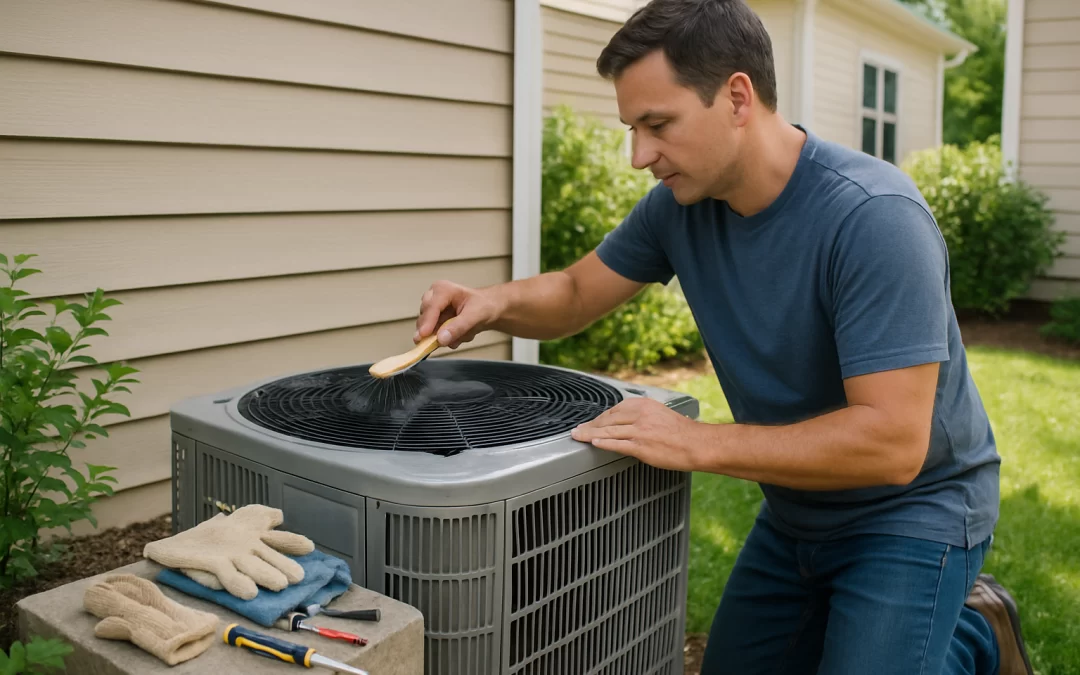
- Remove leaves, sticks, and debris from around and on top of the unit.
- Use a garden hose on gentle pressure to rinse dirt off the outside fins (spray from the side, not directly down).
- Check the condensate drain line:
- Find the PVC drain pipe near your indoor unit.
- Look for clogs or standing water in the drain pan.
- If accessible, pour a cup of white vinegar or a mild bleach solution into the drain to help prevent algae buildup.
- Inspect visible ductwork (if accessible in attic or basement):
- Look for obvious disconnected sections or large gaps.
- Listen for air leaks when the system runs.
- Test run the system:
- Set the thermostat to “cool” and a few degrees below room temperature.
- Make sure cool air comes from vents and the outdoor unit runs smoothly without loud or unusual noises.
- Schedule a professional tune-up if you haven’t had one in the last 12 months.
Summer: In-Season AC Maintenance
During peak cooling months, focus on keeping airflow strong and watching for warning signs.
- Check the air filter monthly and replace as needed.
- Keep the outdoor unit clear:
- After mowing, gently rinse off grass clippings.
- Maintain at least 2 feet of clearance around the unit.
- Monitor performance:
- Notice if some rooms are much warmer than others.
- Watch for ice on the refrigerant lines or indoor coil area.
- Listen for grinding, squealing, or rattling noises.
- Check the thermostat:
- Confirm it follows your schedule correctly.
- Replace batteries annually if it’s battery-powered.
- Use ceiling fans to feel cooler at a slightly higher thermostat setting.
Fall: Post-Season AC Maintenance
As cooling season winds down, prepare the system for a break and prevent off-season damage.
- Replace the air filter one more time at the end of the season.
- Clean the outdoor unit:
- Turn off power.
- Remove leaves and debris that have collected.
- Rinse the fins gently if they’re dirty.
- Inspect insulation on refrigerant lines:
- Look at the foam insulation on the copper lines going to the outdoor unit.
- If it’s missing or badly damaged, plan to replace it (inexpensive DIY or part of a service visit).
- Check the condensate drain and pan for any signs of mold or standing water.
Winter: Off-Season AC Care
If you live in a cold climate, your AC will sit unused for months. A few simple steps protect it and avoid surprises next spring.
- Keep the outdoor unit clear:
- Do not fully wrap the unit tightly (this can trap moisture and invite pests).
- You can place a breathable cover or board over the top to keep leaves and ice out, leaving sides open for airflow.
- Check occasionally for ice buildup or damage after storms.
- Plan ahead:
- Budget for a spring tune-up if your system is older or had issues last season.
- Review past electric bills to see how much cooling costs you and where savings might be possible.
Quick Ways to Save Money Immediately
If your electric bill is high and you want fast, low-cost improvements, focus on these steps first.
1. Adjust the Thermostat Strategically
- Raise the temperature by 1–3°F from your usual setting.
- Use a schedule: warmer when you’re away, cooler when you’re home.
- In many homes, this alone can save $10–$30 per month in summer.
2. Replace a Very Dirty Filter Today
- A new filter often costs $5–$20 and can immediately improve airflow.
- This can reduce strain on the system and lower energy use within days.
3. Seal Obvious Air Leaks Around Vents and Returns
- Use inexpensive foam gaskets or caulk around leaky registers or returns.
- This keeps more cooled air in the rooms you’re paying to cool.
4. Use Fans to Feel Cooler at Higher Settings
- Ceiling or portable fans use far less electricity than your AC.
- They allow you to raise the thermostat 1–2°F while feeling just as comfortable.
Long-Term Ways to Reduce Cooling Costs
Once you’ve handled the basics, consider longer-term improvements that can cut your cooling costs year after year.
Improve Home Insulation and Air Sealing
- Better insulation reduces how much heat enters your home, so your AC runs less.
- Upgrading attic insulation or sealing major air leaks can significantly reduce both cooling and heating bills.
- For more detail on costs and potential savings, see this home insulation cost guide with average prices and energy savings.
Use Window Coverings and Shade
- Close blinds or curtains on sunny sides of the house during the hottest part of the day.
- Consider reflective shades or films on windows that get strong direct sun.
- Planting shade trees or adding awnings can reduce heat gain over time.
Upgrade to a Programmable or Smart Thermostat
- These devices automatically adjust temperatures based on your schedule.
- They help avoid accidentally leaving the AC too low when you’re away.
- In many homes, they pay for themselves in 1–3 years through lower bills.
Plan for System Replacement When It’s Time
- If your AC is 12–15+ years old, even perfect maintenance can’t match the efficiency of newer models.
- At some point, replacement becomes more cost-effective than constant repairs.
- For realistic pricing and planning, review this guide on AC unit replacement costs and what homeowners should expect to pay.
When Spending Money on AC Maintenance Actually Saves More
Some maintenance tasks cost money upfront but prevent much larger expenses later. The key is knowing when the investment makes sense.
Annual Professional Tune-Ups
- Typical cost: around $80–$200 per visit, depending on your area and what’s included.
- What you get: coil cleaning, refrigerant check, electrical inspection, safety checks, and performance testing.
- Why it can save money:
- Prevents major breakdowns that can cost $300–$1,500+ in repairs.
- Helps keep efficiency closer to the system’s rated level, lowering monthly bills.
Duct Sealing and Repair
- Typical cost: a few hundred dollars for basic sealing, more for extensive ductwork.
- When it’s worth it: if you have rooms that never cool properly, visible gaps in ducts, or ducts running through hot attics.
- Potential benefit: less cooled air wasted in unconditioned spaces, so your AC runs less to reach the same temperature.
Coil Cleaning and Deep Maintenance
- If your indoor or outdoor coils are heavily clogged, a professional cleaning can restore lost efficiency.
- This is especially important if you’ve gone years without maintenance or live in a dusty or coastal area.
For a deeper look at how regular service affects your bills, you can review this guide on how regular HVAC maintenance can save you money on energy bills.
AC Maintenance Cost & Savings: What’s Realistic?
Actual savings depend on your climate, how often you use your AC, and how neglected the system has been. Here’s a realistic breakdown.
Typical Costs
- DIY supplies: $5–$40 per season (filters, vinegar/bleach for drain, basic cleaning supplies).
- Annual professional tune-up: $80–$200.
- Minor repairs found during maintenance: often $100–$400.
Monthly Savings Potential
- If your system is already well maintained, you might only save a small amount (around $5–$15 per month) from fine-tuning habits and filters.
- If your system has been neglected (dirty filters, clogged coils, poor settings), you may see 5–15% lower cooling costs, which could be $10–$40+ per month in hot climates.
- In very inefficient homes or with severe issues corrected, savings can be higher, but it’s better to assume modest, steady improvements.
Payback Period
- DIY maintenance: Often pays back within the same month through lower bills and reduced risk of breakdowns.
- Professional tune-up:
- If it prevents even one major repair over several years, it usually pays for itself.
- Duct sealing or larger improvements: Payback can range from 3–10 years, depending on how leaky your system was and your climate.
When It’s Not Worth the Cost
- Spending heavily on an AC that is already near the end of its life (15+ years, frequent breakdowns) may not be wise.
- Extensive duct modifications in a small home with low cooling bills may have a very long payback period.
- High-end accessories that don’t improve efficiency (like fancy vents or cosmetic covers) rarely pay off financially.
Decision Guide: DIY vs Pro, Fix vs Upgrade
Use this section to decide what to do now and what to plan for later.
Is AC Maintenance Worth Doing Right Now?
Yes, if:
- Your summer electric bills are higher than expected.
- You haven’t changed your filter in more than 2–3 months.
- Your AC runs constantly or struggles to keep up on hot days.
Maybe later, if:
- Your system is new (under 3 years) and already gets regular professional service.
- Your cooling bills are already low and stable, and comfort is good.
DIY vs Hire a Professional
Good DIY tasks for most homeowners:
- Changing air filters.
- Cleaning around the outdoor unit and gently rinsing fins.
- Checking and clearing the condensate drain (if accessible).
- Adjusting thermostat schedules and settings.
Tasks better left to professionals:
- Checking and adding refrigerant (requires special tools and licensing).
- Opening sealed panels and working on electrical components.
- Deep coil cleaning inside the air handler.
- Major duct repairs or redesign.
Cheap Fix vs Upgrade
- Choose the cheap fix (filters, cleaning, thermostat adjustments) if your system is under 10–12 years old and mostly reliable.
- Consider upgrades (new thermostat, duct improvements, or eventually a new AC) if:
- Your system is older and inefficient.
- You face frequent repair bills.
- Your home has major comfort issues that maintenance alone doesn’t solve.
When to Take Action vs Wait
- Act now if you see warning signs: ice on lines, burning smells, frequent cycling on and off, or sudden jumps in your electric bill.
- Plan and budget if your system is aging but still working; start getting quotes and understanding replacement costs before it fails.
- Wait on major upgrades if your current system is relatively new, efficient, and your bills are reasonable.
When to Call a Professional or Consider Replacement
Maintenance can prevent many issues, but some problems require expert help or even a new system.
Signs You Need a Professional
- Warm air coming from vents when the AC is on.
- Short cycling (system turns on and off frequently).
- Unusual noises: grinding, screeching, loud banging.
- Water leaks around the indoor unit or ceiling stains below it.
- Frozen coils or ice on refrigerant lines.
In these cases, continuing to run the system can cause more damage and higher repair costs.
When to Consider AC Replacement
- Your system is 12–15+ years old.
- You face major repairs (like a compressor replacement) that cost a large fraction of a new system.
- Your home is consistently uncomfortable despite proper maintenance.
- Your energy bills are high compared to similar homes in your area.
If you’re approaching this point, it’s smart to understand your options and budget. A detailed guide on HVAC replacement costs can help you compare repair vs replacement from a financial perspective.
Frequently Asked Questions
How often should I do AC maintenance?
You should handle basic tasks like checking the air filter every month during cooling season and replacing it every 1–3 months. A professional tune-up is recommended once a year, ideally in spring before heavy use, to catch issues early and keep efficiency high.
Can AC maintenance really lower my electric bill?
Yes, especially if your system has been neglected. Cleaning filters, coils, and drains and improving airflow can cut cooling costs by roughly 5–15% in many homes, which may mean $10–$40 per month in hot climates, though exact savings depend on your usage and local rates.
Is it safe to clean my outdoor AC unit myself?
It’s generally safe to turn off power and gently rinse the outside fins with a garden hose, and to clear debris around the unit. Avoid opening panels, bending fins, or using high-pressure water; deeper cleaning inside the unit should be done by a professional.
What happens if I never service my AC?
Without maintenance, dirt and wear build up, causing higher energy use, more frequent breakdowns, and a shorter system lifespan. You may not notice a problem right away, but over time you’ll likely pay more in both monthly bills and repair or replacement costs.
How do I know if my AC is too old to bother maintaining?
If your system is over 15 years old, needs frequent repairs, or has a major failure like a bad compressor, it may be more cost-effective to replace it than to keep investing in it. In that case, basic maintenance still matters for safety and short-term performance, but you should start planning for a new unit.
Should I get a maintenance plan from an HVAC company?
Maintenance plans can be worth it if they include a yearly tune-up, priority service, and discounts on repairs at a reasonable price. Compare the plan cost to a one-time tune-up and your typical repair history to see if it’s likely to save you money over several years.
Summary & Next Steps
Regular AC maintenance is a practical way to keep your home comfortable while controlling one of your largest utility expenses. Simple tasks like changing filters, cleaning around the outdoor unit, and checking drains can be done by most homeowners and often pay back quickly through lower bills and fewer breakdowns.
Expect modest but meaningful savings—often 5–15% off your cooling costs—plus a longer-lasting system and fewer surprise repair bills. Start with the easy checklist items today, then schedule professional service if your system is older, struggling, or hasn’t been inspected in over a year. By staying consistent and making smart decisions about when to repair, upgrade, or replace, you can keep your AC running efficiently and avoid common money-wasting mistakes.