
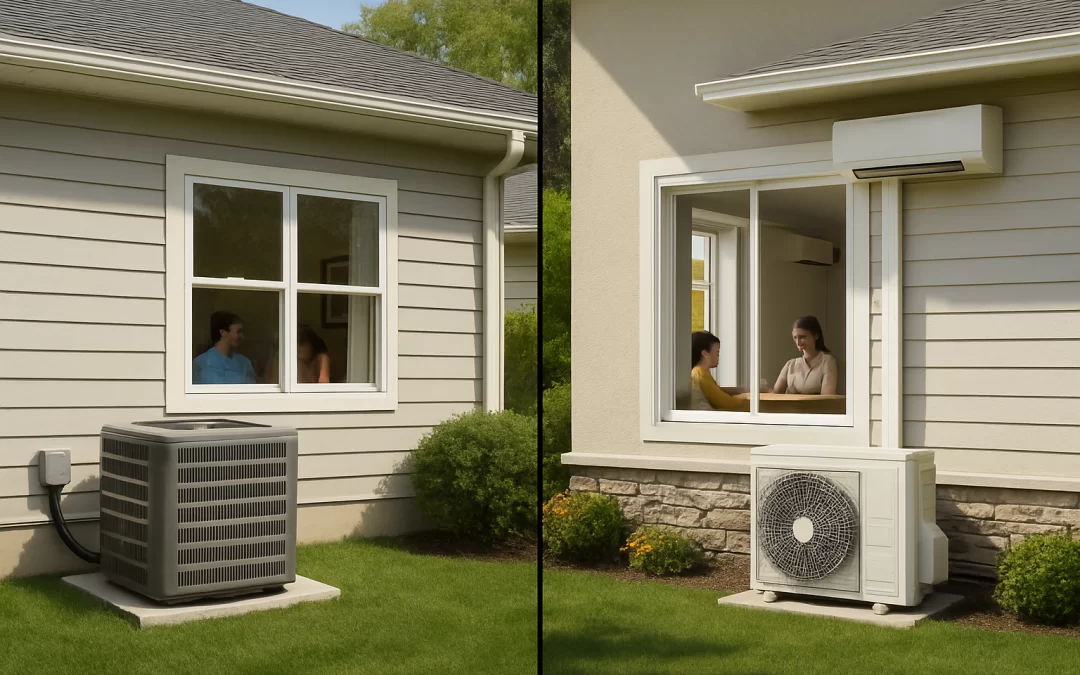
Direct answer: A central air conditioner is usually best for whole-house comfort and can be cheaper per square foot to run in larger homes, while a mini split (ductless system) is often better for smaller homes, additions, or homes without ductwork. Mini splits typically cost more per indoor unit but can cut cooling costs by 20–40% if you only cool the rooms you use. Central air is more convenient for entire homes but wastes money if you’re regularly cooling unused spaces. The best choice depends on your home’s layout, existing ducts, and whether you plan to stay long enough to recover the upfront cost.
This guide is for homeowners and renters comparing central air vs. mini split systems and trying to avoid overspending. Cooling is often one of the largest energy costs in summer, and choosing the wrong system can lock you into higher bills for 10–15 years. By understanding how each option works, what it costs, and where the savings really come from, you can choose a system that fits your home and your budget.
Table of Contents
- Central Air vs. Mini Split: Basic Differences
- Why Cooling Costs Get So High
- Common Ways People Overspend on Cooling
- What to Check First Before Choosing a System
- Immediate Ways to Save with Either System
- Long-Term Savings and Upgrade Options
- When Spending More Now Actually Saves Money Later
- Common Costly Mistakes to Avoid
- When to Hire a Professional (and How It Saves You Money)
- Costs, Savings, and Payback Periods
- Decision Guide: Central Air vs. Mini Split for Your Situation
- Frequently Asked Questions
- Summary and Next Steps
Central Air vs. Mini Split: Basic Differences
Before comparing costs, it helps to understand how each system works in simple terms.
What is a central air conditioner?
A central air conditioner uses one outdoor unit connected to an indoor coil and a furnace or air handler. Cool air is pushed through ductwork and delivered to every room with a vent.
- Best for: Homes that already have ductwork and need whole-house cooling.
- Comfort: Even cooling across most rooms, controlled by one thermostat.
- Downside: You pay to cool the whole house, even rooms you rarely use.
What is a mini split (ductless) system?
A mini split has an outdoor unit connected to one or more indoor wall- or ceiling-mounted units. Each indoor unit cools a specific room or zone and has its own remote or thermostat.
- Best for: Homes without ducts, additions, bonus rooms, or targeted cooling.
- Comfort: Room-by-room control; you can set different temperatures in different spaces.
- Downside: Higher cost per indoor unit, and visible wall units some people don’t like.
Why Cooling Costs Get So High
Whether you choose central air or a mini split, certain factors drive your bills up.
- Oversized or undersized equipment: A unit that’s too big short-cycles (turns on and off frequently), wasting energy and wearing out faster. Too small runs constantly and still can’t keep up.
- Poor insulation and air leaks: If your home leaks cool air, your system has to run longer to maintain temperature, no matter how efficient it is.
- Leaky or uninsulated ducts (central air only): Duct leaks can waste 20–30% of cooled air, especially in attics or crawl spaces.
- Old, low-efficiency equipment: Older central AC units and mini splits can use 30–50% more electricity than modern high-efficiency models.
- Running at very low temperatures: Setting the thermostat to 68°F instead of 75°F can add 20–40% to your cooling bill.
These issues matter more to your wallet than the brand name on the box. Fixing them can sometimes save more than upgrading the system itself.
Common Ways People Overspend on Cooling
Many homeowners pay more than necessary simply because of how they use their system.
- Cooling unused rooms: With central air, closing vents in unused rooms can actually increase pressure in the ducts and reduce efficiency. With mini splits, leaving all heads on the same low temperature all day removes the main advantage of zoning.
- Ignoring maintenance: Dirty filters, clogged coils, and low refrigerant levels can increase energy use by 10–30% and shorten equipment life.
- Constant manual thermostat changes: Frequently dropping the thermostat several degrees “to cool faster” doesn’t work and often leads to overcooling.
- Using window units plus central air: Running multiple systems at once is usually less efficient than properly sizing and using one good system.
- Delaying replacement too long: Keeping a 20-year-old central AC or mini split can cost more in energy and repairs than replacing it a few years earlier.
What to Check First Before Choosing a System
Before deciding between central air and a mini split, check a few basics that can save you money regardless of your choice.
1. Do you already have ductwork?
- If your home has ducts in good condition, central air is often the lower-cost option for whole-house cooling.
- If you have no ducts, adding them can cost more than installing a mini split system, especially in finished homes.
2. How is your home insulated?
Poor insulation and air leaks can make any system feel undersized and expensive to run.
- Check attic insulation depth and look for obvious gaps around doors, windows, and attic hatches.
- Improving insulation can reduce cooling costs by 10–30% and may let you choose a smaller, cheaper system. For typical costs and savings, see a detailed home insulation cost guide.
3. How many rooms do you actually use daily?
- If you mainly use a few rooms (for example, living room and one bedroom), a mini split can save money by cooling only those spaces.
- If your family uses most of the home all day, central air may be more cost-effective.
4. What’s your current system’s age and condition?
- Systems older than 12–15 years are usually less efficient and more prone to breakdowns.
- Frequent repairs or uneven temperatures are signs it may be time to compare replacement options.
Immediate Ways to Save with Either System
You can often cut cooling costs right away without replacing your system.
Thermostat and usage adjustments
- Raise the setpoint: Increasing your thermostat by 2–3°F can reduce cooling costs by about 5–10%.
- Use programmable or smart controls: Set higher temperatures when you’re away and at night. This can save 10–20% on cooling bills.
- Use fans wisely: Ceiling fans make you feel cooler, allowing you to raise the thermostat 2–4°F. Turn fans off when leaving the room.
Simple maintenance tasks
- Change or clean filters: Every 1–3 months in summer. This alone can save 5–15% on energy use.
- Clear outdoor unit: Keep at least 2 feet of clearance around the outdoor unit and remove leaves, grass, and debris.
- Clean indoor mini split filters: For ductless systems, wash the indoor unit filters monthly during heavy use.
For more detailed maintenance steps that help both central air and mini splits run efficiently, see an AC maintenance checklist.
Long-Term Savings and Upgrade Options
When you’re ready to invest, certain upgrades can significantly lower your long-term cooling costs.
Central air: Long-term savings options
- High-efficiency units: Replacing a 10–13 SEER unit with a 16–18 SEER central AC can cut cooling costs by 20–40%.
- Variable-speed or two-stage systems: These run at lower speeds most of the time, improving comfort and efficiency.
- Duct sealing and insulation: Sealing leaks and insulating ducts in attics or crawl spaces can reduce losses by 10–30%.
- Zoning (if possible): Some central systems can be zoned with multiple thermostats and dampers, reducing wasted cooling in unused areas.
Mini split: Long-term savings options
- High SEER mini splits: Many ductless systems have SEER ratings in the 20–30+ range, using far less electricity than older central units.
- Right number of zones: Installing only as many indoor units as you truly need keeps upfront costs down and maximizes zoning savings.
- Inverter technology: Most modern mini splits use inverter compressors that ramp up and down smoothly, saving energy and improving comfort.
Home improvements that help both systems
- Better insulation and air sealing: Reduces the size and runtime of any cooling system.
- Shade and window treatments: Closing blinds during the hottest hours and adding exterior shade can noticeably reduce heat gain.
- Efficient windows (when already replacing): Upgrading windows is expensive and usually only worth it if they are failing or being replaced anyway.
When Spending More Now Actually Saves Money Later
Sometimes the cheaper system up front is more expensive over 10–15 years. Here’s when paying more can be smart.
When a mini split can beat central air financially
- No existing ductwork: If you’d have to add ducts, a multi-zone mini split is often cheaper overall and more efficient.
- Partial use homes: For vacation homes, in-law suites, or homes where only a few rooms are used, zoning can cut bills by 20–40%.
- Hot spots or additions: Instead of upsizing your central system, adding a small mini split to a problem area can be cheaper and more efficient.
When central air can beat mini splits financially
- Existing ducts in good shape: Replacing an old central unit with a modern, efficient one is often cheaper than installing multiple mini split heads.
- Large families using the whole home: If most rooms are occupied daily, the zoning advantage of mini splits is smaller.
- Resale expectations: In some markets, buyers expect central air, which can help protect your home’s value.
When a higher-efficiency model is worth it
- High electric rates or heavy usage: If your summer bills are already high, upgrading to a more efficient system often pays back faster.
- Long-term stay: If you plan to stay in your home 7–10+ years, paying extra for efficiency usually makes sense.
- Utility rebates: Rebates for high-efficiency systems can shorten the payback period by 1–3 years.
Common Costly Mistakes to Avoid
Avoiding these mistakes can save thousands over the life of your system.
- Choosing based on price alone: The lowest bid often means corners cut on sizing, installation quality, or equipment efficiency.
- Oversizing “just to be safe”: Bigger is not better. Oversized central air or mini splits cost more up front and more to run.
- Too many mini split zones: Installing a head in every room raises costs and can reduce efficiency if many zones are rarely used.
- Ignoring duct condition: Replacing a central AC without checking ducts can lock in 20–30% energy waste.
- DIY refrigerant work: Handling refrigerant without proper tools and training can damage equipment and void warranties.
- No permits or inspections: Skipping permits to save a few hundred dollars can cause problems with insurance, safety, and resale.
When to Hire a Professional (and How It Saves You Money)
Some decisions and tasks are worth paying a qualified HVAC professional for, because mistakes are expensive.
Situations where a pro is strongly recommended
- New system sizing: A proper load calculation (often called a Manual J) ensures your central air or mini split is the right size.
- New installations or major replacements: Correct refrigerant charging, electrical work, and line sizing are critical for efficiency and longevity.
- Complex ductwork or zoning: Poorly designed ducts or zones can cause comfort issues and high bills.
- Refrigerant leaks or compressor issues: These require specialized tools and knowledge.
To avoid overpaying or hiring the wrong contractor, it helps to compare multiple quotes and know what to ask. A guide on how to choose an HVAC contractor and spot red flags can help you protect your budget.
Costs, Savings, and Payback Periods
Actual costs vary by region, home size, and equipment, but these ranges can help you budget and estimate savings.
Typical upfront costs
Central air conditioner (replacement, ducts already in place)
- Equipment and installation: Roughly $4,000–$9,000 for a typical 2–3 ton system, depending on efficiency and brand.
- With duct repairs or modifications: Often $1,000–$3,000 more if ducts need sealing, resizing, or replacement.
Mini split (ductless) systems
- Single-zone mini split: Around $2,500–$5,000 installed for one indoor unit and one outdoor unit.
- Multi-zone mini split (3–5 indoor units): Often $7,000–$15,000+ depending on the number of zones and efficiency.
Monthly savings estimates
These are typical ranges; your actual savings depend on local energy rates and usage.
- Replacing an old central AC with a modern efficient model: Can save $20–$80 per month during peak summer months, or 20–40% of cooling costs.
- Switching from whole-house central air to targeted mini split zoning: If you only cool the rooms you use, you might save $30–$100 per month in summer, especially in larger homes.
- Improving insulation and sealing leaks: Often saves $10–$50 per month in combined heating and cooling costs.
Typical payback periods
- High-efficiency central air vs. basic model: Paying $1,000–$2,000 more for a higher SEER unit can pay back in 5–10 years through lower bills, faster in hot climates.
- Mini split vs. adding ductwork plus central air: In homes without ducts, mini splits can have a similar or lower total cost up front and pay back in 5–10 years through efficiency and zoning.
- Insulation upgrades: Often pay back in 3–7 years and continue saving for decades.
When savings are small vs. significant
- Small savings: Replacing a relatively new, efficient central AC with a slightly more efficient model usually isn’t worth the cost.
- Significant savings: Replacing a 15–20-year-old central AC or mini split, or switching from cooling the whole house to cooling only used rooms, can cut bills noticeably.
- Not worth it: Oversizing equipment “just in case,” or adding more mini split zones than you need, usually increases costs without meaningful savings.
For more detailed breakdowns of what homeowners actually pay for new systems, see a guide on heating and cooling replacement costs.
Decision Guide: Central Air vs. Mini Split for Your Situation
Use this section to match your situation to the system that’s likely to save you the most over time.
Do now vs. later
- Do now: Your system is 15–20+ years old, needs frequent repairs, or struggles to keep up. Energy bills are high, and comfort is poor.
- Do later: Your system is under 10 years old, runs reliably, and your bills are reasonable. Focus on maintenance, insulation, and thermostat use first.
Quick fix vs. investment
- Quick fixes: Filter changes, thermostat adjustments, sealing obvious air leaks, and basic maintenance. These are low-cost and can cut bills 5–20%.
- Investments: New central AC or mini split, duct repairs, or major insulation upgrades. Higher upfront cost but larger long-term savings.
DIY vs. professional
- DIY-friendly: Changing filters, cleaning mini split filters, basic caulking and weatherstripping, using programmable thermostats.
- Professional only: System sizing, new installations, refrigerant handling, electrical work, and major duct modifications.
Cheap fix vs. upgrade
- Cheap fix makes sense when: The system is relatively new, problems are minor (like dirty coils or clogged filters), and your main issue is slightly higher bills.
- Upgrade makes sense when: The system is old, inefficient, or undersized/oversized, and you plan to stay in the home long enough to benefit from lower bills and fewer repairs.
Which is best for you: central air or mini split?
- Central air is usually better if:
- Your home already has good ductwork.
- You want simple, whole-house cooling with one thermostat.
- Most rooms are used daily, and you plan to stay long term.
- Mini split is usually better if:
- Your home has no ducts or they are in very poor condition.
- You mainly use a few rooms and want to avoid cooling unused spaces.
- You’re adding a new room, finished attic, or garage conversion.
Frequently Asked Questions
Is a mini split cheaper to run than central air?
In many cases, yes—especially if you only cool the rooms you use. Mini splits are often more efficient and avoid duct losses, which can cut cooling costs by 20–40%. However, if you cool your entire home all day, the savings compared to a well-installed central air system may be smaller.
Which is cheaper to install: central air or a mini split?
If you already have good ductwork, replacing a central air conditioner is often cheaper than installing multiple mini split zones. In homes without ducts, mini splits can be less expensive overall because you avoid the cost and disruption of adding ductwork. The more zones you add to a mini split system, the higher the upfront cost.
How long do central air conditioners and mini splits last?
Both systems typically last around 12–20 years with proper maintenance. Mini splits often run at lower speeds and can have slightly longer lifespans, but this depends heavily on installation quality and regular care. Keeping filters clean and scheduling routine service helps either system last longer and run cheaper.
Can I use both central air and a mini split in the same home?
Yes, and in some cases this is the most cost-effective setup. For example, you might keep central air for the main living areas and add a mini split for a hot upstairs room or addition. This can be cheaper than upsizing your central system and may reduce your overall energy use.
Will a mini split increase my home’s value more than central air?
In many markets, buyers are more familiar with central air, so it may have a clearer impact on resale value. However, high-efficiency mini splits are becoming more common and can be a selling point, especially in homes without ducts or with separate living spaces. The best choice for value depends on what’s typical and expected in your local housing market.
How can I be sure I’m not overpaying for a new system?
Get at least two to three quotes, ask for a proper load calculation, and compare equipment efficiency ratings and warranties—not just price. Working with a qualified contractor and understanding typical AC unit replacement costs can help you spot bids that are unrealistically low or high.
Summary and Next Steps
Central air is usually the better choice for homes with existing ductwork and whole-house cooling needs, while mini splits shine in homes without ducts, in additions, or where you only need to cool certain rooms. The biggest savings come from matching the system to how you actually live, improving your home’s insulation and air sealing, and using your thermostat wisely.
To move forward:
- Check your current system’s age, condition, and energy bills.
- Decide whether you truly need whole-house cooling or mainly use a few rooms.
- Address easy fixes first: filters, thermostat settings, and basic air sealing.
- When ready, get multiple quotes for both central air and mini split options that fit your home.
By taking a structured approach instead of rushing into a replacement, you can choose the cooling system that keeps you comfortable and saves the most money over the long term.