
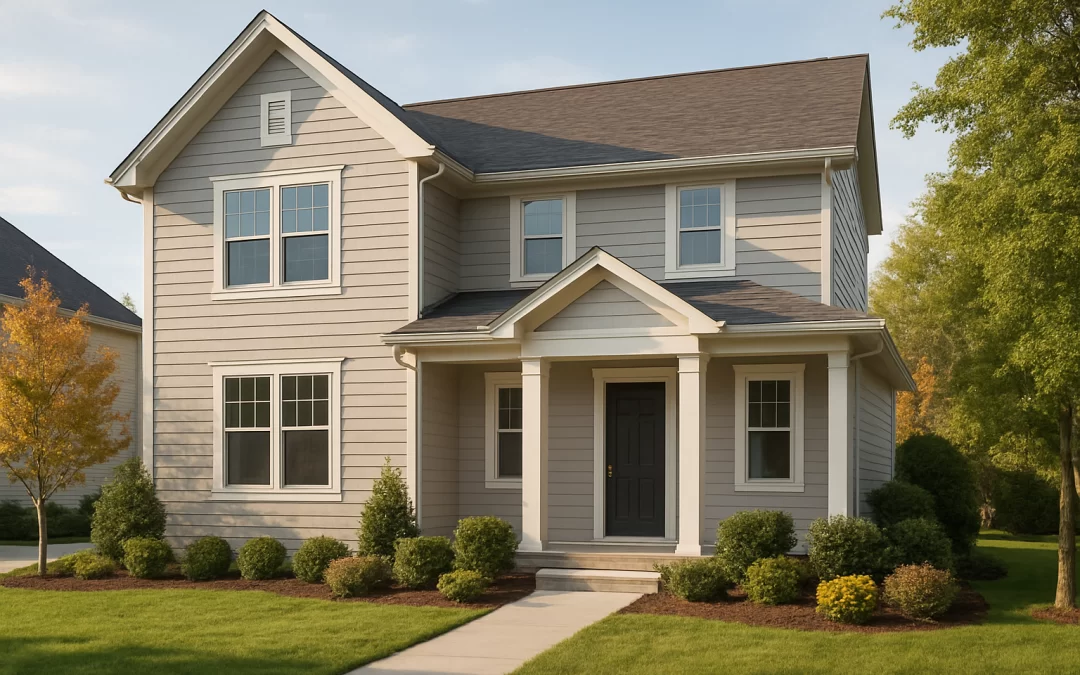
Best siding colors for resale value are usually light neutrals like warm white, greige (gray-beige), and soft taupe, with darker, classic colors like navy or charcoal as accents or on higher-end homes. These colors appeal to the widest pool of buyers, photograph well for listings, and can add $5,000–$15,000 or more in perceived value compared to loud or dated colors, especially in competitive markets. Choosing the right color also helps your siding look cleaner for longer, which can save hundreds on frequent repainting or cleaning. The tradeoff is that “safe” colors may feel less unique, and the best choice still depends on your neighborhood, climate, and roof color.
This guide is for homeowners planning to sell in the next 1–10 years who want to pick a siding color that boosts curb appeal without wasting money. Exterior repainting or re-siding can easily cost $5,000–$25,000+, so choosing the wrong color is an expensive mistake. Below, you’ll see which siding colors buyers actually prefer, how color affects resale value, and when it makes financial sense to repaint or replace siding before listing.
Table of Contents
- Why Siding Color Matters for Costs and Resale
- Common Ways Homeowners Overspend on Siding Color
- What to Check First Before Choosing a Siding Color
- Best Siding Colors for Resale Value
- Immediate Savings: Low-Cost Color Tweaks Before Selling
- Long-Term Savings and Upgrades
- When Spending More on Color Actually Saves Money
- Common Costly Mistakes With Siding Color
- When to Hire a Professional for Siding Color Choices
- Cost and Savings Estimates
- Decision Guide: Do Now vs Later, DIY vs Pro
- Frequently Asked Questions
- Summary and Next Steps
Why Siding Color Matters for Costs and Resale
Siding color doesn’t just affect style; it affects how quickly your home sells and how much buyers are willing to pay. Neutral, widely appealing colors can:
- Attract more showings and online clicks
- Make the home look newer and better maintained
- Hide dirt and aging better, reducing cleaning and repainting costs
On the flip side, unusual or dated colors can shrink your buyer pool and lead to lower offers or longer time on market. Even a 1–3% difference in sale price can mean $4,000–$15,000 on a typical home, which is often more than the cost of repainting.
Common Ways Homeowners Overspend on Siding Color
Many homeowners lose money on siding color in ways that aren’t obvious at first:
- Choosing trendy, bold colors that look great now but feel dated in 3–5 years, forcing an early repaint.
- Ignoring neighborhood norms, which can make your home stand out in a bad way and scare off buyers.
- Repainting the entire house when a partial repaint or accent color change would have been enough.
- Picking colors that fade quickly in strong sun, leading to a chalky, tired look and earlier repaint costs.
- Not testing colors in real light, then paying to repaint because the color looks different than expected.
These mistakes can easily add $2,000–$10,000 in unnecessary costs over a decade, especially if you repaint more often than needed.
What to Check First Before Choosing a Siding Color
Before you fall in love with a color on a paint chip, look at the bigger picture. This helps you avoid expensive do-overs.
1. Your Roof Color and Style
Your roof is usually the largest color block after your siding. Certain combinations look “off” and can hurt curb appeal:
- Warm roofs (brown, tan, reddish) pair best with warm siding colors (creamy whites, beiges, warm grays).
- Cool roofs (black, dark gray, blue-gray) pair best with cool siding colors (true grays, blue-grays, crisp whites).
If your roof is older and you’ll replace it soon, consider future roof color too, so you don’t lock yourself into a siding color that clashes later.
2. Brick, Stone, and Fixed Elements
Chimneys, brick foundations, stone accents, and even colored windows or gutters are expensive to change. Your siding color should coordinate with these, not fight them. Take photos of your home and bring them when color shopping so you can compare tones side by side.
3. Neighborhood and Buyer Expectations
Look at homes that sell quickly in your area:
- What siding colors do they use?
- Are most homes light, medium, or dark?
- Are there any colors that seem to sit on the market longer?
Matching the general “feel” of the neighborhood (without copying exactly) usually leads to faster sales and fewer buyer objections.
4. Condition of Existing Siding
If your siding is failing, color alone won’t fix the problem. Before choosing a color, check for:
- Rot, warping, or soft spots
- Cracks, holes, or loose panels
- Moisture damage or mold
If you’re unsure whether to repaint or replace, compare your options using a guide like siding replacement vs. repair so you don’t spend thousands painting siding that needs replacement soon anyway.
Best Siding Colors for Resale Value
While there’s no single “best” color for every home, some categories consistently perform better for resale.
1. Light Neutrals (Safest Bet for Most Homes)
Light neutrals are the most broadly appealing and safest for resale. These include:
- Warm whites (not stark, slightly creamy)
- Greige (a mix of gray and beige)
- Soft taupe
- Pale gray (not too blue or too cold)
Why buyers like them:
- Make homes look larger and cleaner
- Work with many roof and trim colors
- Photograph well for online listings
Financial impact: On a typical $350,000 home, switching from a loud or dated color to a light neutral can realistically improve perceived value by 1–3% ($3,500–$10,500) and reduce time on market, especially in competitive areas.
2. Medium Neutrals (Balanced and Practical)
Medium tones hide dirt better than very light colors and still appeal to most buyers. Good options include:
- Mid-tone greige
- Medium warm gray
- Muted sage green (soft, gray-green, not bright)
These colors are especially good in areas with dust, rain splatter, or snow, where very light siding can look dirty quickly. They can save you on power washing or repainting frequency over 5–10 years.
3. Dark, Classic Colors (Best as Accents or on Certain Homes)
Darker colors can look high-end and dramatic when used correctly. Popular choices include:
- Navy blue
- Charcoal or deep gray
- Deep green (forest or black-green)
These work best when:
- The home has good architectural details and trim to break up the color
- You pair them with light trim and doors for contrast
- Your neighborhood already has some darker homes
Dark colors can fade faster in strong sun and show dust and chalking more, which may mean more frequent repainting. For resale, they’re usually safest in higher-end neighborhoods or as accent colors (e.g., on shutters or gables).
4. Colors to Use Carefully (or Avoid for Resale)
Some colors can hurt resale value or limit your buyer pool:
- Very bright colors (bright yellow, red, blue, or green siding)
- Unusual pastels (pink, lavender, turquoise) outside of coastal or historic areas where they’re common
- Very dark brown or black on small homes, which can make them look smaller and hotter
These can be polarizing. Even if a few buyers love them, many will mentally “deduct” the cost of repainting from their offer, often $5,000–$10,000 or more.
Immediate Savings: Low-Cost Color Tweaks Before Selling
If you’re selling soon and don’t want to spend $10,000+ on a full repaint or re-siding, focus on high-impact, low-cost changes.
1. Repaint Trim, Doors, and Accents
Often, the siding color itself is acceptable, but the trim and doors make the home look dated. Strategic repainting can cost $500–$2,000 and still deliver a noticeable boost in curb appeal.
- Front door: A fresh, modern color (black, navy, deep red, or a rich wood tone) can make the whole front look updated.
- Trim and fascia: Clean white or soft off-white trim can modernize older siding colors.
- Shutters: Repainting or removing old shutters can simplify and update the look.
This approach can deliver much of the visual benefit of a full repaint at a fraction of the cost, especially if your siding is in good shape.
2. Power Wash Before Repainting
Sometimes what looks like a “bad color” is just dirty siding. A professional power wash typically costs $200–$500 and can:
- Make colors look brighter and newer
- Help you decide if repainting is truly needed
- Improve listing photos immediately
If washing alone makes the home look 50–70% better, you may be able to skip or delay a full repaint and save thousands.
3. Touch-Up Instead of Full Repaint
If most of the paint is sound but some areas are peeling or faded, targeted touch-ups can be enough for resale. This might cost $300–$1,500 instead of $5,000–$10,000+ for a full job. Focus on:
- Front-facing walls and entry areas
- Peeling window trim and fascia
- Highly visible corners and edges
Long-Term Savings and Upgrades
If you plan to stay in the home for several years before selling, you can choose siding colors and materials that reduce maintenance and energy costs over time.
1. Choose Fade-Resistant Colors and Materials
Some materials and colors hold up better than others. For example, fiber cement and higher-quality vinyl often have better color retention than cheaper options. Mid-tone neutrals usually show fading less than very dark or very bright colors.
Over 10–15 years, this can mean repainting once instead of twice, saving $5,000–$15,000 depending on home size.
2. Consider Heat and Energy Impacts
Color can slightly affect how much heat your home absorbs:
- Lighter colors reflect more sunlight and can help keep homes cooler in hot climates.
- Darker colors absorb more heat, which may be helpful in cold climates but can increase cooling costs in warm areas.
The energy savings from color alone are usually modest (often $5–$20 per month), but combined with good insulation and efficient siding materials, it adds up. If you’re also considering upgrading insulation, see how it compares in cost and payback in a guide like investing in insulation to cut heating costs.
3. Pick Colors That Hide Dirt and Wear
Colors that are too light or too dark can show every splash, cobweb, and dust streak. For long-term savings on cleaning and repainting:
- Choose mid-tone neutrals in dusty or rainy areas.
- Avoid pure white near busy roads or trees that drop sap.
- Avoid very dark colors in sunny, dry climates where dust and chalking are obvious.
4. Coordinate With Future Upgrades
If you plan to replace windows, doors, or the roof in the next 5–10 years, choose a siding color that will still work with those future choices. This reduces the risk of needing to repaint again after a major upgrade.
When Spending More on Color Actually Saves Money
Sometimes, investing in a better color choice or a full repaint before selling can pay for itself and more.
1. When Your Current Color Is a Turn-Off
If your home is currently a very bright, unusual, or obviously dated color (for example, faded yellow, mint green, or a 1980s peach), buyers will often mentally subtract the cost of repainting from their offer. In many markets:
- Full exterior repaint: $5,000–$10,000+ for an average home
- Buyer discount for “needs repaint”: often $10,000–$20,000+
In this case, repainting to a neutral color before listing can easily return 100–200% of the cost in a higher sale price and faster sale.
2. When Siding Is Failing and Needs Replacement Anyway
If your siding is rotting, warping, or failing, repainting is usually a waste. Replacing siding with a low-maintenance material in a buyer-friendly color can:
- Improve curb appeal dramatically
- Reduce maintenance for you and future buyers
- Increase perceived quality and value
Use a cost guide like siding replacement cost by material to compare options and see how color choices interact with material (for example, prefinished colors vs. paintable surfaces).
3. When You’re in a Competitive, Higher-Priced Market
In hot markets or higher-priced neighborhoods, buyers expect move-in-ready exteriors. Spending $7,000–$12,000 on a professional repaint in a top resale color can realistically help you:
- Sell faster (weeks instead of months)
- Avoid multiple price cuts
- Compete better with newer homes
Even a 1–2% higher sale price on a $500,000 home ($5,000–$10,000) can cover most or all of the repaint cost.
Common Costly Mistakes With Siding Color
Avoiding these mistakes can save you thousands in repainting and lost resale value.
1. Choosing Color From a Tiny Chip Only
Colors look very different on a whole house than on a small sample. Many homeowners end up repainting sooner because the color looks too blue, too beige, or too dark once applied.
Always:
- Paint large test patches (2–4 feet) on different sides of the house
- View them at different times of day and in different weather
2. Ignoring Sun Exposure
South- and west-facing walls get the most sun and show fading first. Dark and bright colors on these sides can look worn in just a few years, especially with cheaper paints.
Consider slightly lighter or more muted colors on sun-heavy sides or invest in higher-quality, UV-resistant paint if you choose a darker color.
3. Overcomplicating the Color Scheme
Using too many colors (for example, one for siding, one for trim, one for shutters, one for doors, plus an accent) can look busy and turn off buyers. It can also increase painting costs by 10–25% due to extra labor and materials.
For resale, most homes look best with:
- 1 main siding color
- 1 trim color
- 1 accent color (door/shutters) if needed
4. Forgetting About HOA or Local Rules
Some neighborhoods and HOAs restrict exterior colors. Painting or re-siding without approval can lead to fines or even being forced to repaint at your own expense.
Always check rules and get written approval before committing to a color.
5. Painting Over Failing Siding
Painting over rotten, warped, or water-damaged siding is a short-term bandage. The damage usually worsens, and buyers may see it as “covering up” problems, which can hurt trust and offers.
If you suspect serious issues, compare repainting vs. replacement using resources like siding replacement cost and how to avoid overpaying before you spend on paint.
When to Hire a Professional for Siding Color Choices
Color decisions can be DIY, but there are times when professional help is worth the cost.
1. When Your Home Is High-Value or Unique
If your home is in a higher price range or has complex architecture, a poor color choice can cost far more than a color consultation. A professional designer or color consultant typically charges $150–$500 and can:
- Recommend 2–4 proven color schemes
- Coordinate with roof, stone, and surroundings
- Help you avoid trendy choices that will date quickly
2. When You’re Completely Unsure
If you and your partner or family can’t agree, or you’ve changed your mind multiple times, a neutral expert can save you from repainting twice. This is especially helpful if you’re on a tight selling timeline.
3. When You’re Re-Siding the Whole House
Full siding replacement is a major investment, often $12,000–$40,000+. Getting the color wrong means living with it for decades or paying again to repaint or replace. In this case, a small fee for professional color advice is usually a smart insurance policy.
Cost and Savings Estimates
Actual costs vary by region and home size, but these ranges can help you budget and decide what’s worth it.
Typical Upfront Costs
- Power washing only: $200–$500
- Trim/door/shutter repaint only: $500–$2,000
- Full exterior repaint (average home): $5,000–$10,000+
- Full siding replacement: $12,000–$40,000+ depending on material and size
Monthly and Long-Term Savings
- Energy savings from color alone: Usually modest, around $5–$20/month in extreme climates when choosing lighter colors that reduce cooling load.
- Maintenance savings: Choosing fade-resistant, dirt-hiding colors and better materials can reduce repainting frequency, saving $500–$1,500 per year averaged over 10–15 years.
- Resale impact: A buyer-friendly color can add 1–3% to sale price or prevent price cuts, often $3,000–$15,000+ depending on home value.
Payback Period
- Low-cost updates (power wash, trim/door repaint): Often pay back immediately through better first impressions and faster sale; think of this as a 1–3 month payback when listing.
- Full repaint for resale: If it prevents a 2–3% price cut, payback is often immediate at closing.
- Re-siding with better material and color: Payback is longer (5–15 years) and comes from a mix of higher resale value, lower maintenance, and sometimes modest energy savings.
When Savings Are Small vs. Significant
- Small savings: Changing from one neutral to another similar neutral just for personal taste usually doesn’t add much resale value; do this only if you’ll enjoy it for years.
- Significant savings: Changing from a polarizing or very dated color to a widely appealing neutral before selling can significantly increase buyer interest and offers.
When It’s Not Worth the Cost
- If your current color is a decent neutral and the paint is in good condition, a full repaint right before selling may not add enough value to justify the cost.
- If you plan to sell within a year and your siding is failing structurally, a full re-siding may not fully pay back unless you’re in a very competitive, high-priced market.
Decision Guide: Do Now vs Later, DIY vs Pro
Do Now vs. Later
- Do now if:
- Your current color is very bright, unusual, or clearly dated.
- Paint is peeling or badly faded on the front of the home.
- You’re listing within 6–12 months and want strong curb appeal.
- Do later if:
- Your color is a reasonable neutral and paint is in good shape.
- You plan to replace the roof or windows soon and want to coordinate colors.
Quick Fix vs. Investment
- Quick fix (low cost):
- Power wash siding
- Repaint front door and trim
- Touch up peeling areas on the front
Best if you’re selling soon and your budget is limited.
- Investment (higher cost):
- Full repaint in a top resale color
- Re-siding in a durable, low-maintenance material and neutral color
Best if you’ll own the home for several years or are in a competitive market.
DIY vs. Professional
- DIY may make sense if:
- You have a one-story home with simple architecture.
- You have the tools, time, and comfort with ladders and prep work.
- You’re doing small areas (doors, trim, shutters) rather than the whole house.
- Hire a pro if:
- Your home is two stories or more.
- You’re repainting the entire exterior.
- You want a high-quality finish that will last and impress buyers.
Cheap Fix vs. Upgrade
- Cheap fix: Repainting existing siding in a better color. Good when siding is structurally sound but ugly or dated.
- Upgrade: Replacing siding with a more durable material in a buyer-friendly color. Good when siding is failing, high-maintenance, or clearly dragging down value.
Frequently Asked Questions
What siding color adds the most resale value?
Light neutrals like warm white, greige, and soft taupe typically add the most resale value because they appeal to the widest range of buyers. They make homes look larger, cleaner, and more modern, which can translate into higher offers and faster sales. The exact dollar impact depends on your market, but a good color choice can easily influence offers by several thousand dollars.
Is it worth repainting my siding before selling?
It’s usually worth repainting if your current color is very dated, bright, or peeling, because buyers will factor repainting costs into their offers. If your color is already a decent neutral and the paint is in good condition, a full repaint may not add enough value to justify the cost; in that case, focus on power washing and repainting trim and doors.
Should I choose a dark or light siding color?
For resale, light to medium neutrals are the safest choice for most homes. Dark colors can look upscale but may fade faster and aren’t as universally liked, so they’re best used as accents or in higher-end neighborhoods where they’re common. In hot climates, lighter colors can also help slightly reduce cooling costs.
How much does siding color really affect my home’s value?
Siding color alone won’t double your home’s value, but it can easily influence buyer perception by 1–3% or more. On a $300,000–$500,000 home, that’s roughly $3,000–$15,000, which is often more than the cost of repainting. Color also affects how quickly your home sells, which can save you months of carrying costs like mortgage, taxes, and utilities.
Can I save money by only repainting the front of my house?
Repainting only the front can save money and still improve curb appeal, especially if the sides and back are in decent shape. However, if the color difference is obvious, buyers may notice and question overall maintenance. This approach works best when you’re refreshing the same color rather than changing to a completely different one.
What if my HOA limits siding colors?
If you have an HOA, always start by checking the approved color list and getting written approval. Working within those options can still allow you to choose a buyer-friendly neutral that boosts resale value. Ignoring HOA rules can lead to fines or being forced to repaint, which can wipe out any savings.
Summary and Next Steps
The best siding colors for resale value are usually light to medium neutrals—warm whites, greiges, soft taupes, and gentle grays—that work with your roof and neighborhood. These colors attract more buyers, photograph well, and can add thousands in perceived value compared to loud or dated colors.
Before spending money, check your siding’s condition, roof color, and local norms, then decide whether you need a full repaint, a few targeted updates, or a full siding upgrade. In many cases, simple steps like power washing and repainting trim and doors can deliver strong returns at a low cost. When in doubt, especially for higher-value homes or full re-siding projects, consider a professional color consultation to avoid expensive mistakes.
Your next steps:
- Walk around your home and honestly assess your current color and paint condition.
- Look at recently sold homes nearby to see what colors are working in your market.
- Decide whether a quick refresh or a larger repaint/re-siding project makes the most financial sense for your timeline.
With a thoughtful color choice and the right level of investment, you can boost curb appeal, avoid overspending, and make your home more attractive to the buyers who matter most.