
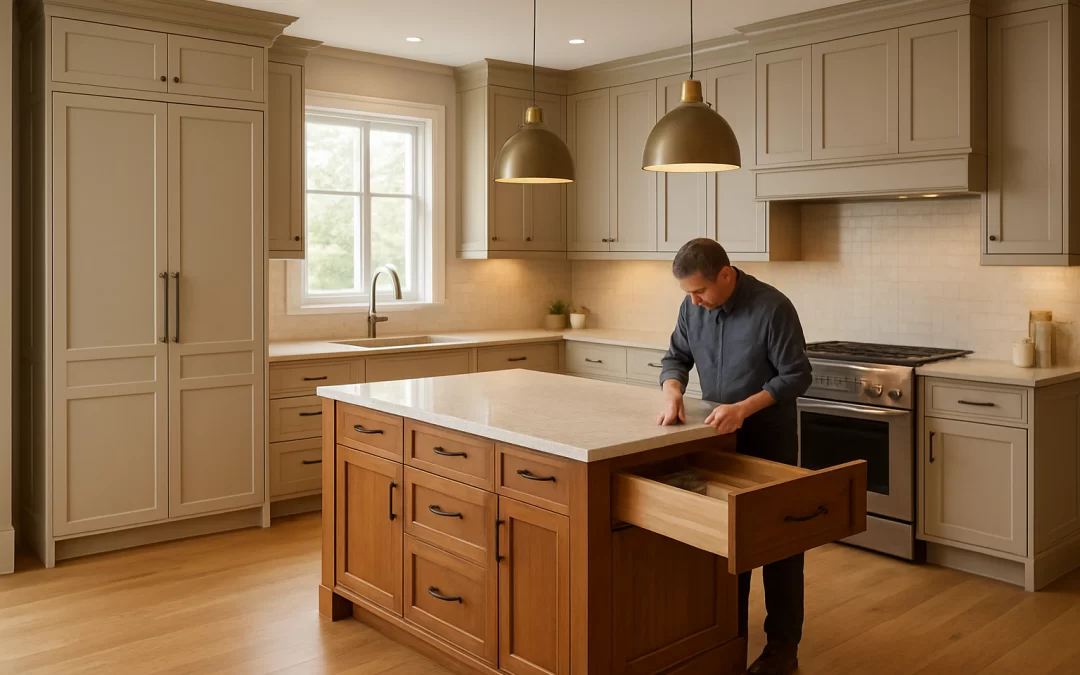
Custom kitchen cabinet pricing typically ranges from about $500–$1,200 per linear foot installed, or $12,000–$45,000+ for a full kitchen, depending on material, style, and layout complexity. Smart choices on wood species, door style, and storage features can easily save $5,000–$15,000 compared with a similar-looking high-end design. You can often cut 10–30% by simplifying finishes and interior extras, but the tradeoff is less resale appeal and potentially shorter cabinet life.
This guide breaks down custom cabinet costs by material and style so you can see where your money actually goes and where you can safely cut back. It’s designed for homeowners planning a remodel who want a custom look without overspending or getting surprised by add-on charges.
If you’re comparing full kitchen remodel options, you may also want to review overall average kitchen remodeling costs to see how cabinets fit into your total budget.
Table of Contents
- Custom Kitchen Cabinet Cost Breakdown by Material & Style
- Why Custom Kitchen Cabinets Are So Expensive
- Common Ways Homeowners Overspend on Custom Cabinets
- What to Check First Before You Order Custom Cabinets
- Immediate Ways to Cut Custom Cabinet Costs
- Long-Term Savings and Smart Upgrades
- When Spending More on Cabinets Actually Saves You Money
- Common Costly Mistakes with Custom Cabinets
- When to Hire a Professional vs. DIY
- Decision Guide: Now vs. Later, Quick Fix vs. Investment
- Frequently Asked Questions
- Summary & Next Steps
Custom Kitchen Cabinet Cost Breakdown by Material & Style
Custom cabinet pricing is usually quoted per linear foot (the length of cabinets along the wall) or as a full project. Below are realistic ranges for a typical 10×12 kitchen (about 20–25 linear feet of cabinets), including installation.
By Material
| Material Type | Typical Cost per Linear Foot (Installed) | Approx. Total for 10×12 Kitchen | Pros | Cons |
|---|---|---|---|---|
| Stock boxes + custom doors (hybrid) | $250–$500 | $6,000–$12,000 | Custom look for less, faster lead time | Less flexible sizing, may use cheaper box materials |
| Painted MDF (doors) + plywood boxes | $400–$700 | $9,000–$18,000 | Smooth painted finish, good value | Edges can chip; not ideal for heavy moisture |
| Maple or birch (stained or painted) | $500–$900 | $12,000–$22,000 | Durable, widely available, mid-range price | Paint hides grain; stain shows natural variation |
| Oak (stained) | $500–$850 | $11,000–$20,000 | Very durable, classic look, good for busy kitchens | Pronounced grain not everyone likes |
| Cherry or walnut | $700–$1,200 | $16,000–$30,000+ | High-end appearance, strong resale appeal | Higher material cost, color changes over time |
| Exotic woods (rift oak, mahogany, etc.) | $900–$1,500+ | $20,000–$45,000+ | Luxury look, unique grain | Very expensive, long lead times |
By Door Style
| Door Style | Relative Cost Impact | Notes |
|---|---|---|
| Slab (flat panel) | Baseline (least expensive) | Simple, modern, easiest to clean; good for tight budgets |
| Shaker | +10–20% | Most popular; good balance of cost, style, and resale value |
| Raised panel | +20–35% | More traditional, more labor and detail |
| Inset doors | +30–50%+ | Doors sit flush with frame; very precise work and higher cost |
| Glass-front or decorative | +15–40% (per affected cabinet) | Great for display, but adds cost and may show clutter |
Hardware, Finishes, and Extras
- Hardware (handles, knobs, pulls): $4–$40+ per piece; a full kitchen often needs 25–40 pieces ($100–$1,000+ total).
- Soft-close hinges and drawers: Add about $15–$40 per door/drawer; $300–$1,000 total.
- Special finishes (glazes, distressing, custom colors): Typically add 10–25% to cabinet cost.
- Pull-out organizers, spice racks, trash pull-outs: $100–$600 per feature; $500–$3,000+ total if heavily used.
For most households, cabinets will be 25–40% of the total kitchen remodel cost. If you’re planning a full remodel, compare these numbers with your overall budget using a detailed kitchen remodel cost guide so cabinets don’t crowd out other important upgrades.
Why Custom Kitchen Cabinets Are So Expensive
Custom cabinets cost more because they are built to fit your exact space, not just pulled from a warehouse. That means more labor, more measuring, and more chances for small design decisions to add up.
Key Cost Drivers
- Labor-intensive construction: Custom shops build each box and door to order, which takes more time than mass-produced stock cabinets.
- Higher-quality materials: Plywood boxes, solid wood doors, and durable finishes cost more than particleboard and thin veneers.
- Complex layouts: Angled corners, ceiling-height cabinets, and built-in appliances require extra design and installation work.
- Finish quality: Hand-sprayed or multi-step finishes are smoother and more durable but add significant labor cost.
- Local shop vs. factory: Small local shops may charge more per unit but can offer better fit and service; large factories may be cheaper but less flexible.
These factors can easily push a project from $15,000 to $30,000+, especially when combined with premium wood species and detailed door styles.
Common Ways Homeowners Overspend on Custom Cabinets
Many homeowners pay more than they need to for custom cabinets without getting extra value in return. Recognizing these patterns can save thousands.
- Over-customizing every inch: Custom depth on all cabinets, lots of glass fronts, and unique door profiles quickly inflate costs without a matching boost in function.
- Too many specialty inserts: Built-in spice racks, tray dividers, and organizers are convenient but often cost more than buying separate organizers later.
- High-end wood where it doesn’t matter: Using cherry or walnut everywhere, including hidden sides and interiors, instead of focusing on visible areas.
- Full-height uppers in low-ceiling rooms: Paying for extra-tall cabinets that are hard to reach and rarely used.
- Changing the design late: Redesigns after production starts can trigger remake fees, rush charges, and schedule delays.
In many kitchens, trimming back on just a few of these overspending habits can reduce the cabinet bill by 15–25% with almost no day-to-day impact.
What to Check First Before You Order Custom Cabinets
Before you sign a cabinet contract, confirm a few basics to avoid surprise costs and rework.
1. Measure and Layout Accuracy
- Confirm that final measurements are taken after walls are framed, plumbing and electrical are roughed in, and flooring decisions are made.
- Check that appliance sizes (especially fridge and range) are locked in; changing appliances later can require cabinet modifications.
- Review the layout for traffic flow and storage; if you’re unsure, compare with kitchen layout options before committing.
2. Scope and Inclusions
- Ask what’s included: crown molding, toe kicks, fillers, panels, hardware, and installation are sometimes priced separately.
- Clarify who handles demo, disposal, and minor wall repairs after old cabinets are removed.
- Verify finish type (paint vs. stain), sheen level, and whether touch-up kits are included.
3. Budget and Priorities
- Decide your must-haves vs. nice-to-haves (for example, soft-close on all drawers may be a must, but glass doors might be optional).
- Set a clear cabinet budget range (e.g., $12,000–$18,000) and ask the designer to show options at both ends.
- Consider how long you plan to stay in the home; this affects whether you prioritize durability or just a fresh look.
Immediate Ways to Cut Custom Cabinet Costs
You can often reduce your custom cabinet quote by 10–30% with a few targeted changes that don’t hurt everyday usability.
1. Simplify Door Styles and Finishes
- Choose Shaker or slab doors instead of inset or heavily detailed raised panels.
- Skip specialty glazes and distressing; a standard painted or stained finish is cheaper and easier to touch up.
- Use glass doors sparingly (for 1–2 feature cabinets) instead of across a whole wall.
Typical savings: 10–20% off cabinet cost. On a $20,000 quote, that’s $2,000–$4,000 saved immediately.
2. Mix Materials Strategically
- Use a premium wood or color only on the island or a feature wall, and a more affordable material elsewhere.
- Consider painted MDF doors with plywood boxes instead of solid wood doors everywhere.
- Keep cabinet interiors in a standard finish and upgrade only visible exteriors.
Typical savings: 5–15%. On a $18,000 project, that’s $900–$2,700.
3. Limit Custom Depths and Odd Sizes
- Use standard cabinet depths (24″ base, 12″ upper) wherever possible.
- Rely on filler strips to handle small gaps instead of designing many unique-width cabinets.
- Reserve custom depths for problem areas only (e.g., around a chimney or tight doorway).
Typical savings: 5–10% on labor and production complexity.
4. Be Selective with Interior Accessories
- Install pull-out trash, one or two large pot drawers, and a pantry pull-out where they’ll be used daily.
- Buy after-market organizers (spice racks, cutlery trays, shelf risers) instead of built-in versions.
- Skip expensive corner gadgets if a simple shelf or lazy Susan will do.
Typical savings: $500–$2,000 upfront, with no real impact on function if you add low-cost organizers later.
5. Consider a Semi-Custom or Hybrid Approach
- Use semi-custom cabinets for most of the kitchen and add a few truly custom pieces where needed.
- Pair stock cabinet boxes with custom doors and panels to get a custom look on a tighter budget.
Typical savings: 20–40% vs. full custom, especially in standard-size kitchens.
Long-Term Savings and Smart Upgrades
Some cabinet choices cost more upfront but save money over time by lasting longer, reducing repairs, or improving your home’s value.
Durability and Maintenance
- Plywood boxes vs. particleboard: Plywood resists moisture and sagging better, reducing the chance of early replacement or repairs.
- Quality hinges and slides: Soft-close, full-extension hardware reduces wear and tear and makes cabinets easier to use as you age.
- Durable finishes: Factory-applied finishes are more resistant to chipping and staining than many site-applied paints.
Cost impact: Upgrading to plywood boxes and better hardware may add $1,000–$3,000 upfront but can extend cabinet life by 5–10+ years.
Resale Value
- Well-designed, durable cabinets can significantly improve kitchen remodel ROI, especially in mid- to high-value neighborhoods.
- Neutral, timeless styles (Shaker, simple slab) tend to appeal to more buyers than very trendy or ornate designs.
- Buyers often see high-quality cabinets as a sign the rest of the home has been cared for.
While cabinets alone don’t guarantee a high resale return, they are a major visual and functional element buyers notice immediately.
Energy and Operating Costs
- Good cabinet layout can make it easier to use efficient appliances and avoid blocking vents or airflow.
- Proper clearances around appliances help them run more efficiently and last longer, reducing repair and replacement costs.
- Thoughtful storage can reduce clutter on counters, making it easier to maintain and clean around appliances and lighting.
Pairing cabinet planning with other upgrades, like small kitchen efficiency improvements, can compound long-term savings.
When Spending More on Cabinets Actually Saves You Money
Not every upgrade is worth it, but some higher-cost choices can prevent expensive problems or early replacement.
When Spending More Makes Sense
- High-moisture kitchens: In homes with heavy cooking or humidity, investing in plywood boxes and moisture-resistant finishes can prevent swelling and delamination.
- Long-term homes (10+ years): If you plan to stay put, better materials and hardware reduce the chance you’ll need a second remodel.
- Structural or layout changes: If you’re moving walls or changing layouts, it’s often worth investing in cabinets that will last as long as the new floor plan.
- Accessibility features: Pull-out shelves and drawers at lower levels can prevent injuries and make aging in place easier, potentially avoiding future retrofits.
When It’s Not Worth the Extra Cost
- Short-term ownership (selling within 3–5 years): Ultra-premium woods and fully custom interiors rarely pay back in resale.
- Hidden areas: Spending on decorative end panels or glass doors in low-visibility corners adds cost without impact.
- Trend-heavy finishes: Very bold colors or unusual door styles may date quickly and hurt resale value.
In many cases, a solid mid-range cabinet with smart layout and a neutral finish offers the best balance of cost, durability, and value.
Common Costly Mistakes with Custom Cabinets
A few avoidable errors can add thousands to your cabinet bill or force you into expensive fixes later.
- Ordering before final measurements: If walls or floors are off even by a little, you may need costly modifications or remakes.
- Ignoring appliance specs: Not checking door swing, venting, and clearances can lead to cabinets that block doors or overheat appliances.
- Skipping a detailed contract: Vague descriptions (“white cabinets”) instead of specific materials and finishes invite misunderstandings and change orders.
- Underestimating installation complexity: Difficult installs (old houses, uneven walls) can lead to surprise labor charges if not discussed upfront.
- DIY removal without a plan: Tearing out old cabinets without protecting walls, floors, and utilities can create extra repair costs.
Reviewing a list of common kitchen remodel cost mistakes before you start can help you avoid these budget traps.
When to Hire a Professional vs. DIY
Custom cabinets are one of the most precise parts of a kitchen remodel. Deciding what to DIY and what to leave to pros affects both cost and risk.
Good DIY Candidates
- Demolition and removal: Carefully removing old cabinets can save $500–$1,500, but protect walls, floors, and plumbing.
- Painting walls and touch-ups: Doing your own painting before and after cabinet install can save another $500–$1,000.
- Simple hardware installation: Installing knobs and pulls yourself can save $200–$400 if you’re comfortable measuring and drilling accurately.
Best Left to Professionals
- Cabinet design and layout: A designer or experienced cabinet pro can prevent layout mistakes that are expensive to fix later.
- Cabinet installation: Leveling, shimming, and securing cabinets properly is critical for safety and countertop fit.
- Structural changes and utilities: Moving walls, plumbing, or electrical should be done by licensed pros to meet code and avoid damage.
Hiring pros for design and installation typically adds $2,000–$5,000, but can easily prevent mistakes that cost more than that to correct.
Decision Guide: Now vs. Later, Quick Fix vs. Investment
Use this section to decide how far to go with your cabinet project and when to do it.
Do It Now vs. Later
- Do it now if: Cabinets are failing (sagging shelves, broken doors), layout is unsafe or unusable, or you’re already opening walls for other work.
- Wait if: Cabinets are structurally sound and your main issue is cosmetic; a temporary refresh (paint, new hardware) may be enough for a few years.
Quick Fix vs. Full Investment
- Quick fix options: Painting existing cabinets, replacing hardware, adding a few organizers. Cost: $500–$3,000. Good for short-term stays or tight budgets.
- Full investment: New custom or semi-custom cabinets with layout improvements. Cost: $10,000–$30,000+. Best if you plan to stay 7–10+ years.
DIY vs. Professional
- DIY-heavy approach: You handle demo, painting, and hardware; pros handle design and installation. Saves $1,000–$3,000 with moderate effort.
- Pro-managed approach: Contractor or cabinet company manages everything. Higher cost but less risk and stress, especially for complex kitchens.
Cheap Fix vs. Upgrade
- Choose a cheap fix if you’re selling soon, renting the property, or unsure about long-term plans.
- Choose an upgrade if you want better storage, plan to stay long-term, or your current cabinets are beyond simple repair.
Cost & Savings: What to Expect
Cabinets don’t usually create monthly utility savings like insulation or lighting, but they do affect your long-term home costs and value.
Upfront Costs
- Budget custom/hybrid: $6,000–$12,000 installed for a small to mid-size kitchen.
- Mid-range custom: $12,000–$25,000 installed for most typical homes.
- High-end custom: $25,000–$45,000+ installed for large or luxury kitchens.
Monthly Savings and Payback
- Direct monthly savings: Usually small ($0–$20/month) from better layout and easier cleaning, plus reduced damage to walls and floors.
- Indirect savings: Fewer repairs, less need for replacement, and potential energy savings from properly placed appliances.
- Payback period: For most households, the “payback” is realized at resale or by avoiding a second remodel, not through monthly bills.
Cabinet upgrades are most financially effective when coordinated with other efficiency improvements, such as better appliances or lighting, which can have clearer monthly savings.
Frequently Asked Questions
How much should I budget for custom kitchen cabinets?
Plan on 25–40% of your total kitchen remodel budget for cabinets. For many homes, that means $10,000–$25,000, but smaller kitchens or hybrid solutions can come in closer to $6,000–$12,000. Setting a firm range before you meet with a designer helps keep costs under control.
Are custom cabinets worth it compared to semi-custom?
Custom cabinets are worth it when you have unusual room dimensions, specific storage needs, or a high-end home where buyers expect a certain level of finish. If your kitchen is a standard size and layout, semi-custom often delivers 80–90% of the look and function for 60–80% of the cost, which can save you thousands.
Can I save money by painting my existing cabinets instead of replacing them?
Yes. Professionally painting existing cabinets typically costs $3,000–$8,000, while full replacement can run $12,000–$30,000+. If your boxes are solid and the layout works, painting plus new hardware can be a smart way to refresh the kitchen for a fraction of the price.
What cabinet upgrades give the best value for the money?
Spending on plywood boxes, quality hinges and slides, and a durable finish usually pays off more than exotic woods or fancy glass doors. A simple, timeless door style like Shaker, combined with a practical layout, tends to deliver the best balance of cost, durability, and resale appeal.
How can I avoid surprise costs with custom cabinets?
Get a detailed written quote that lists materials, finishes, hardware, installation, and any extras like crown molding or panels. Confirm final measurements after rough construction is complete, and lock in appliance choices before ordering to avoid costly changes later.
Do custom cabinets increase my home’s resale value?
High-quality, well-designed cabinets can make your kitchen more attractive to buyers and support a higher sale price, especially when paired with updated counters and appliances. While you may not recoup every dollar, you’re more likely to recover a larger share of your investment than with low-quality or very trendy cabinets.
Summary & Next Steps
Custom kitchen cabinet pricing depends heavily on material, style, and how much you customize, with most projects falling between $10,000 and $30,000. You can often save 10–30% by simplifying door styles, limiting specialty inserts, and mixing materials strategically, without sacrificing everyday function.
For most homeowners, the best financial approach is a mid-range cabinet with durable construction, a practical layout, and a timeless look. This avoids the cost of ultra-premium options while still delivering long life and solid resale value.
Next steps:
- Measure your kitchen and list your must-have storage features.
- Set a realistic cabinet budget range and share it with your designer or contractor.
- Decide where you’re willing to compromise (door style, extras) and where you’re not (durability, layout).
- Compare at least two detailed quotes so you can see exactly where your money is going.
By approaching custom cabinet pricing with clear priorities and a firm budget, you can get a kitchen that looks and works the way you want—without paying for features you don’t need.