
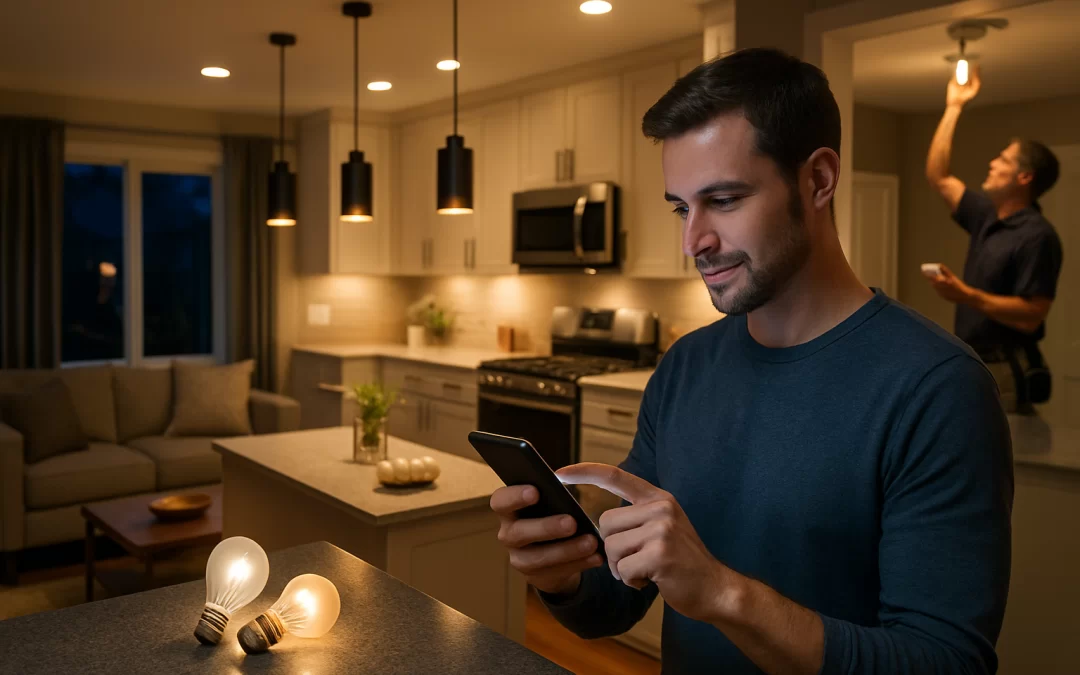
Energy-efficient lighting means using bulbs and controls that give you the same or better light while using less electricity. Swapping old bulbs for efficient LEDs can cut your lighting costs by 50–80%, often saving $10–$30 per month in a typical home. Over 10 years, that can add up to hundreds of dollars, especially in larger homes. The main tradeoff is a higher upfront cost for quality bulbs and fixtures, but the long-term savings usually outweigh it.
This guide is for homeowners and renters who want lower electric bills without getting into complicated technical details. Lighting is a small part of your home, but it can quietly waste a lot of money if you’re using old bulbs or poor habits. By making a few smart changes, you can reduce your energy use, improve comfort, and avoid paying more than you need to every month.
Table of Contents
- Why Lighting Costs More Than It Should
- Common Lighting Overspending Habits
- What to Check First in Your Home
- Immediate Lighting Savings You Can Get This Week
- Best Long-Term Energy-Efficient Lighting Upgrades
- When Spending More on Lighting Actually Saves You Money
- Common Costly Lighting Mistakes to Avoid
- When to Hire a Professional for Lighting Upgrades
- Decision Guide: What to Do Now vs Later
- Frequently Asked Questions
- Summary and Next Steps
Why Lighting Costs More Than It Should
Lighting can quietly add 10–15% to your electric bill, and in some homes much more. High costs usually come from a mix of inefficient bulbs, long run times, and poor control of when lights are on.
Main causes of high lighting costs include:
- Old incandescent bulbs: These waste about 90% of their energy as heat, not light.
- Halogen bulbs: Slightly better than incandescent, but still use 3–4 times more power than LEDs.
- Over-lighting rooms: Using more bulbs or brighter bulbs than you actually need.
- Lights left on: Hallways, bathrooms, basements, and outdoor lights often stay on for hours with no one using them.
- Outdated fixtures: Some older fixtures only accept inefficient bulbs or have built-in transformers that waste energy.
Even if each bulb only costs a few dollars per month to run, dozens of bulbs running for hours every day add up quickly. The good news is that lighting is one of the easiest and fastest areas to fix.
Common Lighting Overspending Habits
Beyond the bulbs themselves, everyday habits can drive up your lighting costs without you noticing.
Typical overspending behaviors include:
- Using lights as background lighting all day: Keeping multiple lights on in bright daylight “just because.”
- Lighting empty rooms: Bedrooms, guest rooms, and basements lit for hours with no one in them.
- Overusing decorative lighting: Accent lights, under-cabinet lights, and outdoor string lights left on for long periods.
- Leaving outdoor lights on all night: Especially if they are not LED or not on timers or motion sensors.
- Using the brightest bulb by default: Choosing 100W-equivalent bulbs where a 40–60W-equivalent would be enough.
These habits can easily add $5–$20 per month to your bill. Adjusting them costs nothing and can deliver instant savings.
What to Check First in Your Home
Before buying anything, do a quick lighting audit. This helps you focus your money where it will save the most.
1. Count and identify your bulbs
- Walk through your home and note:
- How many bulbs you have
- Bulb types (incandescent, halogen, CFL, LED)
- Wattage printed on the bulb (e.g., 60W, 75W)
- Prioritize:
- Incandescent and halogen bulbs (highest cost to run)
- Bulbs used 3+ hours per day (kitchen, living room, exterior)
2. Check how long lights are on
- Estimate hours per day for:
- Kitchen and living room lights
- Bathroom and hallway lights
- Outdoor porch, driveway, and security lights
- Look for lights that are on:
- All evening or all night
- During daylight hours
3. Look at your electric bill
- Find your kWh rate (cents per kilowatt-hour). This is what you pay per unit of electricity.
- In many areas, this is between $0.12 and $0.25 per kWh. Higher rates mean lighting upgrades pay back faster.
This quick check usually takes 15–30 minutes and shows you where the biggest savings are hiding.
Immediate Lighting Savings You Can Get This Week
Some savings require no tools and very little money. These are the easiest wins.
1. Change how you use existing lights (no-cost)
- Turn off lights in empty rooms: Aim to make this automatic for everyone in the home.
- Use task lighting instead of whole-room lighting: For reading or working at a desk, use a small lamp instead of all ceiling lights.
- Use natural light: Open blinds and curtains during the day instead of turning on lights.
- Shorten outdoor lighting hours: Turn off decorative lights earlier in the night.
Estimated savings: $3–$10 per month, depending on your starting habits. Savings are larger in homes where lights are often left on.
2. Replace the worst bulbs with LEDs (low-cost, fast payback)
LED (light-emitting diode) bulbs use about 75–85% less energy than incandescent bulbs and last 10–20 times longer.
- Start with:
- Kitchen and living room ceiling lights
- Outdoor porch and security lights
- Any bulb on 3+ hours per day
- Costs:
- Standard LED bulbs: $2–$6 each (often cheaper in multi-packs or during sales)
- Outdoor/weather-rated LEDs: $4–$10 each
- Monthly savings per bulb (typical):
- Replacing a 60W incandescent with a 9W LED used 3 hours/day can save about $1–$2 per month.
- Outdoor bulbs on 8–12 hours/night can save $2–$4 per month each.
Payback period: Often 1–6 months per bulb, depending on your electric rate and usage. After that, the savings are essentially profit.
3. Use basic timers for outdoor and holiday lights
- Plug-in timers: $10–$20 each, can automatically turn lights off at set times.
- Estimated savings: $2–$8 per month if you currently leave outdoor or decorative lights on all night.
- Payback period: 2–6 months in most cases.
Best Long-Term Energy-Efficient Lighting Upgrades
Once you’ve tackled the quick wins, consider upgrades that lock in savings for years. These usually cost more upfront but can pay off well over time.
1. Full LED conversion throughout the home
Converting nearly all bulbs in your home to LEDs maximizes savings and reduces maintenance.
- Upfront cost:
- Small apartment (15–25 bulbs): $50–$150
- Average home (30–50 bulbs): $100–$250
- Large home (50+ bulbs): $200–$400
- Monthly savings estimate:
- Small apartment: $5–$15
- Average home: $10–$30
- Large home: $20–$50
- Payback period: Typically 6–24 months, faster in high-cost electricity areas.
After payback, you continue to save every month, and you’ll replace bulbs far less often.
2. Smart bulbs and smart switches
Smart lighting lets you control lights from your phone, set schedules, and use automation to avoid waste.
- Smart bulbs: $8–$20 each; good for lamps and a few key fixtures.
- Smart switches: $20–$50 each plus possible installation cost; better for controlling multiple bulbs on one circuit.
- Benefits:
- Automatic schedules (e.g., off at midnight, on at sunset).
- Remote control when you forget to turn lights off.
- Integration with motion sensors or occupancy sensors.
- Monthly savings: Usually modest on their own ($2–$10 per month), but they help you maintain good habits and avoid waste.
Smart lighting is most worth it if you value convenience and already have or plan to build a smart home system. Purely for energy savings, basic LEDs and timers often give better payback.
3. Motion sensors and occupancy sensors
These automatically turn lights on when someone enters and off after a set time with no movement.
- Best locations:
- Hallways and stairwells
- Garages and basements
- Closets and laundry rooms
- Outdoor security lights
- Costs:
- Plug-in or bulb-based sensors: $10–$25
- Wall switch sensors: $20–$50 plus possible installation
- Monthly savings: $2–$10 per sensor-controlled area, depending on prior waste.
- Payback period: Often 6–18 months.
4. Fixture upgrades
Some older fixtures are inefficient or limit your bulb choices. Replacing them can improve both efficiency and light quality.
- When it makes sense:
- Fixtures that only accept specialty or high-wattage bulbs.
- Built-in fluorescent fixtures that flicker or fail often.
- Outdoor fixtures that are not weather-sealed and cause frequent bulb failures.
- Costs:
- Basic LED fixtures: $25–$100 each
- Professional installation (if needed): $75–$200 per fixture
- Monthly savings: Usually modest per fixture ($1–$5), but comfort and reliability improve.
Fixture upgrades are often best combined with other home improvements, such as remodeling or electrical updates, to reduce labor costs.
When Spending More on Lighting Actually Saves You Money
Not every “cheap” bulb or fixture is a good deal. Sometimes paying more upfront leads to lower total cost over time.
1. Quality LEDs vs. the cheapest bulbs
- Cheapest LEDs: May flicker, fail early, or have poor color quality.
- Mid-range, brand-name LEDs: Often last longer and maintain brightness better.
- Cost difference: Maybe $1–$3 more per bulb.
- Why it matters: A bulb that lasts 10 years instead of 2–3 years saves you replacement costs and hassle.
2. Dimmable and compatible bulbs
- If you have dimmer switches, choose dimmable LEDs that are labeled as compatible with your type of dimmer.
- Non-compatible bulbs can flicker, buzz, or fail early, wasting your money.
- Paying a bit more for the right bulb avoids replacing both bulbs and dimmers later.
3. Outdoor and specialty locations
- Use bulbs rated for outdoor or damp locations where needed.
- In hard-to-reach fixtures (high ceilings, stairwells), longer-life LEDs reduce the need for ladders or paid help.
- Spending a few extra dollars per bulb here can save on both energy and maintenance.
Common Costly Lighting Mistakes to Avoid
Avoiding a few common errors can protect your budget and prevent frustration.
1. Replacing bulbs that are rarely used
- Closets, guest rooms, and storage areas used only a few minutes per week don’t save much from LED upgrades.
- Savings are small: Often just a few cents per month per bulb.
- Focus your budget on high-use areas first; upgrade low-use bulbs later or as they burn out.
2. Buying more brightness than you need
- Many people replace a 60W incandescent with the brightest LED they can find, even when it’s not needed.
- Look at lumens (brightness) instead of watts:
- 40W incandescent ≈ 450 lumens
- 60W incandescent ≈ 800 lumens
- 75W incandescent ≈ 1,100 lumens
- Choosing the right brightness avoids eye strain and saves energy.
3. Ignoring color temperature
Color temperature is measured in Kelvin (K) and affects how “warm” or “cool” the light looks.
- 2700K–3000K: Warm, cozy light (good for living rooms and bedrooms).
- 3500K–4100K: Neutral white (good for kitchens and work areas).
- 5000K+: Cool daylight (good for garages or task areas if you prefer bright, crisp light).
Choosing the wrong color can make a room feel harsh or gloomy, leading you to buy more lamps or fixtures unnecessarily.
4. Over-investing in smart features you won’t use
- Smart bulbs and systems are useful, but if you rarely use the app or automation, you may not see enough benefit.
- For pure savings, basic LEDs plus simple timers or motion sensors often give better value.
- Consider your habits honestly before spending heavily on smart lighting ecosystems.
5. Ignoring other home efficiency issues
Lighting is important, but in many homes, heating and cooling waste far more money. Once your lighting is efficient, consider other upgrades like insulation and air sealing.
For example, understanding fiberglass insulation cost and risks can help you decide if improving insulation will save more than further lighting tweaks.
When to Hire a Professional for Lighting Upgrades
Many lighting changes are DIY-friendly, but there are times when hiring a licensed electrician is safer and more cost-effective.
DIY-friendly tasks
- Replacing screw-in bulbs with LEDs.
- Installing plug-in timers and smart plugs.
- Swapping lamp shades or portable fixtures.
- Installing some battery-powered motion sensors.
When to call a professional
- Replacing hardwired fixtures: Especially if wiring is old, unknown, or aluminum.
- Adding new switches or circuits: For smart switches, dimmers, or new lighting locations.
- Frequent breaker trips or flickering: Could indicate wiring problems that need expert attention.
- Outdoor wiring: For permanent landscape lighting or exterior fixtures exposed to weather.
Professional labor typically costs $75–$150 per hour, but it can prevent safety issues and expensive mistakes. If you’re unsure, a quick consultation can be worth the fee.
Decision Guide: What to Do Now vs Later
Use this section to decide which lighting changes to make immediately and which to plan for later.
Do now (this week)
- Identify and replace:
- Incandescent and halogen bulbs used 3+ hours per day.
- Outdoor bulbs that run all night.
- Start simple habits:
- Turn off lights when leaving a room.
- Use natural light during the day.
- Add basic plug-in timers for outdoor or decorative lights if they run late into the night.
Plan for the next 1–3 months
- Gradually convert the rest of your frequently used bulbs to LEDs.
- Decide if smart bulbs or smart switches fit your lifestyle and budget.
- Add motion sensors in high-waste areas like hallways, garages, and basements.
Longer-term investments (3–24 months)
- Upgrade outdated or inefficient fixtures during other home projects.
- Consider a more complete smart lighting system if you value automation and remote control.
- Look at other energy-saving opportunities (insulation, HVAC, appliances) once lighting is under control.
DIY vs professional
- DIY: Bulb replacements, plug-in timers, basic smart bulbs, and battery-powered sensors.
- Professional: New wiring, hardwired smart switches, complex fixture changes, or any work you’re not comfortable doing safely.
Cheap fix vs upgrade
- Cheap fix: Replace bulbs with LEDs and add timers; best for renters or short-term stays.
- Upgrade: New fixtures, smart switches, and integrated systems; better for long-term homeowners looking for comfort, control, and long-term savings.
Frequently Asked Questions
How much can I really save by switching to LED lighting?
Most households can save $10–$30 per month by replacing frequently used incandescent and halogen bulbs with LEDs. In larger homes or high-cost electricity areas, savings can be even higher. The exact amount depends on how many bulbs you replace and how long they’re on each day.
Are LED bulbs worth the higher upfront cost?
Yes, in most cases LEDs pay for themselves within a few months to a couple of years through lower electric bills. A single LED replacing a 60W incandescent can save $10–$20 per year in energy, far more than the extra cost of the bulb. They also last much longer, reducing replacement costs and hassle.
Should I replace CFL bulbs with LEDs?
CFLs (compact fluorescent lamps) are more efficient than incandescent bulbs but less efficient and less durable than LEDs. If a CFL is in a high-use area or is failing or flickering, replacing it with an LED usually makes financial sense. For low-use areas, you can wait until the CFL burns out before upgrading.
Do smart bulbs save more energy than regular LEDs?
Smart bulbs use about the same amount of energy for lighting as regular LEDs. Their main savings come from better control—schedules, remote shutoff, and automation that prevent lights from being left on. If you don’t use these features, the extra cost of smart bulbs may not pay off purely in energy savings.
Is it better to use a smart bulb or a smart switch?
Smart bulbs are easier to install and good for lamps or single fixtures. Smart switches control all bulbs on a circuit and can be more cost-effective when you have many bulbs on one switch. For long-term flexibility and a cleaner look, smart switches often provide better value, but they may require professional installation.
What if my electric rate is low—are upgrades still worth it?
With lower electric rates, payback periods are longer, but LEDs still usually make sense for high-use bulbs. You might prioritize the most-used fixtures and skip rarely used ones. Even with cheap electricity, LEDs improve comfort and reduce the hassle of frequent bulb changes.
Summary and Next Steps
Energy-efficient lighting is one of the simplest ways to cut your home’s electric bill. By replacing old incandescent and halogen bulbs with LEDs, using timers and sensors, and improving your daily habits, you can often save $10–$30 per month with modest upfront costs.
Focus first on high-use bulbs and outdoor lights, where payback is fastest. Then, decide whether smart controls and fixture upgrades fit your budget and long-term plans. Once your lighting is efficient, consider other improvements—such as better insulation or sealing air leaks—to keep pushing your energy costs down.
Walk through your home this week, identify your worst offenders, and start with a small batch of LED replacements. These quick steps can deliver real, lasting savings without sacrificing comfort or light quality.