
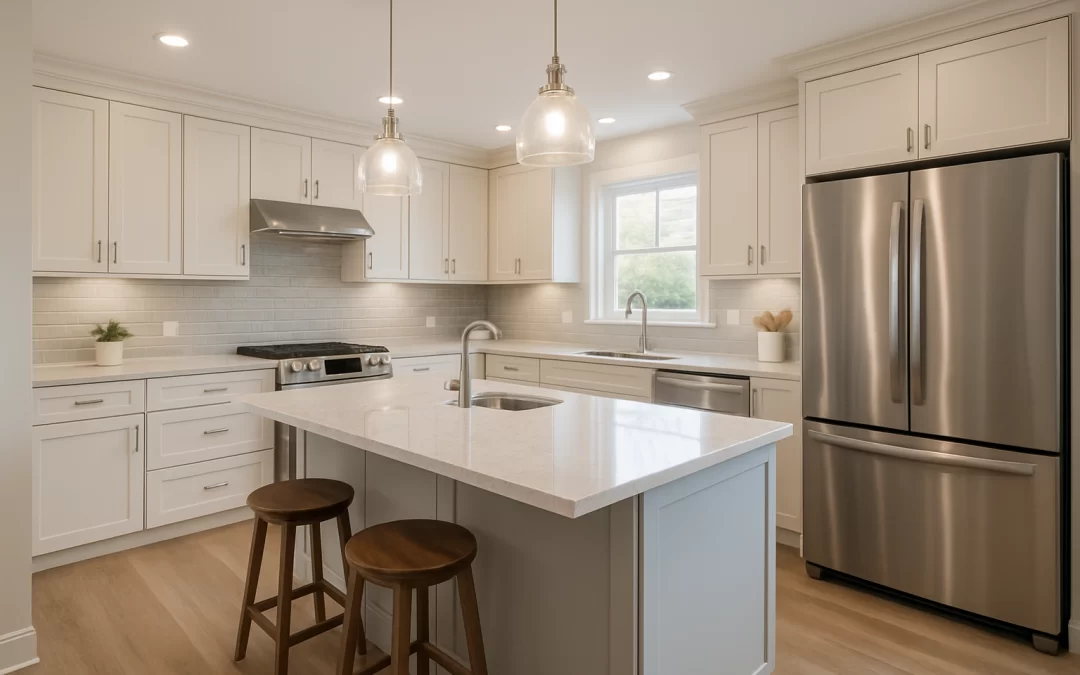
Kitchen remodel ROI is highest when you focus on mid-range, practical upgrades that buyers notice most—like cabinets, countertops, and layout—rather than luxury finishes. A well-planned kitchen remodel can return roughly 50–75% of its cost at resale and make your home sell faster, while also improving daily use. Many homeowners overspend on trends or high-end appliances that add little resale value. The tradeoff: the most profitable remodel is usually about smart updates and function, not creating your personal “dream kitchen.”
This guide is for homeowners who want to update their kitchen without wasting money on low-ROI choices. Kitchen remodels are one of the most expensive home projects, and it’s easy to overshoot your budget or spend $10,000–$30,000 on upgrades that buyers won’t pay extra for. Below, you’ll see which kitchen upgrades add the most resale value, what to skip, and how to balance cost, comfort, and return on investment.
Table of Contents
- Why Kitchen Remodels Get So Expensive
- Common Overspending Behaviors That Kill ROI
- What to Check First Before You Spend
- Immediate Savings: Low-Cost Updates With High Impact
- Long-Term Upgrades That Add the Most Resale Value
- When Spending More Actually Saves (and Earns) You Money
- Common Costly Kitchen Remodel Mistakes
- When to Hire a Professional vs DIY
- Costs, Savings, and Payback Periods
- Decision Guide: Now vs Later, DIY vs Pro, Quick Fix vs Full Remodel
- Frequently Asked Questions
- Summary and Next Steps
Why Kitchen Remodels Get So Expensive
Kitchen remodels are costly because they combine several trades—plumbing, electrical, cabinetry, flooring, and sometimes structural work—into one project. Even a modest kitchen touches multiple systems behind the walls, which drives up labor and permits.
Key drivers of high costs include:
- Moving plumbing or walls: Relocating sinks, gas lines, or knocking down walls can add $3,000–$15,000+ quickly.
- Custom cabinets: Custom cabinetry can cost 2–4 times more than stock or semi-custom options.
- High-end materials: Premium stone, designer fixtures, and luxury appliances add thousands but don’t always increase resale value proportionally.
- Scope creep: Adding “just one more thing” mid-project often leads to change orders and budget overruns.
For a deeper breakdown of typical price ranges and what homeowners actually pay, see the average cost of kitchen remodeling guide.
Common Overspending Behaviors That Kill ROI
Most people don’t blow their budget on one big mistake—it’s a series of small decisions that add up. These behaviors often reduce your kitchen remodel ROI:
- Designing for personal taste only: Very bold colors, ultra-modern or ultra-traditional styles can turn off future buyers.
- Over-improving for the neighborhood: A $90,000 kitchen in a $250,000 home rarely pays off at resale.
- Chasing trends: Trendy finishes and layouts can look dated in a few years, reducing buyer appeal.
- Overspending on appliances: Professional-grade ranges and built-in fridges are expensive but often add limited resale value compared to cabinets and counters.
- Ignoring layout and storage: A beautiful but awkward kitchen is a turnoff for buyers and hurts ROI.
Focusing on timeless, neutral choices and functional improvements usually produces better returns than splurging on the latest look.
What to Check First Before You Spend
Before you pick finishes or order cabinets, step back and look at the big picture. This helps you avoid spending heavily in the wrong areas.
1. Your Home’s Value and Neighborhood
- Check recent sale prices of similar homes in your area.
- Estimate a reasonable total remodel budget: typically 5–15% of your home’s value for a full kitchen remodel.
- Aim to stay in the middle of that range for the best balance of comfort and resale value.
2. Existing Layout and Condition
- Is the current layout functional? If yes, keeping plumbing and walls in place can save $5,000–$20,000.
- Are cabinets structurally sound? If so, refacing or painting may be smarter than full replacement.
- Are there any underlying issues (water damage, electrical problems, old plumbing) that must be fixed first?
3. Your Timeframe to Sell
- Planning to sell within 1–5 years: Focus on neutral, broadly appealing upgrades with strong ROI.
- Staying 7+ years: You can justify more personal choices, but still avoid over-improving for the area.
Immediate Savings: Low-Cost Updates With High Impact
You don’t always need a full remodel to boost value. Some low-cost changes can make your kitchen look newer and more appealing to buyers.
High-ROI, Low-Cost Updates
- Paint walls and cabinets: Fresh, light paint (like soft white or light gray) can make a kitchen feel larger and newer.
- Update hardware: New cabinet handles, pulls, and hinges can modernize older cabinets for a few hundred dollars.
- Replace lighting: Swapping outdated fixtures for simple, modern ones improves both function and appearance.
- Deep clean and re-caulk: Clean grout, re-caulk around sinks and counters, and fix minor damage to show a well-maintained kitchen.
Typical Costs and Impact
- Cabinet painting: $1,000–$3,000 (pro); often makes cabinets look nearly new at a fraction of replacement cost.
- Hardware + lighting: $200–$1,000 depending on quality and number of fixtures.
- Cosmetic refresh package (paint, hardware, lighting, minor repairs): $1,500–$4,000.
These updates may not dramatically raise appraised value on paper, but they can help your home sell faster and avoid low offers due to a “tired” kitchen.
Long-Term Upgrades That Add the Most Resale Value
When you’re ready for a more substantial remodel, certain upgrades consistently deliver better ROI than others. The goal is a “fresh, updated, and functional” kitchen—not necessarily a luxury showpiece.
1. Cabinets: Replace, Reface, or Paint
- Best ROI: Semi-custom or quality stock cabinets in a simple, timeless style.
- Cabinet replacement: $8,000–$20,000+ depending on size and quality.
- Cabinet refacing: $4,000–$10,000; keeps cabinet boxes, replaces doors and drawer fronts.
- Cabinet painting: $1,000–$3,000; best when boxes are in good shape.
For resale, refacing or mid-range replacements often provide similar buyer appeal to high-end custom cabinets at a much lower cost.
2. Countertops
- Best ROI: Durable, neutral materials like quartz or mid-range granite.
- Costs: Typically $2,000–$5,000 for a standard kitchen, more for large islands or premium stone.
- Avoid: Very bold colors or unusual patterns that may limit buyer appeal.
New countertops can dramatically change the look of your kitchen and are one of the first things buyers notice.
3. Layout and Storage Improvements
- Improve workflow: Ensure the “work triangle” (sink, stove, fridge) is convenient and unobstructed.
- Add storage: Pantry cabinets, pull-out shelves, and better organization systems are highly valued.
- Costs: Minor layout tweaks and storage upgrades can range from $1,000–$8,000; major layout changes cost more.
Thoughtful storage and a functional layout often matter more to buyers than high-end finishes.
4. Flooring
- Best ROI: Durable, easy-to-clean flooring like luxury vinyl plank (LVP), tile, or hardwood that matches nearby rooms.
- Costs: $2,000–$7,000 depending on material and kitchen size.
Consistent flooring that flows well with the rest of the home makes the space feel larger and more cohesive.
5. Energy-Efficient Appliances (When Needed)
- Best ROI: Mid-range, energy-efficient appliances in a matching finish (stainless, black stainless, or white).
- Costs: $2,000–$6,000 for a full set of mid-range appliances.
- Savings: Energy-efficient models can save $10–$30 per month on utility bills, depending on usage and local rates.
Replacing very old or mismatched appliances can improve both daily comfort and buyer appeal, but going ultra-luxury rarely pays off financially.
When Spending More Actually Saves (and Earns) You Money
Some higher upfront costs can pay off through energy savings, reduced repairs, or higher resale value. The key is knowing when extra spending is justified.
1. Fixing Structural or Safety Issues
- Updating old electrical, plumbing, or ventilation can prevent costly damage and inspection problems later.
- These upgrades may not be “visible,” but they protect your investment and can be required for permits.
2. Energy Efficiency Upgrades
- LED lighting, efficient appliances, and better insulation around windows and doors can cut utility bills.
- Typical savings: $15–$50 per month combined, depending on your starting point and local energy costs.
- Payback periods often range from 3–10 years, with ongoing savings afterward.
3. Smart Layout Changes
- Removing a poorly placed peninsula, widening a tight walkway, or adding a small island can transform how the kitchen functions.
- These changes can make your home more competitive when you sell, especially in markets where buyers expect open, functional kitchens.
However, large structural changes—like fully opening up load-bearing walls—can cost $10,000–$25,000+ and may not fully pay back in every market. Compare costs carefully to expected resale value.
Common Costly Kitchen Remodel Mistakes
Avoiding a few key mistakes can protect both your budget and your kitchen remodel ROI. Many of these issues are preventable with planning.
- No clear budget or scope: Starting without a firm budget and priorities often leads to overspending.
- Changing plans mid-project: Moving walls, plumbing, or finishes after work starts can trigger expensive change orders.
- Buying materials before final measurements: This can lead to wasted materials or reordering at higher cost.
- Ignoring permits and codes: Unpermitted work can cause problems when selling and may need to be redone.
- Choosing style over function: Beautiful but impractical layouts or materials (like high-maintenance counters) can frustrate both you and future buyers.
For a deeper look at pitfalls to avoid, see this guide on kitchen remodel mistakes that increase costs.
When to Hire a Professional vs DIY
Doing some work yourself can save money, but certain tasks are better left to professionals for safety, quality, and resale value.
Good DIY Candidates
- Painting walls and, if you’re careful, cabinets.
- Installing hardware (handles, pulls, knobs).
- Simple backsplash installation (for experienced DIYers).
- Minor cosmetic repairs and caulking.
Hire a Professional For
- Electrical work (new circuits, moving outlets, lighting rewiring).
- Plumbing changes (moving sinks, dishwashers, gas lines).
- Structural changes (removing or altering walls, beams).
- Cabinet installation and complex countertop work.
Professional work in these areas is often required for permits and inspections, and poor DIY jobs can hurt resale value or even fail a buyer’s inspection.
Costs, Savings, and Payback Periods
Kitchen remodel ROI depends on your starting point, local market, and how smartly you spend. Below are typical ranges to help you plan.
Typical Upfront Costs
- Minor cosmetic refresh: $1,500–$5,000 (paint, hardware, lighting, small repairs).
- Mid-range partial remodel: $15,000–$35,000 (cabinets refaced or replaced, new counters, some appliances, flooring).
- Full mid-range remodel: $30,000–$60,000 (new cabinets, counters, appliances, flooring, lighting, minor layout changes).
Resale Value and ROI
- Minor kitchen remodels: Often recoup 70–80% of cost at resale in many markets.
- Mid-range full remodels: Commonly recoup around 50–70%, depending on neighborhood and quality.
- High-end luxury remodels: May recoup only 40–60% unless in a high-end market where buyers expect luxury finishes.
In addition to direct ROI, an updated kitchen can help your home sell faster and avoid price reductions, which has real financial value.
Monthly Savings and Payback Periods
Some upgrades also reduce monthly costs:
- Energy-efficient appliances: Save about $10–$30 per month; payback in 5–10 years depending on usage and local rates.
- LED lighting: Save $5–$15 per month; payback often within 2–4 years.
- Improved insulation and sealing around windows/doors: Save $10–$25 per month on heating and cooling; payback in 3–7 years.
These savings are modest month-to-month but add up over time, especially if you plan to stay in the home for several years.
When Savings Are Small vs Significant
- Small savings: Swapping a working mid-range appliance for a slightly more efficient model usually doesn’t justify the cost.
- Significant savings: Replacing very old, inefficient appliances or lighting, especially if they’re near the end of their life anyway.
- Not worth the cost: Major structural changes purely for aesthetics in a modest neighborhood, or ultra-luxury finishes in a mid-priced home.
Decision Guide: Now vs Later, DIY vs Pro, Quick Fix vs Full Remodel
Use this section to decide what to do now and what to postpone, based on your budget and goals.
Do Now vs Later
- Do now: Safety issues (electrical, gas, leaks), water damage, failing appliances, and anything that could worsen over time.
- Consider now: High-ROI cosmetic updates if you plan to sell within a few years.
- Do later: Major layout changes or luxury upgrades if your budget is tight or you’re unsure how long you’ll stay.
Quick Fix vs Investment
- Quick fixes: Paint, hardware, lighting, deep cleaning—good for tight budgets or preparing to list your home soon.
- Investment remodel: New cabinets, counters, flooring, and layout improvements—better if you’ll enjoy the kitchen for several years before selling.
DIY vs Professional
- DIY: Choose tasks where mistakes are low-risk and easy to correct (painting, hardware, simple decor).
- Professional: Anything involving plumbing, electrical, gas, structural work, or permits.
Cheap Fix vs Upgrade
- Choose a cheap fix when: You’re selling soon and the kitchen is basically functional but dated.
- Choose an upgrade when: Cabinets or counters are damaged, layout is poor, or you’ll live in the home long enough to enjoy the improvements.
For help matching your budget to the right level of remodel, see this kitchen remodel cost guide by budget level.
Frequently Asked Questions
What kitchen upgrades give the best ROI?
Mid-range upgrades like cabinet refacing or replacement, new countertops, updated lighting, and improved storage usually give the best ROI. Buyers notice clean, functional, and modern-looking kitchens more than luxury brands or custom details. Keeping the layout mostly the same while updating surfaces often delivers strong returns.
Is a full kitchen remodel worth it before selling?
It can be, but only if your current kitchen is very outdated or in poor condition compared to similar homes. Often, a partial remodel or cosmetic refresh provides enough of a boost to attract buyers without the cost of a full gut job. Run the numbers: if you spend $40,000 and expect only $20,000–$30,000 more at resale, a lighter update may be smarter.
Should I replace cabinets or just paint them?
If your cabinets are solid and the layout works, painting or refacing usually offers better value than full replacement. Painting costs far less and can still make the kitchen look dramatically newer. Replace cabinets when they’re damaged, poorly laid out, or very low quality.
Do high-end appliances increase home value?
High-end appliances can make your kitchen more attractive, but they rarely return their full cost at resale. Most buyers are happy with reliable, mid-range, energy-efficient appliances. Splurge on luxury brands only if it fits your neighborhood and you’ll personally enjoy them for several years.
Is an open-concept kitchen better for resale value?
Open-concept kitchens are popular, but they’re not always the best or most cost-effective choice. In some homes, a partially open or well-defined kitchen works better and costs less to create. Before removing walls, compare costs, structural needs, and buyer expectations in your area; you can learn more in this guide on open vs closed kitchen layouts and value.
How much should I spend on a kitchen remodel?
A common guideline is to spend about 5–15% of your home’s value on a full kitchen remodel, staying closer to the middle of that range for the best ROI. Spending far above what’s typical for your neighborhood often doesn’t pay off. Always set a firm budget and prioritize high-impact upgrades first.
Summary and Next Steps
The best kitchen remodel ROI comes from practical, mid-range upgrades that improve function, storage, and appearance without over-customizing. Focus your budget on cabinets, countertops, lighting, and layout improvements, and avoid overspending on luxury finishes that buyers may not value as highly as you do.
Expect to recoup roughly 50–75% of a well-planned kitchen remodel at resale, with additional value from faster, smoother home sales and lower utility bills if you choose efficient fixtures and appliances. Start by assessing your current kitchen, your home’s value, and how long you plan to stay, then decide whether a cosmetic refresh or a deeper remodel makes more sense.
Next steps:
- Set a realistic budget based on your home’s value and local market.
- List your must-haves vs nice-to-haves to avoid scope creep.
- Get multiple quotes for any professional work, especially plumbing, electrical, and structural changes.
- Begin with high-ROI, low-risk updates (paint, hardware, lighting) while you plan larger changes.
With careful planning and smart choices, you can create a kitchen that works better for you today and pays you back when it’s time to sell.