
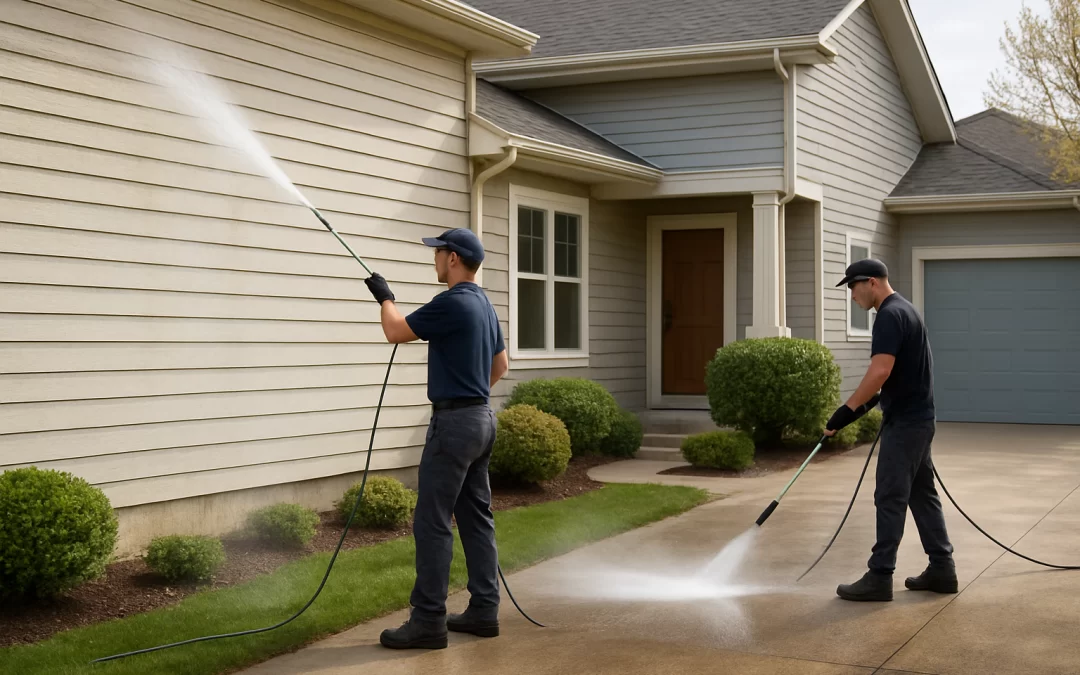
Pressure Washing vs. Soft Washing for Exterior Siding and Driveways: Which Method Is Right for You?
For most homes, pressure washing is best for hard surfaces like concrete driveways, while soft washing is safer for siding, roofs, and painted or delicate areas. Choosing the right method can prevent $500–$5,000 in damage to siding, paint, and landscaping, and extend the life of your exterior surfaces by several years. However, soft washing often requires special cleaners and equipment, so the upfront cost can be slightly higher than a basic pressure wash.
This guide is for homeowners and renters who want a clean exterior without wasting money or damaging their property. We’ll compare pressure washing and soft washing in simple terms, show where each method makes financial sense, and help you avoid costly mistakes that lead to repairs or early repainting.
Table of Contents
- How Pressure Washing and Soft Washing Affect Your Costs
- Common Ways Homeowners Overspend on Exterior Cleaning
- What to Check First Before Choosing a Cleaning Method
- Immediate Savings: Quick Wins from Choosing the Right Method
- Long-Term Savings and Upgrades
- When Spending More Now Actually Saves You Money
- Common Costly Mistakes to Avoid
- When to Hire a Professional vs. DIY
- Cost & Savings Breakdown
- Decision Guide: Pressure Washing vs. Soft Washing
- Frequently Asked Questions
- Summary & Next Steps
How Pressure Washing and Soft Washing Affect Your Costs
Pressure washing uses high-pressure water to blast away dirt, mold, and stains. Soft washing uses low pressure plus cleaning solutions to gently remove grime, algae, and mildew.
The method you choose affects:
- Cleaning results: Pressure washing is better for tough stains on concrete and brick; soft washing is better for mold, algae, and mildew on siding and roofs.
- Risk of damage: High pressure can strip paint, dent siding, and etch concrete; soft washing reduces this risk but relies on chemicals that must be used correctly.
- How often you need cleaning: Soft washing often keeps algae and mildew away longer, which can reduce how often you pay for exterior cleaning.
Over 5–10 years, using the right method can delay repainting, resurfacing, or replacing materials, saving hundreds to thousands of dollars.
Common Ways Homeowners Overspend on Exterior Cleaning
Many homeowners spend more than they need to because they:
- Use pressure washing everywhere: Blasting vinyl siding, wood decks, or older brick can cause damage that costs $500–$3,000 to repair.
- Clean too often: Annual high-pressure cleaning of siding or decks can wear surfaces down faster, leading to earlier repainting or replacement.
- Ignore problem areas: Letting algae, mildew, and stains sit for years can permanently stain surfaces, requiring full repainting or resurfacing instead of simple cleaning.
- Hire the cheapest contractor: Low-cost, uninsured operators may use the wrong method or too much pressure, leaving you with repair bills and no recourse.
- Buy expensive equipment they rarely use: A $300–$500 pressure washer that’s used once a year may not be worth it if you could hire a pro for $150–$250 per visit.
What to Check First Before Choosing a Cleaning Method
Before you decide between pressure washing and soft washing, check these key points:
1. Type and Age of Your Siding
- Vinyl siding: Usually best with soft washing or very low pressure to avoid cracking or forcing water behind panels.
- Wood siding or shingles: High pressure can gouge wood and strip paint; soft washing is usually safer.
- Stucco or EIFS (synthetic stucco): Very vulnerable to high pressure; soft washing is strongly preferred.
- Brick or stone: Can often handle pressure washing, but older or damaged mortar may require lower pressure or soft washing.
2. Condition of Paint, Caulk, and Seals
- Look for peeling paint, cracked caulk, or gaps around windows and doors.
- High pressure can force water into gaps, leading to hidden moisture damage and potential mold inside walls.
- If your exterior paint is already failing, consider reviewing an exterior house painting cost guide before aggressive cleaning that might make it worse.
3. Type of Surface You’re Cleaning
- Driveways and sidewalks (concrete, pavers): Pressure washing is usually best for oil stains, tire marks, and heavy dirt.
- Decks (wood or composite): Often need lower pressure or soft washing to avoid splintering or surface damage.
- Roofs: Generally should not be pressure washed; soft washing is safer for shingles and tiles.
4. Local Climate and Growth
- In humid or shaded areas, algae and mildew grow faster, making soft washing more effective and longer-lasting.
- In dry, dusty areas, pressure washing may be enough for driveways and siding without heavy organic growth.
Immediate Savings: Quick Wins from Choosing the Right Method
Choosing the right cleaning method can save money right away by avoiding damage and reducing how much you need to clean.
Where Pressure Washing Saves You Money
- Driveways and sidewalks: A $150–$300 pressure wash can restore curb appeal and delay resurfacing that might cost $2,000–$5,000.
- Brick steps and patios: Removing slippery algae and moss can reduce slip-and-fall risk and potential medical or liability costs.
- Garage floors and heavily stained areas: High pressure can remove oil and grime that regular cleaning can’t touch.
Where Soft Washing Saves You Money
- Siding with algae or mildew: Soft washing can keep growth away longer, so you may clean every 2–3 years instead of annually.
- Older or delicate surfaces: Avoiding damage to paint, stucco, or wood can prevent $1,000–$4,000 in early repainting or repairs.
- Roofs with black streaks or moss: Soft washing can extend roof life by several years, delaying a $7,000–$15,000 replacement.
In many cases, using the right method can save $100–$300 per year by reducing cleaning frequency and avoiding small repairs.
Long-Term Savings and Upgrades
Exterior cleaning is not just about looks; it affects how long your siding, paint, and driveway last.
Extending the Life of Siding and Paint
- Regular, gentle cleaning (often soft washing) can extend paint life by 3–5 years.
- Delaying a full exterior repaint (often $3,000–$8,000) by even 3 years can equal $1,000–$2,000 in effective savings over time.
- Keeping mold and mildew off siding reduces the risk of rot and hidden moisture damage.
Protecting Driveways and Hard Surfaces
- Pressure washing followed by sealing concrete or pavers can reduce cracking and staining.
- Sealing after cleaning may cost $0.50–$1.50 per square foot but can delay a $2,000–$5,000 replacement by several years.
- Cleaning and sealing every 2–3 years can be cheaper than major repairs later.
Planning Upgrades Strategically
- If your home is older and you’re planning updates, combine cleaning with other exterior projects like painting or new doors to save on setup and labor costs.
- For older homes, pairing gentle cleaning with thoughtful upgrades can help you modernize without damaging original materials; see ideas similar to those in renovation-focused guides.
When Spending More Now Actually Saves You Money
Sometimes the cheaper cleaning option costs more in the long run.
Soft Washing vs. High-Pressure on Siding
- Example: A basic pressure wash of siding might cost $200–$300, while a soft wash might be $250–$400.
- If high pressure damages paint or siding, you could face $1,000+ in repairs or early repainting.
- Paying an extra $50–$100 for soft washing can be a smart trade to protect a much larger investment.
Professional Cleaning vs. DIY for Complex Areas
- DIY pressure washing equipment might cost $200–$500, plus your time.
- Using the wrong pressure or nozzle can cause cracks, water intrusion, or etched concrete.
- Hiring a qualified pro for $200–$400 once a year can be cheaper than fixing $1,000+ in accidental damage.
Bundling Services
- Some companies offer discounts if you clean siding, driveway, and walkways at the same time.
- Bundling can save 10–20% compared to separate visits, especially if you only need full cleaning every 2–3 years.
Common Costly Mistakes to Avoid
Avoiding these mistakes can save you hundreds or even thousands of dollars over time.
1. Using Too Much Pressure on the Wrong Surfaces
- High pressure on wood, vinyl, stucco, or older brick can cause permanent damage.
- Repairing gouged wood, cracked stucco, or damaged siding can cost $500–$3,000.
- When in doubt, use lower pressure or soft washing, especially on vertical surfaces.
2. Spraying Upward at Siding or Under Laps
- Spraying upward can force water behind siding or into wall cavities.
- This can lead to hidden mold, rot, and insulation damage that may cost thousands to fix.
- Always spray downward or straight-on and keep a safe distance.
3. Ignoring Safety and Surroundings
- Not covering plants, outlets, or outdoor fixtures can lead to dead landscaping or electrical issues.
- Some cleaning solutions can burn plants or discolor metal if not rinsed properly.
- Protect nearby areas and rinse thoroughly to avoid extra repair or replacement costs.
4. Using Harsh Chemicals Incorrectly
- Overusing bleach or strong cleaners can damage paint, stain, or nearby surfaces.
- Improper mixing can reduce effectiveness, meaning you pay more for products and time.
- Follow product instructions carefully and test in a small area first.
5. Skipping Regular Maintenance
- Waiting until surfaces are heavily stained or covered in growth can make cleaning harder and more expensive.
- Light, regular cleaning every 1–3 years is usually cheaper than restoring heavily neglected surfaces.
When to Hire a Professional vs. DIY
Some jobs are safe and cost-effective to do yourself; others are better left to pros.
Good DIY Candidates
- Driveways and sidewalks: If you rent or own a basic pressure washer and follow safety guidelines.
- Ground-level patios: With simple stains and no delicate materials.
- Light siding cleaning: Using a garden hose, soft brush, and mild cleaner for small areas.
Best Left to Professionals
- Roofs: Risk of falls and damage; soft washing requires experience and proper solutions.
- Older or delicate exteriors: Historic homes, stucco, or failing paint benefit from expert handling.
- Multi-story homes: Working at height with powerful equipment increases risk.
If you’re unsure whether to tackle a job yourself or hire help, you may find it useful to review guidance similar to a DIY vs. hiring a professional comparison to weigh cost, risk, and your skill level.
Cost & Savings Breakdown
Typical Upfront Costs
- DIY pressure washer purchase: $200–$500 (electric or gas).
- DIY pressure washer rental: $40–$100 per day.
- Professional pressure washing (driveway or small home): $150–$400 per visit.
- Professional soft washing (siding/roof): $250–$600+ depending on home size and complexity.
Monthly Savings Estimates
Exterior cleaning doesn’t usually change your monthly utility bills, but it affects long-term maintenance costs. Spread over time, you can think of savings this way:
- Delaying exterior repainting by 3 years: If repainting costs $4,500, that’s roughly $125/month in avoided cost over those 3 years.
- Extending roof life by 5 years: On a $10,000 roof, that’s about $167/month in avoided replacement cost during those extra years.
- Avoiding $1,500 in siding repairs from damage: That’s about $40/month in avoided cost over 3 years.
While you won’t see these as direct monthly bills, thinking in monthly terms helps you see how smart cleaning choices protect your budget.
Payback Period
- Buying a $300 pressure washer vs. hiring a pro: If a pro costs $250 per visit and you’d hire them once a year, your payback is just over 1 year—if you use it correctly and avoid damage.
- Paying $100 more for soft washing instead of high-pressure on siding: If this prevents even one $1,000 repair or early repaint, your “payback” is immediate and large.
- Adding sealing after driveway cleaning: If $400 in sealing extends driveway life by 5 years and avoids a $4,000 replacement, the payback is strong, even though it’s long-term.
When Savings Are Small vs. Significant
- Small savings: Cleaning a lightly dirty driveway more often than needed; the difference between methods is mostly cosmetic.
- Significant savings: Protecting siding, roofs, and paint from damage and early failure; choosing soft washing for delicate surfaces.
- Not worth the cost: Buying high-end equipment you’ll rarely use, or over-cleaning just for appearance when surfaces are already in good shape.
Decision Guide: Pressure Washing vs. Soft Washing
Do It Now vs. Later
- Do it now if: You see algae, mildew, or heavy staining, or surfaces are becoming slippery.
- Can wait a bit if: Dirt is light and purely cosmetic, and there’s no growth or safety issue.
Quick Fix vs. Investment
- Quick fix: One-time pressure wash of driveway or patio for appearance before guests or selling.
- Investment: Regular soft washing of siding and roof to extend material life and delay big projects.
DIY vs. Professional
- DIY makes sense when: You’re cleaning simple, ground-level hard surfaces and are willing to learn safe techniques.
- Professional makes sense when: You have multi-story siding, a roof to clean, older or delicate materials, or limited time and experience.
- For a broader cost comparison of hiring help, you can look at resources similar to a handyman cost guide to understand typical hourly rates and job pricing.
Cheap Fix vs. Upgrade
- Cheap fix: Basic pressure wash of driveway or siding just to remove surface dirt.
- Upgrade: Soft washing plus sealing or repainting, which costs more now but can add years of life and improve curb appeal and resale value.
Frequently Asked Questions
Is pressure washing or soft washing cheaper?
Basic pressure washing is usually cheaper upfront, especially for driveways and sidewalks. Soft washing often costs a bit more because it uses specialized cleaners and lower-pressure equipment, but it can save money long-term by preventing damage and keeping surfaces cleaner for longer.
How often should I clean my siding and driveway?
Most homes only need siding cleaned every 1–3 years, depending on climate and how quickly algae or dirt builds up. Driveways and sidewalks can be cleaned every 1–2 years or as needed; cleaning more often than that usually doesn’t provide much extra financial benefit.
Can pressure washing damage my home?
Yes. Using too much pressure or the wrong technique can strip paint, damage siding, crack stucco, or force water behind walls. Repairs can easily cost hundreds or thousands of dollars, which is why soft washing or hiring a pro is often safer for siding, roofs, and older materials.
Is it worth buying my own pressure washer?
It can be, if you’ll use it regularly on driveways, patios, and other hard surfaces and you’re careful. If you’d only use it once a year or are unsure about safe use, renting or hiring a professional may be cheaper and less risky over time.
Does soft washing use a lot of harsh chemicals?
Soft washing uses cleaning solutions, often including diluted bleach or other agents, but they’re typically applied in controlled amounts and rinsed thoroughly. When done correctly, it’s safe for most surfaces and landscaping, and can be less damaging than high-pressure water alone.
Will cleaning my exterior increase my home’s value?
Regular cleaning improves curb appeal, which can help your home show better if you sell. While it may not directly raise appraised value, it can make your home more attractive to buyers and help you avoid price reductions due to visible neglect.
Summary & Next Steps
Use pressure washing for tough stains on hard surfaces like driveways and sidewalks, and soft washing for siding, roofs, and any delicate or older materials. The right method can prevent costly damage, extend the life of paint, siding, and roofing, and effectively save you hundreds to thousands of dollars over the life of your home.
Next steps:
- Walk around your home and note the type and condition of each exterior surface.
- Decide which areas are safe for DIY pressure washing and which should be soft washed or handled by a pro.
- Get 2–3 quotes from reputable contractors, and compare them to the cost of renting or buying equipment before you commit.
By matching the cleaning method to the surface and thinking about long-term maintenance, you can keep your home looking great while protecting your budget.