
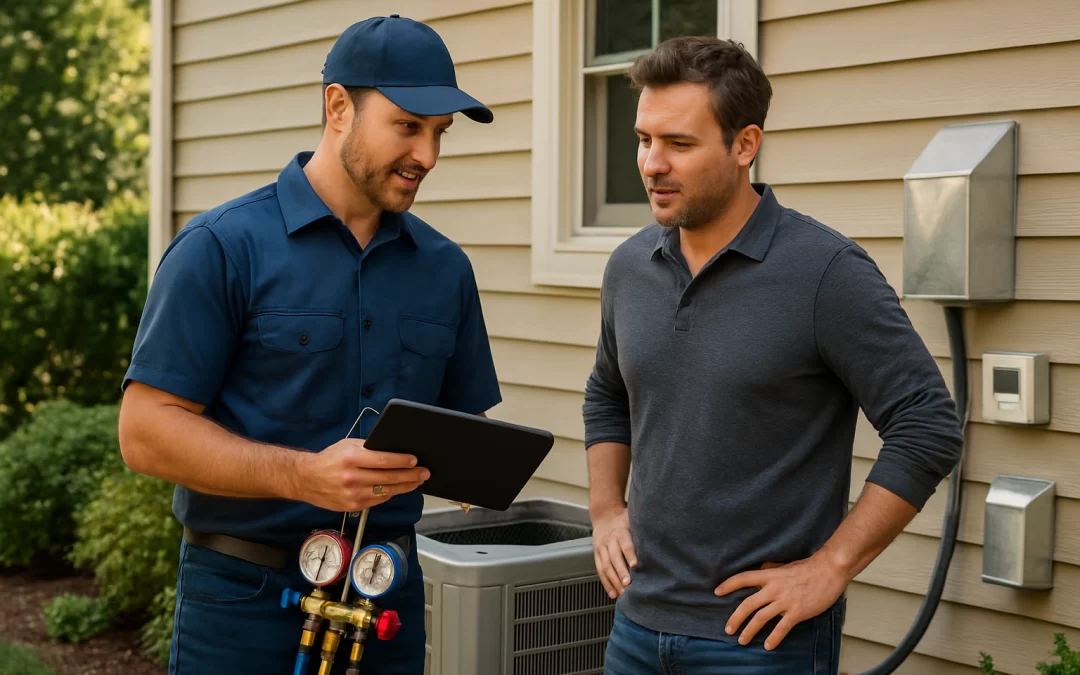
Residential HVAC contractors near you can help you fix comfort problems, cut energy bills, and avoid expensive breakdowns—but only if you choose carefully. By comparing at least 3 quotes, checking licenses and reviews, and doing a few simple checks yourself first, many homeowners save $20–$80 per month on energy and avoid $500–$3,000 in unnecessary work. The tradeoff is that getting multiple bids and vetting contractors takes time, and the cheapest quote is not always the best long-term value.
This guide is for homeowners and renters who need HVAC repair, replacement, or maintenance and want to avoid overpaying. Heating and cooling are often your biggest home energy costs, so choosing the right local HVAC professional can have a major impact on your monthly bills and future repair expenses.
Table of Contents
- Why HVAC Costs Get So High
- Common Ways People Overpay for HVAC Work
- What to Check Before Calling an HVAC Contractor
- Immediate Ways to Save on HVAC Costs
- Long-Term HVAC Savings and Upgrades
- When Spending More Now Actually Saves Money
- Common Costly Mistakes When Hiring Residential HVAC Contractors
- When You Should Hire a Professional HVAC Contractor
- Costs, Savings, and Payback Periods
- Decision Guide: DIY vs Pro, Quick Fix vs Upgrade
- Frequently Asked Questions
- Summary and Next Steps
Why HVAC Costs Get So High
Heating and cooling can account for 40–60% of a home’s energy use, so small problems add up quickly. High HVAC costs usually come from a mix of equipment issues, home conditions, and how the system is used.
Main drivers of high HVAC costs
- Old or inefficient equipment: Systems over 12–15 years old often use 20–40% more energy than newer models.
- Poor maintenance: Dirty filters, clogged coils, and low refrigerant force the system to run longer, raising bills and wear-and-tear.
- Improper sizing: Units that are too big or too small cycle incorrectly, waste energy, and break down more often.
- Leaky ducts and poor insulation: Conditioned air escapes into attics, crawlspaces, or outdoors, so you pay to heat or cool unused spaces.
- Thermostat misuse: Constant manual changes or extreme temperature settings can add 10–20% to bills.
Residential HVAC contractors near you can diagnose these issues, but if you don’t understand the causes, it’s easy to approve work that doesn’t address the real problem.
Common Ways People Overpay for HVAC Work
Many homeowners overspend not because of scams, but because of rushed decisions and lack of information. Knowing these patterns helps you push back and ask better questions.
Typical overspending behaviors
- Calling the first contractor that shows up in search results and accepting their quote without comparison.
- Approving major repairs on old systems that are near the end of their life, instead of considering replacement.
- Buying the biggest unit “just in case” instead of having a proper load calculation done.
- Skipping maintenance and then paying emergency rates when the system fails at the worst time.
- Not asking for itemized quotes, so you can’t see labor vs parts or compare apples to apples.
These habits can easily cost an extra $300–$1,500 per year in higher energy use, unnecessary repairs, and premature replacement.
What to Check Before Calling an HVAC Contractor
Before you search “residential HVAC contractors near me,” do a few simple checks. You might fix the issue yourself or at least narrow down the problem, which can save on diagnostic fees.
Basic DIY checks (5–20 minutes)
- Thermostat: Make sure it’s on the correct mode (heat/cool), set below/above room temperature, and has fresh batteries.
- Breaker and switches: Check the electrical panel for tripped breakers and any on/off switches near the indoor and outdoor units.
- Air filter: If it’s dirty or clogged, replace it. A clean filter can improve airflow and cut energy use by 5–15%.
- Vents and returns: Open all supply vents and make sure furniture or rugs aren’t blocking them.
- Outdoor unit: Clear leaves, grass, and debris at least 2 feet around the unit for proper airflow.
If these steps don’t solve the problem, it’s reasonable to call a contractor. But you’ve already reduced the chance of paying for a simple fix.
Immediate Ways to Save on HVAC Costs
Even without replacing equipment, you can often cut your heating and cooling costs within days or weeks. Many of these steps cost little or nothing.
Low-cost or no-cost actions
- Adjust your thermostat: Raising summer settings or lowering winter settings by 2–3°F can save $10–$30 per month.
- Use a programmable or smart thermostat: Automating setbacks when you’re asleep or away can save 8–15% on heating and cooling.
- Seal obvious air leaks: Use weatherstripping and caulk around doors and windows; this can reduce drafts and save $5–$25 per month.
- Change filters regularly: At least every 1–3 months; this can prevent breakdowns and reduce energy use.
- Use fans wisely: Ceiling fans let you feel comfortable at higher summer temperatures, reducing AC run time.
For more structured upkeep, follow a seasonal checklist or ask a contractor about maintenance plans. Regular maintenance can prevent costly breakdowns and improve efficiency; see this AC maintenance checklist for a detailed guide.
Long-Term HVAC Savings and Upgrades
Some upgrades require more upfront money but pay off over several years through lower bills and fewer repairs. A good residential HVAC contractor should explain these options clearly and not pressure you.
Common long-term upgrades
- High-efficiency HVAC systems: Replacing a 15–20-year-old system with a modern high-efficiency unit can cut energy use by 20–40%.
- Duct sealing and balancing: Properly sealed and balanced ducts can improve comfort and reduce wasted air.
- Improved insulation: Adding attic or wall insulation reduces how hard your HVAC system has to work, especially in extreme climates.
- Zoning systems: Separate temperature control for different areas can reduce energy use in rarely used rooms.
- Smart controls: Advanced thermostats and sensors fine-tune operation for comfort and savings.
These projects can cost from a few hundred dollars (duct sealing) to several thousand (full system replacement), but often pay back in 3–10 years through lower monthly bills and extended equipment life. For a deeper look at insulation costs and savings, see this home insulation cost guide.
When Spending More Now Actually Saves Money
Sometimes the cheapest quote or smallest repair is not the best financial choice. A trustworthy HVAC contractor will help you compare short-term and long-term costs.
Repair vs replace decisions
- Age of system: If your system is over 12–15 years old and needs a major repair (over $800–$1,500), replacement may be smarter.
- Frequency of repairs: If you’re calling for service more than once a year, ongoing repair costs can quickly exceed the price of a new unit.
- Energy efficiency: A new high-efficiency system can save $30–$100+ per month in energy, depending on your climate and home size.
For example, spending $5,000–$10,000 on a new system might seem high, but if it saves $600–$1,200 per year in energy and repairs, the payback can be 5–8 years. You can explore typical ranges in this guide on how much HVAC replacement costs.
Common Costly Mistakes When Hiring Residential HVAC Contractors
Choosing the wrong contractor can lock you into years of higher bills and recurring problems. Avoid these frequent mistakes when searching for “residential HVAC contractors near me.”
Hiring mistakes that raise costs
- Not verifying licenses and insurance: Unlicensed work can void warranties and leave you liable for damage or injuries.
- Skipping written estimates: Verbal quotes are hard to compare and easy to dispute later.
- Ignoring load calculations: Contractors who size equipment by “rule of thumb” instead of doing a proper calculation may oversize or undersize your system.
- Choosing solely on price: The lowest bid may use cheaper parts, skip key steps, or lack proper permits.
- Not asking about warranties: Weak or unclear warranties can cost you hundreds or thousands if something fails early.
How to vet residential HVAC contractors near you
- Confirm they are licensed, insured, and bonded in your state or locality.
- Check recent reviews (good and bad) and how they respond to complaints.
- Ask if they perform a manual load calculation for new systems, not just guess based on square footage.
- Request itemized, written estimates from at least 3 contractors.
- Ask about labor and equipment warranties and what is and isn’t covered.
For more detail on red flags and cost expectations, see this guide on how to choose an HVAC contractor.
When You Should Hire a Professional HVAC Contractor
Some tasks are safe for most homeowners, but others should be left to licensed professionals for safety, warranty, and code reasons.
DIY-friendly tasks
- Changing air filters.
- Cleaning accessible vents and registers.
- Adjusting thermostat settings and schedules.
- Clearing debris around the outdoor unit.
Tasks for professionals only
- Refrigerant work: Requires special certification and tools; improper handling is illegal and dangerous.
- Electrical repairs inside the unit: Risk of shock, fire, and code violations.
- Gas furnace repairs: Risk of gas leaks and carbon monoxide.
- Duct modifications or new installations: Poor work can cause leaks, noise, and comfort issues.
- Full system replacement: Needs proper sizing, permits, and commissioning.
Hiring a professional for these jobs may cost more upfront, but it protects your safety, preserves warranties, and often prevents expensive rework.
Costs, Savings, and Payback Periods
Understanding typical costs and savings helps you decide which projects are worth doing now and which can wait.
Typical cost and savings ranges
- Filter changes: $5–$25 per filter, every 1–3 months. Can save $5–$15 per month and reduce breakdowns.
- Professional maintenance visit: $80–$200 once or twice per year. May prevent $300–$1,500 in repairs and improve efficiency by 5–15%.
- Duct sealing: $1,000–$3,000 depending on home size. Can save $15–$50 per month; payback often 3–7 years.
- Smart thermostat: $100–$300 plus $100–$250 for professional installation. Can save $10–$30 per month; payback 1–3 years.
- Full HVAC replacement: Commonly $5,000–$15,000+ depending on system type and home size. Potential savings $30–$100+ per month; payback 5–10 years, plus comfort and reliability benefits.
When savings are small vs significant
- Small but worthwhile: Filter changes, thermostat tweaks, sealing a few obvious leaks. These are low-cost and add up over time.
- Significant: Replacing very old systems, major duct sealing, upgrading insulation, or switching from window units to efficient central air in some homes.
Some upgrades may not be worth it if you plan to move soon or if your current system is relatively new and efficient. Always ask contractors to estimate your expected energy savings and compare that to the project cost.
Decision Guide: DIY vs Pro, Quick Fix vs Upgrade
Use this simple framework to decide what to do now, what to plan for later, and when to call a residential HVAC contractor near you.
Do now vs later
- Do now: Change filters, clear vents, adjust thermostat, schedule maintenance if it’s been over a year, fix obvious air leaks.
- Plan soon (next 6–24 months): Duct sealing, insulation upgrades, replacing systems older than 12–15 years that still work but are inefficient.
- Wait: Cosmetic upgrades or minor efficiency improvements with long payback periods if your budget is tight.
DIY vs professional
- DIY: Anything outside the equipment that doesn’t involve gas, refrigerant, or internal wiring.
- Professional: Diagnostics, repairs, refrigerant, gas, electrical work, duct design, and system replacement.
Cheap fix vs upgrade
- Choose the cheap fix if the system is under 10 years old, has a good service history, and the repair is under 20–30% of replacement cost.
- Consider an upgrade if the system is over 12–15 years old, needs frequent repairs, or your energy bills are much higher than similar homes.
When comparing quotes for repair vs replacement, ask each contractor to provide both options with estimated energy savings and expected lifespan. This makes the financial tradeoff clearer.
Frequently Asked Questions
How many quotes should I get from residential HVAC contractors near me?
Get at least three written, itemized quotes from licensed contractors. This helps you spot outliers, compare labor and equipment costs, and avoid overpaying by hundreds or even thousands of dollars.
Is regular HVAC maintenance really worth the cost?
Yes, in most cases. A yearly maintenance visit costing $80–$200 can improve efficiency, lower bills by 5–15%, and prevent expensive breakdowns that might cost $300–$1,500 or more; see this guide on how regular HVAC maintenance saves money.
Should I repair or replace my old HVAC system?
If your system is under 10 years old and the repair is minor, repair usually makes sense. If it’s over 12–15 years old and needs a major repair, replacement often saves more over the next 5–10 years through lower energy and repair costs.
How can I tell if a residential HVAC contractor is trustworthy?
Look for proper licensing and insurance, strong recent reviews, clear written estimates, and a willingness to explain options without pressure. Be cautious of contractors who push immediate replacement without explaining repair alternatives.
Can I save money by buying my own HVAC equipment online?
You might pay less for the equipment itself, but many contractors won’t install homeowner-supplied units or will offer limited warranties. Any savings can be offset by installation issues, lack of support, and shorter equipment life.
Are high-efficiency HVAC systems always worth the extra cost?
Not always. They tend to pay off faster in extreme climates or large homes with high usage; in mild climates or smaller homes, the extra cost may take longer to recover, especially if you plan to move within a few years.
Summary and Next Steps
Finding the right residential HVAC contractor near you can significantly reduce your energy bills, prevent costly breakdowns, and improve comfort. The key is to handle simple checks yourself, get multiple written quotes, and choose contractors based on qualifications and long-term value—not just the lowest price.
By combining quick fixes (filters, thermostat settings, sealing leaks) with smart long-term decisions (timely replacement, duct and insulation upgrades), many homeowners save $20–$100+ per month and avoid thousands in unnecessary repairs. Your next steps are simple: do the basic checks listed above, gather at least three quotes from licensed local contractors, and compare repair vs replacement options with clear cost and savings estimates.