
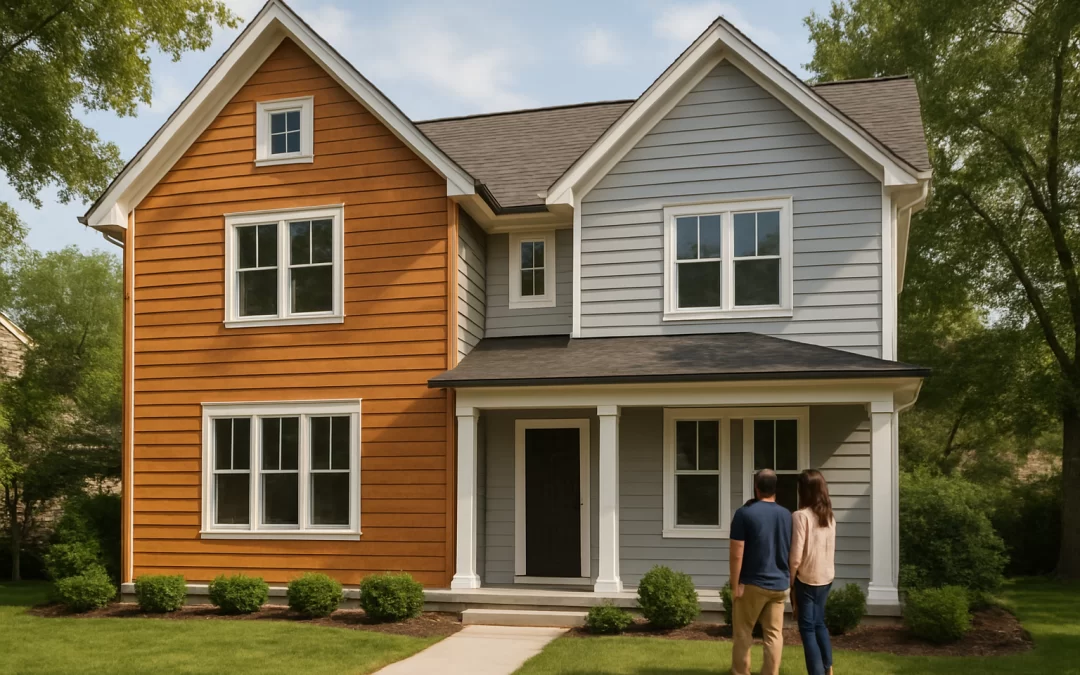
Wood vs. fiber cement siding comes down to a tradeoff between higher ongoing maintenance costs (wood) and higher upfront installation costs (fiber cement). Wood siding can cost less to install but often needs repainting or staining every 5–7 years, which can add thousands over time. Fiber cement usually costs more at the start but can save $300–$800 per year in reduced maintenance over 20–30 years. The main limitation: if you plan to move in a few years, you may not fully recoup the higher upfront cost of fiber cement.
This guide is for homeowners comparing wood vs. fiber cement siding and trying to avoid overspending. Siding is a major project, often costing $10,000–$30,000 or more, and the wrong choice can lock you into decades of higher maintenance and repair bills. Below, you’ll see how each option affects your budget now and long term, and how to avoid common, costly mistakes.
Table of Contents
- Key Cost Drivers: Wood vs. Fiber Cement Siding
- Common Ways Homeowners Overspend
- What to Check First Before Choosing Siding
- Immediate Savings: How to Cut Costs Right Now
- Long-Term Savings and Upgrades
- When Spending More Actually Saves Money
- Common Costly Mistakes to Avoid
- When to Hire a Professional vs. DIY
- Costs, Savings & Payback Period
- Decision Guide: What to Do Now vs. Later
- Frequently Asked Questions
- Summary & Next Steps
Key Cost Drivers: Wood vs. Fiber Cement Siding
The total cost of wood or fiber cement siding is driven by more than just the material price. Labor, prep work, and future maintenance all affect what you’ll really pay over 20–30 years.
Material and Installation Costs
- Wood siding (cedar, redwood, pine):
- Material: typically lower to mid-range per square foot compared with fiber cement.
- Labor: can be moderate; wood is lighter and easier to cut, which can reduce labor hours.
- Finish: often requires on-site priming and painting or staining.
- Fiber cement siding:
- Material: usually higher per square foot than wood.
- Labor: heavier boards and special cutting tools can increase labor time and cost.
- Finish: many products come prefinished with long warranties, reducing future painting costs.
On a typical 2,000 sq. ft. home, fiber cement can cost $3,000–$8,000 more upfront than basic wood, depending on brand, finish, and local labor rates.
Maintenance and Repair Costs
- Wood siding maintenance:
- Repainting or restaining every 5–7 years is common.
- Expect $2,000–$6,000 per full repaint, depending on home size and local prices.
- Higher risk of rot, insect damage, and warping, which can mean patch repairs or board replacement.
- Fiber cement maintenance:
- Repainting often needed only every 12–15 years (or longer with some factory finishes).
- Much lower risk of rot, insects, and fire damage.
- Repairs are less frequent but can be more specialized.
Over 20–25 years, wood siding can easily cost $10,000–$20,000 more in maintenance than fiber cement, especially in wet or harsh climates.
Climate and Exposure
- Wet, humid, or termite-prone areas:
- Wood: higher risk of rot, swelling, and insect damage.
- Fiber cement: more stable, usually lower lifetime repair costs.
- Harsh sun or big temperature swings:
- Wood: paint can peel and crack faster, increasing repaint frequency.
- Fiber cement: holds paint better, which stretches out maintenance cycles.
Common Ways Homeowners Overspend
Many homeowners spend thousands more than necessary on siding because of a few predictable behaviors.
- Choosing based only on upfront price:
- Picking cheaper wood without factoring in repainting and repairs can cost more over 15–20 years.
- Over-upgrading finishes:
- Paying for premium stains or designer colors that don’t add much resale value in your neighborhood.
- Not comparing multiple quotes:
- Sticking with the first contractor can mean paying 10–25% more than necessary.
- Ignoring underlying damage:
- Covering over rot or moisture issues leads to expensive structural repairs later.
- Full replacement when repair would do:
- Replacing all siding when only certain walls or elevations are failing.
What to Check First Before Choosing Siding
Before you commit to wood or fiber cement, a few simple checks can prevent expensive surprises.
1. Condition of Existing Siding and Sheathing
- Look for soft spots, bulging, peeling paint, or visible rot.
- Check around windows, doors, and rooflines where water often gets in.
- If more than 20–30% of your siding is failing, full replacement may be more cost-effective than repeated repairs.
2. Moisture and Insulation Issues
- Ask a contractor to check for:
- Moisture behind existing siding.
- Missing or inadequate house wrap.
- Insulation gaps in exterior walls.
- Addressing these during a siding project can improve comfort and reduce energy bills.
If you’re also considering improving your home’s insulation, see this guide on whether investing in insulation is worth it for heating costs.
3. How Long You Plan to Stay
- Staying 3–7 years:
- Upfront cost matters more; you may not fully benefit from long-term maintenance savings.
- Staying 10+ years:
- Fiber cement’s lower maintenance can pay off and improve resale appeal.
Immediate Savings: How to Cut Costs Right Now
You can often trim 10–20% off your siding project without sacrificing quality.
1. Compare Wood and Fiber Cement Quotes Side by Side
- Ask each contractor to price:
- Wood siding with a basic, durable paint or stain.
- Fiber cement with a standard factory finish.
- Compare:
- Material and labor separately, if possible.
- Any included painting or finishing costs.
2. Simplify Design Choices
- Use more standard profiles and fewer decorative details:
- Fewer trim pieces, simpler corner boards, and standard lap siding can cut labor hours.
- Limit accent walls or specialty textures to small, visible areas only.
3. Time Your Project Strategically
- Ask contractors about off-peak discounts:
- In many areas, late fall or early winter can be slower, and some crews may offer better pricing.
- Book early to avoid rush fees or scheduling premiums.
4. Do Limited DIY Prep (If Safe)
- Homeowners sometimes save a few hundred dollars by:
- Removing old shutters or light fixtures.
- Trimming back landscaping to improve access.
- Leave removal of old siding and structural work to professionals for safety and warranty reasons.
Long-Term Savings and Upgrades
The biggest financial difference between wood and fiber cement shows up over 10–30 years.
Wood Siding: How to Control Long-Term Costs
- Choose the right species:
- Cedar and redwood resist rot and insects better than cheaper softwoods, reducing repair frequency.
- Invest in quality paint or stain:
- Higher-quality coatings can stretch repainting cycles from 5 to 7–8 years, saving $2,000–$4,000 over time.
- Stay on top of maintenance:
- Spot-treat peeling paint and caulk gaps early to avoid moisture damage.
Fiber Cement: Maximizing Its Low-Maintenance Advantage
- Choose factory-finished boards when possible:
- These often come with 15-year or longer finish warranties, reducing repainting costs.
- Use compatible caulks and paints:
- Following manufacturer recommendations helps maintain warranties and avoid premature peeling.
- Plan repainting strategically:
- Repainting every 12–15 years instead of 8–10 can save $2,000–$5,000 over the life of the siding.
Energy Efficiency and Comfort
- Neither wood nor fiber cement is a major insulator by itself, but:
- Adding a house wrap and addressing gaps can reduce drafts.
- Including a thin rigid foam layer can improve comfort and modestly lower heating and cooling bills.
- Expect modest monthly energy savings (often $10–$30/month) if your current exterior is leaky or poorly sealed.
When Spending More Actually Saves Money
Sometimes a higher upfront cost is the cheaper choice over the life of your home.
1. Choosing Fiber Cement Over Wood in Harsh Climates
- If you live in a wet, humid, or termite-prone area and plan to stay 10+ years:
- Fiber cement’s lower maintenance can save $300–$800 per year on average over 20–25 years.
- Fewer repairs and longer paint life reduce surprise bills.
2. Upgrading to Better Paint or Stain on Wood
- Spending an extra $500–$1,500 on higher-quality coatings can:
- Delay your next repaint by several years.
- Prevent early rot and swelling that might require board replacement.
3. Fixing Hidden Damage During Replacement
- Paying to repair damaged sheathing or framing when you replace siding can:
- Prevent structural repairs later that might cost $5,000–$15,000.
- Protect your new siding investment so it lasts its full lifespan.
Common Costly Mistakes to Avoid
Avoiding a few key mistakes can save thousands, regardless of whether you choose wood or fiber cement.
- Not checking contractor references:
- Poor installation can void warranties and lead to water damage.
- Skipping permits or inspections:
- Can lead to fines or forced rework if the job doesn’t meet code.
- Mixing incompatible materials:
- Using the wrong fasteners or caulks can cause staining, rust, or premature failure.
- Ignoring ventilation and flashing:
- Poorly flashed windows, doors, and rooflines are a major source of leaks and rot.
- Assuming all warranties are equal:
- Some cover only the material, not labor, and may be void if installed incorrectly.
For a deeper look at what affects siding estimates and how to avoid overpaying, see this guide on siding replacement cost and what drives the price.
When to Hire a Professional vs. DIY
Siding is one of the more complex and risky exterior projects to DIY, especially with fiber cement.
When DIY Might Make Sense
- Small wood siding repairs:
- Replacing a few damaged boards or repainting a small area can be manageable for handy homeowners.
- Basic maintenance:
- Caulking gaps, touching up paint, and cleaning siding are good DIY tasks.
When to Hire a Professional
- Full siding replacement (wood or fiber cement):
- Requires proper flashing, moisture management, and safe removal of old materials.
- Fiber cement installation:
- Boards are heavy and require special cutting tools and safety precautions.
- Homes with existing moisture or structural issues:
- Professionals can identify and repair hidden damage correctly.
In many cases, hiring a qualified installer reduces the risk of water damage and warranty problems that can cost far more than the labor savings from DIY.
Costs, Savings & Payback Period
Below are typical cost and savings ranges for a 2,000 sq. ft. home. Actual numbers vary by region and product, but these estimates help with planning.
Upfront Costs
- Wood siding:
- Material and installation: often in the mid-range compared with other options.
- Initial painting or staining: add a few thousand dollars if not factory-finished.
- Fiber cement siding:
- Material and installation: typically $3,000–$8,000 more than basic wood for the same home size.
- Factory finish: can add cost but reduces early repainting needs.
Ongoing Maintenance and Monthly Savings
- Wood siding:
- Repainting every 5–7 years: roughly $2,000–$6,000 each time.
- Average annual maintenance cost (spread over time): roughly $300–$800 per year.
- Fiber cement siding:
- Repainting every 12–15 years: similar cost per job but less frequent.
- Average annual maintenance cost: often $100–$300 per year.
Compared with wood, fiber cement can save roughly $20–$70 per month on average when you spread maintenance and repair costs over 20–25 years.
Payback Period
- If fiber cement costs $5,000 more upfront:
- And you save about $600 per year in maintenance vs. wood.
- Simple payback: around 8–9 years.
- If you plan to move in 5 years:
- You may not fully recover the higher upfront cost through maintenance savings alone.
- However, you may recoup some of it through improved resale value and buyer appeal.
When Savings Are Small vs. Significant
- Savings are smaller when:
- You live in a mild, dry climate.
- You’re disciplined about maintaining wood siding yourself.
- You plan to sell in a few years.
- Savings are significant when:
- You live in a wet, harsh, or termite-prone climate.
- You prefer low-maintenance exteriors and will hire out most work.
- You plan to stay in the home 10–20+ years.
When an Upgrade Is Not Worth the Cost
- Paying a large premium for a specialty wood species or ultra-high-end fiber cement brand may not pay off if:
- Your neighborhood is mostly mid-range homes.
- You don’t plan to stay long enough to benefit from the extra durability.
- In these cases, a solid mid-range product, installed well, is usually the best value.
Decision Guide: What to Do Now vs. Later
Use this section to match your situation to a practical plan.
Do Now vs. Later
- Do now if:
- Your siding is rotting, buckling, or letting in water.
- Repairs would cost more than 30–40% of a full replacement.
- Do later if:
- Your siding is mostly sound and issues are cosmetic.
- You can manage with a repaint or minor repairs for a few more years.
Quick Fix vs. Investment
- Quick fix:
- Patch repairs and repainting wood siding can buy 3–7 more years.
- Best if you’re planning to sell soon or saving up for a full replacement.
- Investment:
- Full replacement with fiber cement or higher-quality wood is better if you’ll stay long term.
- Focus on proper installation and moisture control to protect your investment.
DIY vs. Professional
- DIY:
- Limit to small wood repairs, caulking, and repainting if you’re comfortable with ladders and tools.
- Professional:
- Recommended for full siding replacement, fiber cement installation, and any job involving structural or moisture issues.
Cheap Fix vs. Upgrade
- Cheap fix (wood):
- Best if your budget is tight and your siding is mostly sound.
- Expect higher maintenance and repainting costs over time.
- Upgrade (fiber cement):
- Higher upfront cost but lower long-term maintenance and better durability.
- Often the better financial choice if you’ll stay in the home 10+ years.
Frequently Asked Questions
Is fiber cement siding cheaper than wood in the long run?
In many cases, yes. While fiber cement usually costs more to install, it often needs less frequent painting and has fewer rot and insect issues, which can save $300–$800 per year over 20–25 years. The longer you stay in the home, the more likely fiber cement is to be cheaper overall.
Does wood siding increase home value more than fiber cement?
High-quality wood siding can be attractive to buyers, especially in certain styles of homes or neighborhoods. However, many buyers also value the low maintenance and durability of fiber cement. In most markets, both can support good resale value if they are in good condition and properly maintained.
How often will I need to repaint wood vs. fiber cement siding?
Wood siding typically needs repainting or restaining every 5–7 years, sometimes sooner in harsh climates. Fiber cement siding often holds paint for 12–15 years, especially if factory-finished, which can cut your repainting costs roughly in half over time.
Can I switch from wood to fiber cement without major changes?
Yes, most homes can switch from wood to fiber cement without major structural changes. The installer will remove the old siding, inspect and repair any damaged sheathing, then install house wrap and fiber cement. The main difference is the heavier material and specific installation techniques, which is why professional installation is recommended.
Is it worth repairing my old wood siding instead of replacing it?
If damage is limited to small areas and the rest of the siding is sound, repairs and a fresh coat of paint can be a cost-effective short-term solution. However, if a large portion is rotting, warped, or failing, repeated repairs can quickly add up to more than a well-planned replacement.
Which is better for fire resistance: wood or fiber cement?
Fiber cement is generally much more fire-resistant than wood because it is made from cement and cellulose fibers. In areas with wildfire risk or strict fire codes, fiber cement can reduce risk and may even help with insurance or code compliance, which can have financial benefits over time.
Summary & Next Steps
Wood siding usually has a lower upfront cost but higher ongoing maintenance, while fiber cement costs more to install but often saves money over 10–25 years through fewer repaints and repairs. If you plan to stay in your home long term, especially in a harsh or wet climate, fiber cement often delivers better lifetime value. If you expect to move soon or have a tight budget, repairing or replacing with wood can still make sense, as long as you plan for future maintenance.
Next steps:
- Inspect your current siding for rot, peeling, and moisture issues.
- Get at least two quotes that compare wood and fiber cement options side by side.
- Factor in how long you’ll stay in the home and how much maintenance you’re willing to handle.
For more detail on how different siding materials compare on cost, you can also review this guide to siding replacement cost by material. Taking a bit of time to compare options now can easily save you thousands of dollars and years of extra maintenance work.